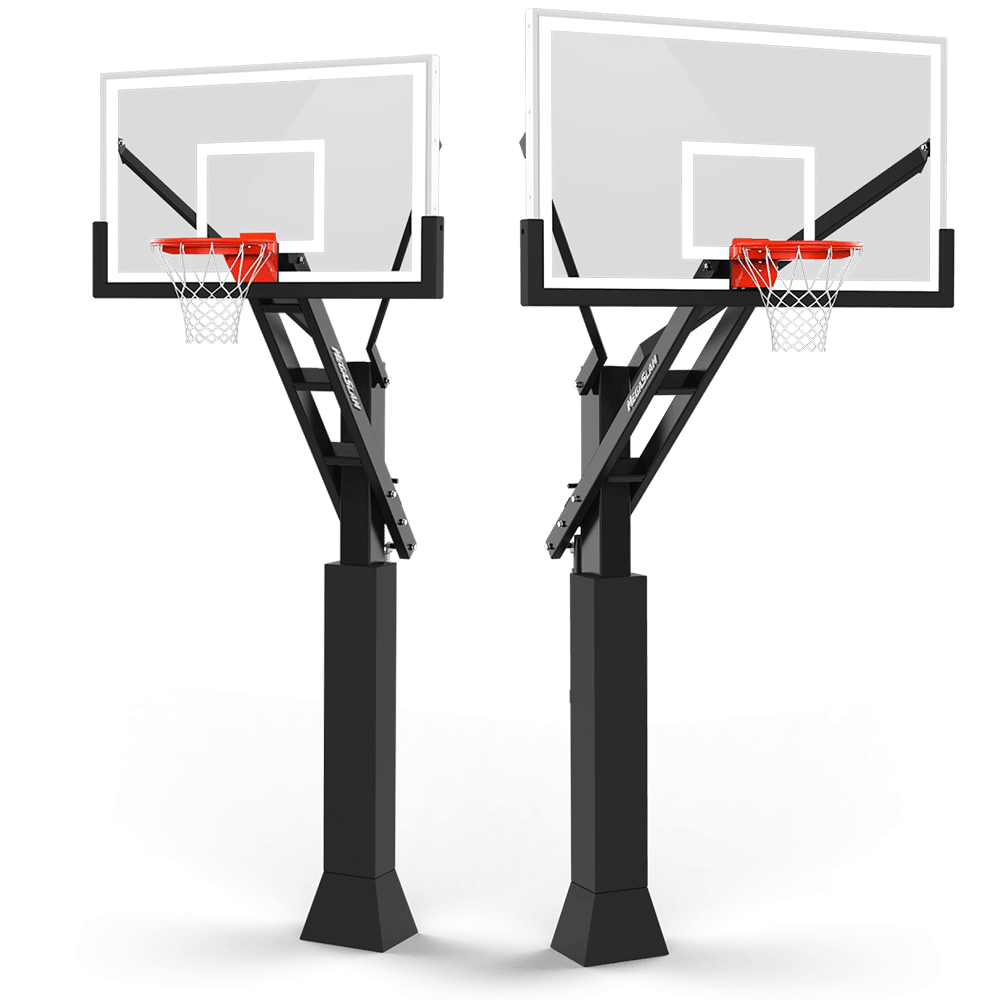
Basketball hoop padding helps cushion contact with hard surfaces, particularly around the support pole and backboard. It’s an important consideration for family courts, younger players, and games where players frequently drive toward the basket.
Every Mega Slam Hoops system includes 2-inch-thick pole padding, gusset padding, and 1-inch-thick backboard padding, providing added protection without requiring separate purchases.
Beyond padding, other features, including properly installed anchor kits and breakaway rims, contribute to a well-planned basketball setup. This guide explains what each component does and how to evaluate the safety features that matter most for your court. For the bigger picture, our basketball hoop safety guide covers safe use and upkeep in more depth.
Basketball Hoop Pole Padding
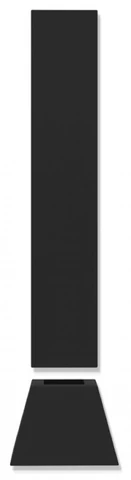
Pole padding is a cushioned wrap that covers the exposed lower section of your hoop’s support pole. Its purpose is simple: if a player runs into the pole, the padding can help reduce direct contact with a hard steel surface.
How much value it adds depends on how close your players get to the pole. If the pole sits right at the edge of your driveway or court, players driving for layups or chasing rebounds may come near it regularly. If it sits well off the playing surface, contact is less likely. Families with younger kids often place more value on padding, since kids tend to play at full speed with less awareness of where the pole is.
What to look for in pole padding
- Correct fit. Padding has to match the shape and dimensions of your specific pole. Square, rectangular, and round poles each need padding made for them, and a loose pad can shift or slide during play.
- Outdoor-rated materials. An outdoor hoop sits in sun, rain, and temperature swings all year. Look for basketball hoop padding built for exterior use, with a weather-resistant cover.
- Secure attachment. The pad should fasten firmly so it stays in position instead of rotating or sagging down the pole.
Mega Slam Hoops systems include 2-inch-thick, high-density foam pole padding with UV-protected vinyl, providing cushioning designed for outdoor use.
Maintenance tip: Inspect your pole padding regularly for torn covers, compressed foam, or loose attachments. Replace damaged padding when it no longer provides adequate coverage.
Basketball Hoop Anchor Kit: What Does It Do?
On an in-ground hoop, the basketball hoop anchor kit is the hardware that connects your basketball system to its concrete foundation. It is not an optional add-on for extra stability. It is a core part of how the hoop is installed and how it stays securely in place.
In a typical in-ground design, the anchor assembly is set into the concrete footing during installation, and the pole mounts to it once the foundation is ready. That connection is what ties the pole, backboard, and overhang to the ground. To see what this stage looks like on one of our systems, our walkthrough of the Mega Slam Hoops anchor kit installation shows the complete installation process.
Why compatibility matters
Anchor kits are designed around a particular pole and mounting configuration. Using an anchor from a different system, or swapping in hardware from a home improvement store, can change how the hoop sits and how it handles load. Use the anchor hardware made for your hoop, follow the manufacturer’s installation instructions for the foundation and mounting, and do not improvise or substitute parts without guidance from the manufacturer.
Every Mega Slam Hoops system includes a model-specific anchor kit, with different bolt sizes and configurations depending on the basketball system. The table below outlines the anchor kit specifications for each model.
| Basketball Hoop Model | Anchor Kit Specifications |
|---|---|
| Mega Slam 54 / 60 | x4 16 mm × 18″ J-bolts with steel anchor plate |
| Mega Slam 72 | x4 18 mm × 18″ J-bolts with steel anchor plate |
| Mega Slam XL | x6 18 mm × 18″ J-bolts with steel anchor plate |
| FX 60 / FX 72 | x4 18 mm × 18″ J-bolts with installation brace base plate, installation brace, and hinge bolt |
| FX Pro | x6 18 mm × 18″ J-bolts with installation brace base plate, installation brace, and hinge bolt |
In-Ground Anchor Kits vs. Portable Hoop Weights
In-ground anchor kits and portable hoop weights serve different purposes. An anchor kit connects the hoop directly to a concrete foundation, while portable hoop weights or tie-downs help stabilize a portable system’s base.
These components are not interchangeable, and portable weights should never be treated as a substitute for a properly installed in-ground anchor system.
Other Basketball Hoop Safety Accessories to Consider
Beyond pole padding, backboard padding and breakaway rims are important features to consider when evaluating basketball hoop safety. The layout of your playing area also plays a role in reducing potential hazards.
Backboard padding
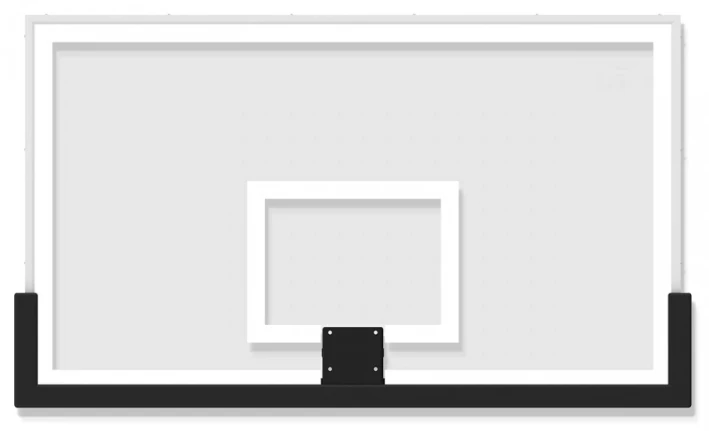
Backboard padding provides cushioning along the bottom and side edges of the backboard, helping reduce direct contact with hard surfaces during rebounds or contested shots near the basket.
Because some systems adjust as low as 5 feet, backboard padding matters for players of every height, not only taller players.
Breakaway rim
A breakaway rim is designed to flex downward under heavier force and then return to position, rather than staying completely rigid. Rim type matters most for players who dunk or put real downward force on the rim. For kids shooting jumpers, it is less of a factor. Our guide to breakaway vs fixed basketball rims explains how the different designs work.
Court and playing area
A clear playing area matters as much as any accessory. Check for nearby walls, fences, parked vehicles, landscaping edges, and anything else a player could run into while chasing a loose ball. Where the hoop sits in the first place also shapes how close players get to the pole. For more guidance, see our guide to basketball hoop placement.
Which Safety Accessories Make Sense for Your Setup?
The safety features that matter most depend on who uses your basketball hoop, how they play, and your court layout. Consider the position of the pole, the hoop’s overhang, player age, and playing style when evaluating your setup.
Family Courts and Younger Players
For families with younger players, pole and backboard padding are especially important, as children may be less aware of nearby obstacles during play. Keep the playing area clear of hazards and make sure the hoop is installed according to the manufacturer’s instructions.
Regular Residential Play
For everyday basketball games, focus on keeping the padding, rim, and mounting hardware in good condition. Regularly inspect these components for visible damage or wear, following the manufacturer’s maintenance recommendations.
Frequent Dunking and Physical Play
For players who dunk or regularly apply downward force to the rim, breakaway rim design becomes particularly relevant. Pole and backboard padding also help cushion potential contact with hard surfaces, especially during more physical games.
Regardless of playing style, safety accessories should complement a properly installed and maintained basketball hoop rather than compensate for structural or installation issues.
Safety Starts With the Basketball Hoop Setup
Accessories can add a layer of protection, but they cannot make up for problems with the system itself. Padding and a breakaway rim will not compensate for:
- Improper installation
- Incompatible or substituted hardware
- Significant structural damage, such as bends, cracks, or heavy corrosion
- An unstable or damaged foundation
- Using the system in ways the manufacturer advises against
Always follow the manufacturer’s instructions for installation, use, and maintenance. Regularly inspect your hoop’s foundation, anchor system, and hardware to identify potential issues before they affect play.
Planning an in-ground hoop?
Proper installation starts with the foundation and anchor system. Explore our Basketball Hoop Installation Guide to learn more about setting up your hoop correctly.