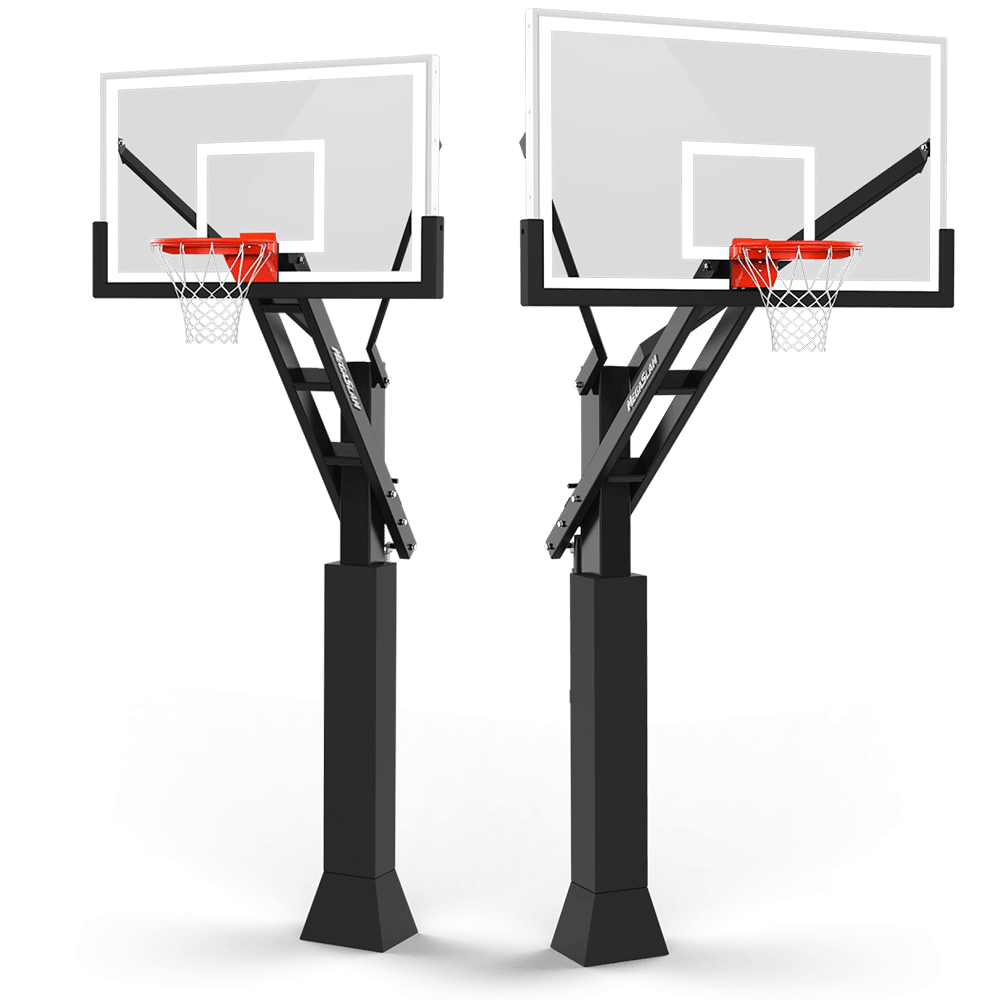
Basketball rims come in different types, with fixed and breakaway rims being two of the most common options. Fixed rims remain rigid under pressure, while breakaway rims use a spring-loaded mechanism that allows them to flex under downward force and return to their original position. This difference can affect how a hoop handles dunks, repeated impact, and everyday play.
Breakaway rims also come in different designs, including single-pivot and 180-degree models, each offering different levels of flexibility. In this guide, we’ll compare the main basketball rim types, explain their advantages and limitations, and help you choose the right rim for your playing style and basketball hoop setup.
Fixed Rim vs Breakaway Rim: What’s the Difference?
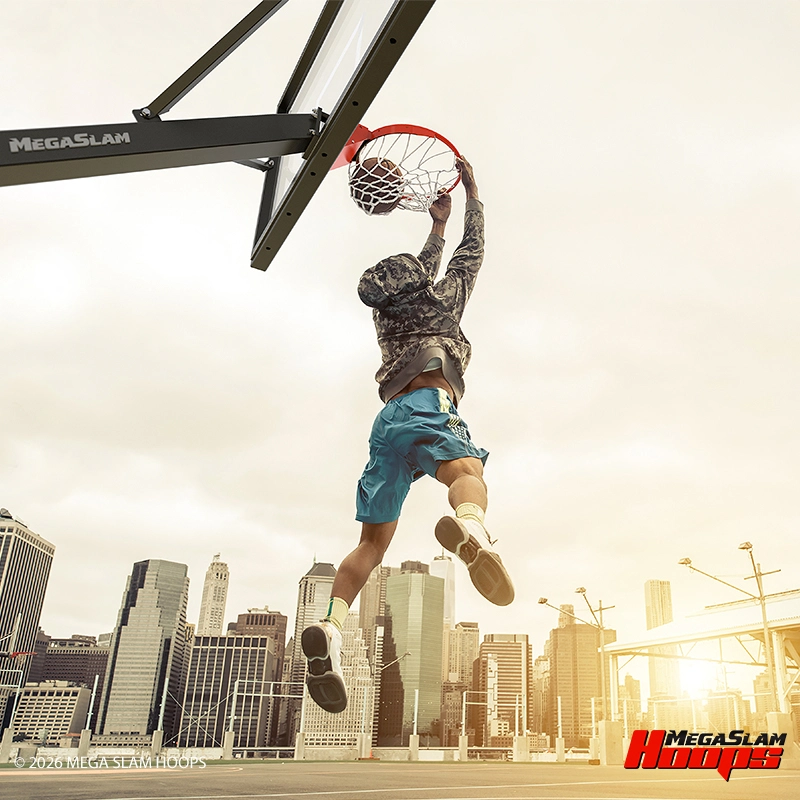
The main difference between fixed and breakaway basketball rims is how they respond to impact. A fixed rim stays rigid under pressure, while a breakaway rim uses a spring-loaded mechanism to flex under significant force and return to its original position.
Fixed basketball rims are typically attached directly to the backboard assembly without a breakaway mechanism. Their rigid construction makes them suitable for casual shooting and light recreational use. However, repeated dunking or hanging on the rim can place additional stress on the mounting hardware and backboard.
Breakaway basketball rims are designed to absorb some of that impact through a spring-loaded mechanism. This flexibility helps reduce stress on the hoop’s supporting components during dunks and other high-impact plays, making breakaway rims a popular choice for more demanding basketball environments.
| Feature | Fixed Rim | Breakaway Rim |
|---|---|---|
| Mechanism | Rigid, without a breakaway mechanism | Spring-loaded, flexes under sufficient force |
| Impact absorption | Limited | Absorbs part of the impact |
| Dunking | Generally not recommended | Designed to accommodate dunking, subject to manufacturer guidelines |
| Backboard stress | Greater load transfer during heavy impact | Helps reduce impact transferred to the backboard assembly |
| Best for | Casual shooting and light recreational use | Regular play, dunking, and more demanding use |
The rim is only one factor that affects a basketball hoop’s performance and durability. Backboard construction, mounting hardware, and overall structural stability also play important roles. For a closer look at how these components influence long-term performance, explore our guide on how long basketball hoops last.
Single-Pivot vs. 180-Degree Breakaway Rims: Which Is Better?
Both single-pivot and 180-degree breakaway rims use spring-loaded mechanisms to absorb impact during dunks. The key difference is the direction in which the rim can flex. Single-pivot rims move along one axis, while 180-degree breakaway rims can flex in multiple directions away from the backboard.
Single-Pivot Breakaway Rims
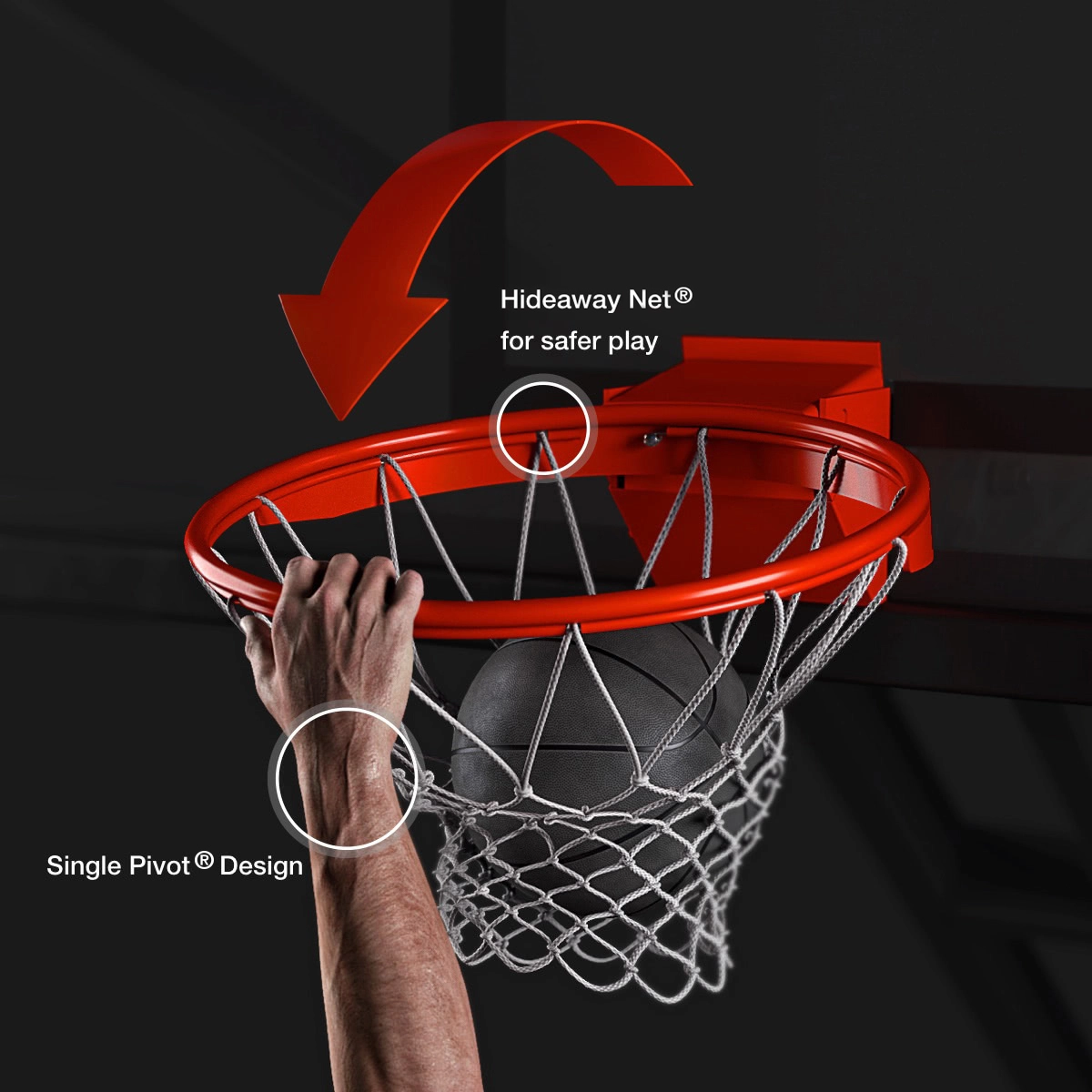
Single-pivot breakaway rims are designed to flex downward when force is applied to the front of the rim, then return to their original position. They provide a practical option for recreational basketball, shooting practice, and occasional dunking.
Mega Slam Hoops’ Collegiate Flex® Rim uses patented Single Pivot® engineering to provide breakaway action during front-of-rim dunks. This rim comes standard on several Mega Slam Hoops systems, including the MegaSlam 60.
180-Degree Breakaway Rims
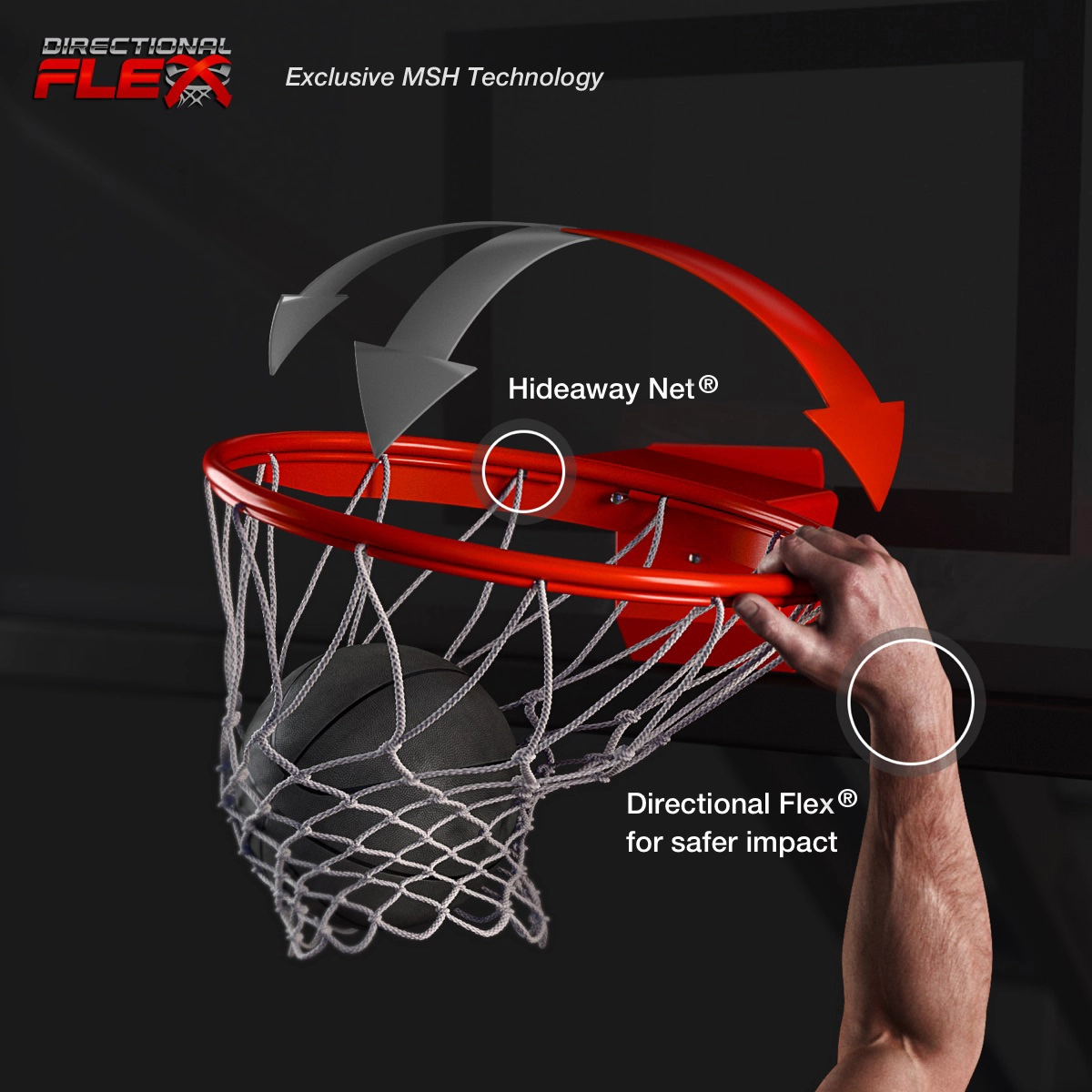
Unlike single-pivot designs, 180-degree breakaway rims can flex in multiple directions across a 180-degree range away from the backboard. This added flexibility accommodates dunks from different angles, making these rims particularly suitable for frequent dunking and more aggressive play.
Mega Slam Hoops’ 180° Pro Rim® features Directional Flex® Technology, allowing the rim to respond to impact from multiple directions. It also includes the recessed Hideaway Net® attachment system, designed to help protect players’ hands during dunks.
The 180° Pro Rim® is available as an upgrade on select systems, including the MegaSlam 72, and comes standard on the FX Pro.
Which Breakaway Rim Should You Choose?
For everyday shooting, recreational games, and occasional front-of-rim dunks, a single-pivot breakaway rim offers the flexibility most home players need. For players who dunk frequently or approach the basket from different angles, a 180-degree breakaway rim offers greater directional flexibility.
Ultimately, the right choice depends on how you play, how often you dunk, and the level of performance you want from your basketball hoop.
Mega Slam Hoops builds both a collegiate flex rim and a Pro 180 breakaway rim.
Does a Breakaway Rim Affect Ball Bounce?
A breakaway rim can affect how a basketball bounces, but the difference is typically minimal during normal play. A properly functioning breakaway rim remains stable during regular shots and flexes when sufficient force is applied, such as during a dunk.
However, rim stiffness and spring tension can influence how the ball rebounds, particularly when a shot hits the rim with greater force. A rim with a softer mechanism may absorb more energy than a stiffer one, potentially changing the ball’s bounce.
For most recreational players, the key is choosing a well-designed rim that provides a consistent shooting experience while offering flexibility during high-impact plays.
Is a Breakaway Basketball Rim Worth It?
A breakaway basketball rim is worth considering if you play regularly, practice dunking, or want a hoop designed to handle higher-impact play. For casual shooting without dunking, a fixed rim may be sufficient, depending on the hoop’s construction and intended use.
The best choice depends on who will use the hoop and how they play:
- Casual players: If you mainly practice free throws, layups, or jump shots, a fixed rim may meet your needs without the added cost of a breakaway mechanism.
- Players who dunk: A breakaway rim is designed to flex under impact, making it a better option for dunking when used with a system rated for that purpose.
- Families with growing players: A breakaway rim can accommodate changing playing styles as younger players develop their skills and begin practicing more demanding moves.
- Competitive players: For frequent dunking and aggressive play, a 180-degree breakaway rim offers additional directional flexibility.
If you’re investing in a basketball hoop for long-term home use, consider the complete system rather than the rim alone. Backboard construction, pole stability, height adjustability, and installation all affect performance.
For help evaluating these features, explore our basketball hoop buying guide to find a setup that fits your playing style, space, and budget.
Frequently Asked Questions
Can you replace a basketball rim without replacing the entire hoop?
Yes, many basketball hoops allow you to replace the rim without replacing the entire system. However, compatibility depends on the hoop’s mounting configuration and manufacturer specifications.
Mega Slam Hoops offers replacement options, including the Collegiate Flex™ Rim and 180° Pro Rim™. Always confirm compatibility with your specific basketball hoop before purchasing a replacement.
Do NBA basketball hoops use breakaway rims?
Yes, NBA basketball hoops use breakaway rims designed to flex under the force of dunks and other high-impact plays. These mechanisms help manage impact on the rim and supporting structure while allowing the rim to return to its playing position.
Can you dunk on a fixed basketball rim?
Dunking on a fixed basketball rim is generally not recommended unless the manufacturer explicitly rates the system for that use. Unlike breakaway rims, fixed rims do not have a spring-loaded mechanism to absorb part of the impact, which can place additional stress on the backboard assembly and mounting hardware.
Can you upgrade from a single-pivot rim to a 180-degree breakaway rim?
Yes, some basketball hoop systems allow you to upgrade from a single-pivot rim to a 180-degree breakaway rim. Compatibility depends on the manufacturer’s specifications and the hoop’s mounting configuration.
For example, Mega Slam Hoops offers its 180° Pro Rim™ as an upgrade on select systems. Check your hoop model and the manufacturer’s compatibility guidelines before purchasing.