You can usually move an in-ground basketball hoop, but how much work it takes depends mostly on how the system was installed. A direct-set pole is cemented straight into its footing, so moving it generally means cutting, digging, or both. A sleeve-based system has the pole sitting inside a sleeve that stays in the concrete. An anchor-mounted system attaches the hoop to an assembly set in the foundation. With those last two designs, separating the hoop from its base can be much more manageable, depending on the model.
This guide covers how to move a basketball hoop, how removal differs by system, what a basketball hoop sleeve or anchor actually does, and what to do with the concrete you leave behind.
Can You Move an In-Ground Basketball Hoop?
Often, yes. But “moving” can mean very different jobs depending on what holds your pole in the ground. Start by confirming which type of system you have, using your owner’s manual or the manufacturer. If you’re still sorting out how these designs differ, our guide to in-ground basketball hoops breaks down the main systems and features.
Direct-set system
The pole is installed directly into the concrete footing. Because the pole and footing are essentially locked together, relocating it generally requires a more extensive removal process, and reusing the original pole at a new spot may not be practical.
Sleeve-based system
The pole fits into a sleeve installed in the foundation. Depending on the system design, you may be able to remove the pole while the sleeve stays in place.
Anchor-mounted / bolt-down system
The basketball system attaches to an anchor assembly installed in the concrete. On these designs, the above-ground system can typically be separated from the foundation by following the manufacturer’s instructions.
Every model is different: The exact process varies by model, even within the same category, so a generic video or a neighbor’s experience with a different hoop may not apply to yours.
Basketball Hoop Sleeve and Anchor Systems Explained
While the pole can be removed from a sleeve or detached from an anchor assembly, the original sleeve or anchor typically remains embedded in the concrete foundation.
Before relocating your basketball hoop, consider the following:
- New foundation requirements: The new location will generally require a properly prepared concrete foundation with a compatible sleeve or anchor kit.
- Model compatibility: Replacement sleeves and anchor hardware are not universally interchangeable. Always confirm compatibility with your specific basketball hoop model.
- Handling and transportation: Even when the system can be detached from its foundation, the pole, backboard, and supporting components can be large and heavy. Professional assistance may be necessary for safe removal, transport, and reinstallation.
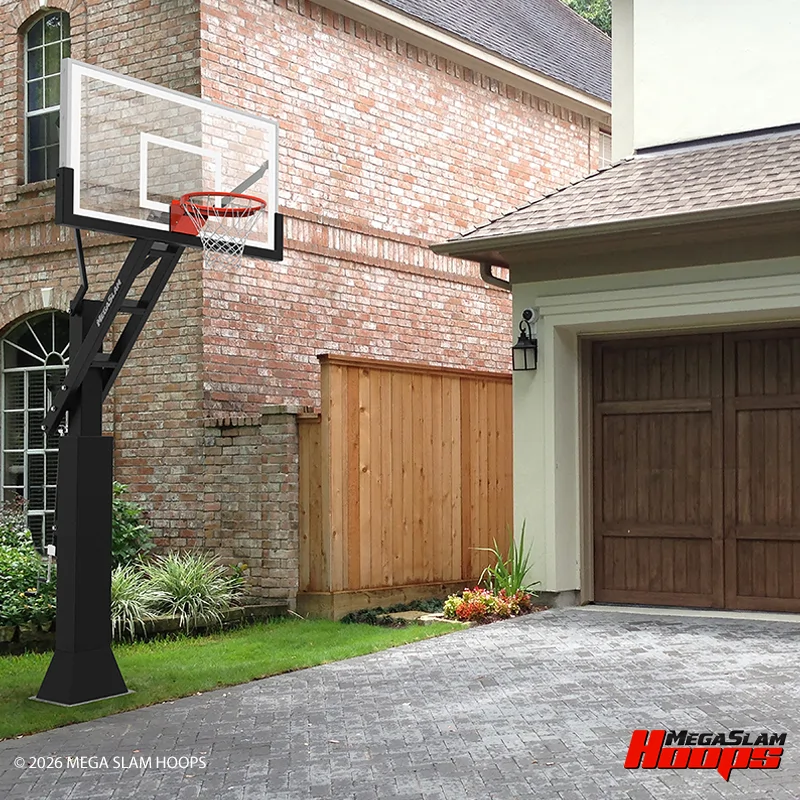
The Mega Slam 60, for example, is installed on a concrete anchor that is assembled and set in place when the foundation is poured, as shown in our walkthrough of basketball hoop concrete anchor installation.
MEGA SLAM INSTALLATION SYSTEM
Mega Slam Hoops uses a J-bolt anchor system embedded in a concrete foundation, allowing the basketball system to be unbolted and relocated without removing the original footing.
A compatible anchor kit and properly prepared foundation are required at the new location. For a closer look at how the system is installed, see our guide to basketball hoop concrete anchor installation.
Always follow the manufacturer’s model-specific instructions when planning a relocation.
How to Remove an In-Ground Basketball Hoop
If you’re figuring out how to remove an in-ground basketball hoop, start with your paperwork before your tools. The general process looks like this:
- Identify the hoop model and installation method. Check your manual, receipts, or labels on the pole or base, or ask the manufacturer.
- Check the manufacturer’s removal or disassembly instructions. They’re your best guide to the correct order of steps.
- Plan for safe handling of components. Determine which parts need to be secured or removed according to the manufacturer’s instructions, and arrange appropriate assistance or lifting equipment when necessary.
- Determine how the support system connects to the foundation. Is the pole cast into concrete, seated in a sleeve, or bolted to an anchor?
- Decide whether the existing concrete or anchor can stay. You may not need to remove the footing at all, depending on your plans for the space.
- Get professional help when the job calls for it. Heavy components, structural cutting, and significant concrete demolition are good reasons to bring in a qualified installer or contractor.
Direct-set poles
Direct-set poles are embedded directly in the concrete footing. Removing them may involve cutting or extracting the pole and potentially removing part of the foundation. Because this work involves heavy materials and specialized tools, professional assistance is often appropriate.
Sleeve and anchor-mounted systems
The removal procedure depends on the specific hardware and the manufacturer’s instructions. Reviewing the basketball hoop installation process for your model can give you a clearer picture of how it’s designed to come apart.
What Happens to the Concrete or Anchor After the Hoop Is Removed?
Once an in-ground basketball hoop has been removed, what happens to the existing foundation depends on the installation type and how you plan to use the space.
There are four main options to consider:
- Leave the foundation in place for future use. If you plan to install another compatible hoop in the same location, keeping the existing anchor or sleeve may save additional work.
- Cover or secure the unused installation point. Exposed anchor bolts or an open sleeve can create tripping hazards. Make sure the area is secured appropriately, especially if children regularly use the space.
- Remove the concrete footing. If you’re restoring a driveway, patio, or lawn, the existing concrete foundation may need to be removed. This can require specialized equipment or professional assistance.
- Prepare a new foundation for relocation. If you’re moving the hoop, the new location will generally need a foundation and compatible mounting hardware that meet the manufacturer’s installation requirements.
Before digging: In the U.S., contact 811 to arrange for underground utilities to be marked. Outside the U.S., follow the equivalent local utility notification requirements.
Removing a concrete footing can be a significant project, particularly when the surrounding surface needs repair or restoration. A qualified contractor can help assess the work involved.
Is Moving the Hoop Worth It or Should You Replace It?
Whether it’s worth moving your basketball hoop depends on its condition, installation type, and the cost of relocating it compared with purchasing a new system.
When Moving Your Basketball Hoop Makes Sense
Relocating your existing hoop may be the better option when:
- The system is in good condition. The pole, backboard, rim, and supporting components show no significant structural damage.
- Compatible installation hardware is available. You can obtain the correct anchor kit or sleeve for the new location.
- The system is designed for practical disassembly. The manufacturer’s instructions support removing and reinstalling the hoop.
- Relocation costs are reasonable. Transportation, new foundation work, and professional installation cost less than replacing the system.
When Replacing Your Basketball Hoop Makes More Sense
Purchasing a new system may be more practical when:
- Major components are damaged. The hoop shows significant corrosion, deformation, or structural deterioration.
- Replacement hardware is unavailable. You cannot obtain compatible components for a new installation.
- Relocation is too complex or expensive. The combined cost of removal, transportation, and reinstallation approaches the price of a new hoop.
- You’re already planning an upgrade. A new system may better suit your court or playing needs.
If replacement turns out to be the better path, our basketball hoop buying guide walks through what to look for in a new system, including installation design, which affects how easy your next hoop will be to move.
What to Do With an Old Basketball Hoop
If you’re removing an in-ground basketball hoop and don’t plan to reinstall it, there are several ways to handle the old system, depending on its condition.
- Reuse compatible components. If the backboard, rim, or other parts are still in good condition, they may be suitable for another compatible setup. Always verify that reused components meet the new system’s requirements.
- Sell or donate the hoop. A structurally sound basketball hoop may be useful to another family, school, or community organization. Be transparent about its condition and any installation requirements.
- Recycle or dispose of damaged components. Contact local recycling or waste management services to confirm which materials they accept and how larger components should be handled.
Setting Up at a New Location?
Whether you’re relocating your existing hoop or installing a replacement, a properly prepared foundation is essential. Explore our Basketball Hoop Installation Guide for installation resources and model-specific guidance.