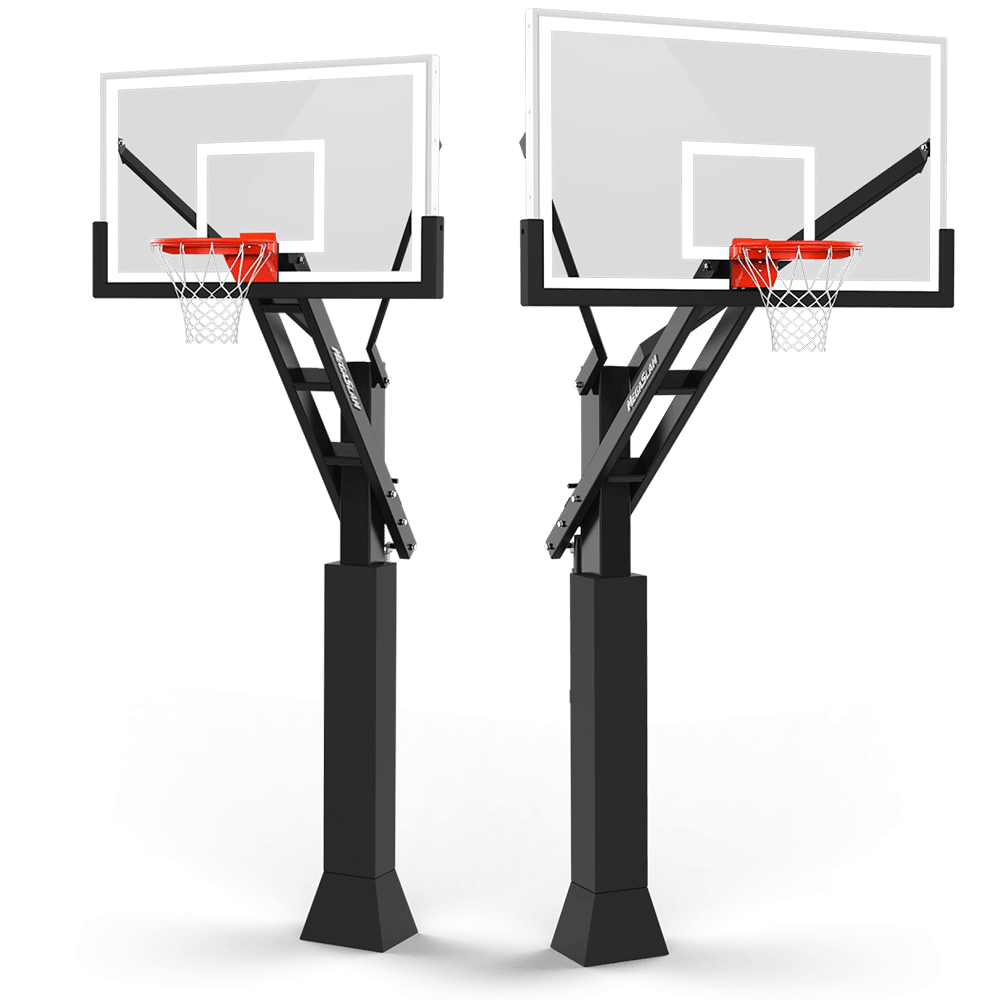
Knowing how to clean a basketball backboard saves you from the most common mistake owners make: grabbing the wrong cleaner. The job takes about 10 minutes with mild soap, water, and a soft cloth. Keep abrasive cleaners and rough materials away from acrylic and polycarbonate boards, because they scratch and cloud the surface permanently. The rest of your hoop needs attention too, but not much. Basic annual maintenance covers the hardware, the pole coating, and the rim. This guide covers backboard cleaning by material and gives you a complete annual maintenance checklist.
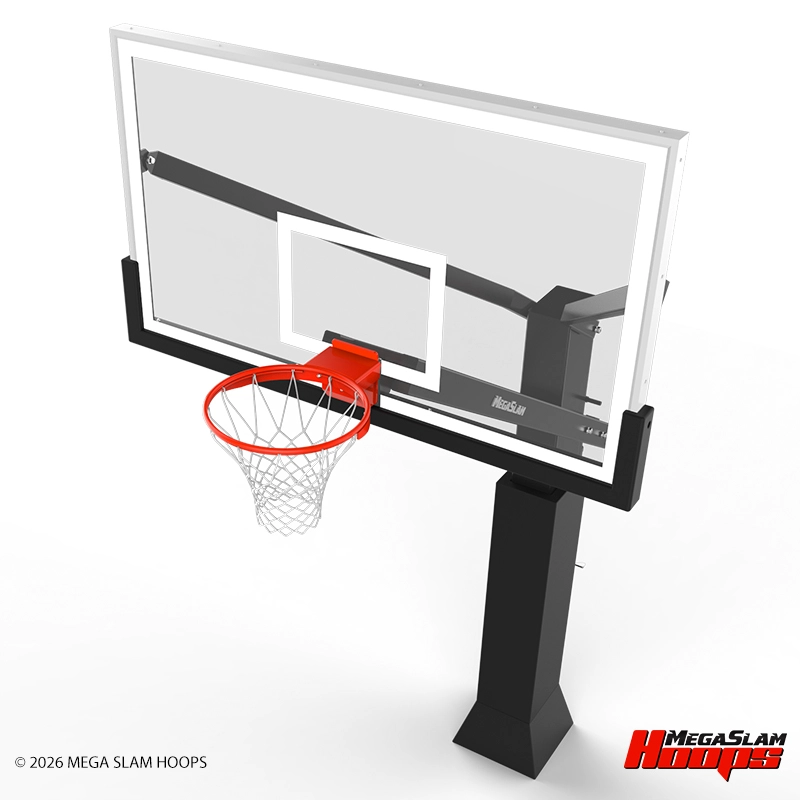
How to Clean a Basketball Backboard
Start by rinsing loose dirt off with a garden hose on a gentle setting. This keeps grit from getting dragged across the surface when you wipe. Use a stable ladder, and never lean it against the backboard itself. Work from the top down so dirty water doesn’t run over areas you’ve already cleaned. From there, the right method depends on your specific backboard. Not sure which material you have? Our backboard materials guide explains how to tell them apart.
Tempered Glass
- Use: a mild dish soap mixed with warm water, applied with a lint-free microfiber cloth
- Avoid: abrasive pads, steel wool, and strong ammonia-based cleaners
- Wipe off bird droppings, pollen, and grime promptly. Left to bake in the sun, they can stain the glass and become much harder to remove.
- Dry with a clean microfiber cloth to prevent water spots.
Acrylic
- Use: mild soap and water with a soft microfiber cloth only
- Avoid: ammonia based cleaners, anything abrasive, including paper towels. Acrylic scratches very easily, and cloudy scratches cannot be removed.
- For light surface scratches, a plastic polish designed for acrylic can reduce their appearance.
- Clean monthly. Regular, gentle cleaning keeps the board clear and looking good for longer.
Polycarbonate
- Use: mild soap and water with a soft cloth
- Avoid: solvent-based cleaners such as acetone and alcohol, which degrade polycarbonate
- Clean as needed. Polycarbonate is more resilient than acrylic, so it tolerates a less frequent schedule.
Basketball Hoop Maintenance Checklist
A quality in-ground system like a Mega Slam Hoops hoop is built to handle years of play and weather, but a little basketball hoop maintenance each year keeps it that way. Routine care is one of the biggest factors in how long a basketball hoop lasts. Work through this list once a year:
- Inspect and re-tighten all bolts and fasteners. Temperature swings and regular play loosen hardware gradually. Tighten each nut with a socket wrench until it is snug. Don’t overtighten the pivot points as it could affect adjustability.
- Check the powder coat finish for chips or scratches. Touch up exposed metal immediately, before rust can start and creep under the surrounding finish.
- Inspect the rim for bending and test the breakaway spring. Push down on the rim. It should return to level under its own spring tension. If it sags or sticks, the spring needs attention. For more on how these systems work, see our guide to breakaway rim technology.
- Replace the net if it’s frayed, stretched, or knotted. A fresh net is inexpensive and makes the whole system look sharper.
- Clean the backboard using the method for your material described above.
- Check the concrete footing for cracking, heaving, or separation where the pole meets the base. Catching these early is far easier than correcting a leaning pole later. If the system appears out of level, consult the manufacturer’s instructions and our guide to basketball hoop alignment and calibration.
- Inspect the extension arm welds and hardware for signs of fatigue or corrosion, such as hairline cracks or rust streaks.
This checklist takes 30 to 45 minutes once per year and prevents problems that would otherwise require part replacement. If you deal with hard freezes, pair it with our guide to weatherproofing your basketball hoop.
What Not to Use on a Basketball Backboard
Keep this quick reference handy before you grab anything from under the sink:
- Never use: steel wool, abrasive scouring pads, melamine “magic” erasers, or rough cloths on any backboard
- Never use on acrylic or polycarbonate: acetone, turpentine, or alcohol-based solvents
- Avoid: pressure washers at close range.
- Avoid: strong ammonia-based glass cleaners on acrylic
- Avoid: bleach sprays and heavy degreasers. They’re more than the job needs and can dull painted lines.
When in doubt, go back to mild soap, water, and a soft cloth. That combination is safe on every backboard material.
Frequently Asked Questions
Can you use Windex on a basketball backboard?
On tempered glass or acrylic, skip standard Windex and other ammonia-based cleaners. Use mild soap and water or an ammonia-free cleaner made for plastics instead.
How do I remove scratches from an acrylic basketball backboard?
A plastic polish designed for acrylic can reduce the appearance of light surface scratches. Deep or cloudy scratches can’t be fully removed, so prevention with soft cloths and gentle cleaners matters most.
How often should I maintain my basketball hoop?
Run through the full maintenance checklist once a year. Clean the backboard monthly for acrylic, or as needed for glass and polycarbonate.