Are expensive basketball hoops worth it? For serious or regular players, yes, without question. For a five-year-old who plays twice a month, maybe not. The honest answer depends on who is using the hoop, how often, and what they actually expect from it.
This guide breaks down the real differences across three price tiers, from $250 big-box-store systems to $2500-plus premium builds. You will see what you actually get for your money in terms of materials, stability, durability, and playing experience, so you can make a decision that holds up five years from now, not just on delivery day.
What the Price Tiers Actually Look Like
Before getting into specifics, here is how the market breaks down:
- Budget: roughly $250-$499
- Mid-range: roughly $500-$2,000
- Premium: $2,500 and above
“Expensive” is relative. A $3,200 Mega Slam system looks like a big number next to a $499 option at a discount retailer. In the context of the full basketball hoop market, that same $350 system is solidly mid-range. Knowing where each tier sits helps you evaluate what you are actually comparing.
| Factor | Budget ($250–$499) | Mid-Range ($500–$1,999) | Premium ($2,500+) |
|---|---|---|---|
| Backboard material | 3/8″ acrylic or polycarbonate plastic | 3/8” – 1/2″ acrylic composite or entry-level tempered glass | ½” tempered glass |
| Pole diameter / system | Single 2.5″ round pole | 2-piece 3″-6” square pole | 1-piece 8” – 12 ” square pole |
| Base weight when filled | 40–75 lbs | N/A | N/A |
| Rim type | Single-spring fixed rim | Double-spring or entry breakaway | Pro-style breakaway |
| Height adjustment | Manual pin-lock | Telescoping crank | Infinite or pneumatic |
| Backboard size | 44″–48″ | 48″–54″ | 54″–60″ |
| Warranty length | 90 days–1 year | 1–3 years | 5 years or lifetime on select components |
| Expected lifespan | 2–3 seasons | 5–6 years | 10+ years with basic care |
| Best suited for | Young children, occasional use | Families, teen players, regular use | Serious players, daily use, multi-player households |
The Real Differences: 7 Things Price Actually Buys You
1. Backboard Material and Rebound Quality
Budget hoops ship with polycarbonate plastic or thin acrylic, typically 3/8″ thick. Both materials are UV-sensitive, meaning they yellow and warp over time. More importantly, thin backboards flex on contact, which produces an inconsistent, deadened rebound. The ball does not come back where you expect it.
Mid-range systems step up to 1/2″ acrylic composite, and some include entry-level 3/8” tempered glass. Premium systems use 10mm or thicker tempered glass, the same material used in gym and arena installations. Regulation ½” glass backboards return the ball predictably on every shot, from corner bank shots to direct center hits.
For a serious player working on bank shots, mid-range glass, the kind found in Mega Slam’s systems, is a genuine upgrade. The difference shows up in the first ten minutes. For a seven-year-old learning to shoot for the first time, thin acrylic is fine. The backboard is not the limiting factor at that skill level.
2. Pole System and Stability
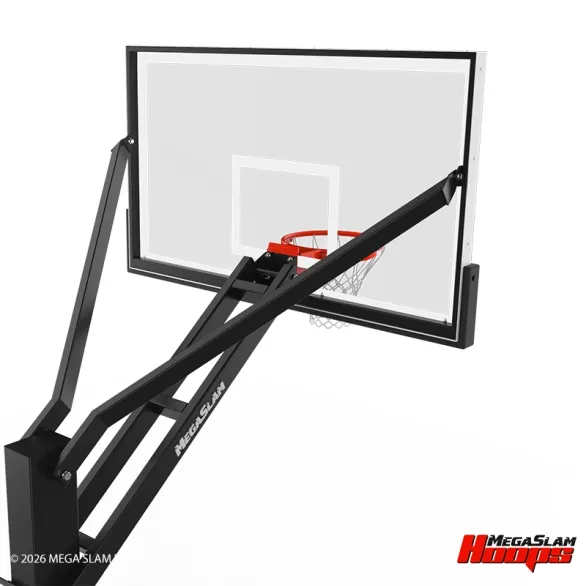
Pole wobble is the single most common complaint in one-star reviews of budget basketball hoops. Budget systems use a single 2.5″ round steel pole. On hard layups and any kind of rim contact, you feel the system shake. It is distracting, and over time it accelerates wear at every connection point.
Mid-range systems use 2-piece 4″ square poles. Square poles are significantly stiffer than round poles of the same diameter, because the geometry resists lateral flex more effectively. Premium systems use 1-piece poles at 8″ or even 12” which are used in installations where the hoop is getting heavy daily use. In this environment, having maximum rigidity is paramount.
Base fill weight also matters, separate from pole spec. Sand adds more weight per volume than water, which improves stability at the base level regardless of what pole sits on top of it. If you are considering a portable system, in-ground installation eliminates base stability concerns entirely. That comparison is worth its own research if you are still deciding between portable and in-ground.

3. Rim and Net Quality
Budget hoops use single-spring fixed rims. They flex slightly on contact but do not return properly to position over time, and they are not rated for dunking. If a player puts real force through a single-spring rim repeatedly, the connection between the rim and backboard takes the stress directly.
Mid-range and premium systems use double-spring or full breakaway rims. A breakaway rim absorbs the downward force of a dunk or hard slam and releases it through the spring mechanism rather than transferring it into the backboard and pole. That protects your investment and makes the playing experience feel closer to a gym environment.
Net quality follows the same pattern. Budget nylon nets degrade in UV and wet weather within a single outdoor season. Mid-range and premium systems use heavier-gauge nylon or all-weather netting that holds shape and color across multiple years. It is a small detail that matters every time you pick up the ball.
One clear rule: if dunking is part of the plan, a single-spring rim is a poor investment at any price. Get a breakaway or do not bother.
4. Height Adjustment Mechanism
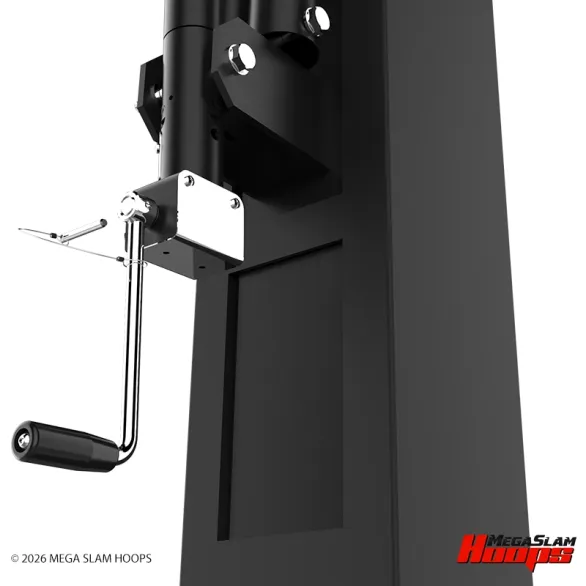
Budget systems use manual pin-lock adjustment. You lift the pole section by hand, find the right hole, and insert the pin. It requires two people for most families and enough effort that most people set it once and leave it. That works fine if one player uses the hoop and never changes their preferred height.
Telescoping crank adjusters, standard at mid-range, let one person adjust height in under a minute without tools. For a family with a ten-year-old and a fifteen-year-old, that matters every time they go outside. Premium systems add infinite height adjustment or pneumatic mechanisms that allow on-the-fly changes between players.
If your household has one player at one height who is not growing much, spend your money on the backboard and rim instead. If multiple people use the hoop at different heights, a crank adjuster is worth prioritizing.
5. Base Weight and Wind Resistance
A budget portable hoop base holds 20 to 35 lbs of fill. In calm conditions, that is workable. In any real wind, or under force from a hard drive to the basket, those systems move. Sometimes they tip and can cause serious injury or property damage.
Mid-range systems hold 40 to 60 lbs. Premium portable systems engineer bases for 60 to 120 lbs of fill, often with a lower center of gravity and anti-tip geometry built into the base design. In-ground systems have no base concern at all.
A tipping hoop is a real safety hazard, not a minor inconvenience, particularly around children or in areas where the system is not monitored constantly. This is not something to overstate, but it is not something to skip when you are evaluating which system to buy.
6. Durability and Weather Resistance
Budget hoops use thin powder coating over lower-grade steel. In wet climates or anywhere the system sits through multiple seasons of rain, that coating fails and rust follows. UV-sensitive plastic components fade and crack. Most budget systems have a realistic outdoor lifespan of two to four seasons with typical use.
Premium systems, and mid-range systems from quality manufacturers, use heavy-gauge steel with proper galvanization, UV-stabilized backboard materials, and hardware designed for long-term outdoor exposure. With basic annual maintenance, these systems hold up for ten years or more.
Here is the math worth doing before you buy. A $500 hoop replaced every two years costs $250 per year. A $1,500 hoop that lasts ten years also costs $150 per year. The premium system delivers a better backboard, a proper rim, and a stable pole every single day of those ten years. That is the core answer to whether expensive basketball hoops are worth it from a long-term value perspective. You are not paying more. You are paying the same, for something that actually holds up.
7. Warranty and After-Sale Support
Warranty length is a reasonable signal for how confident a manufacturer is in what they built. Budget systems typically offer 90 days to one year, limited to manufacturing defects. If the hoop rusts in year two, that is your problem.
Mid-range systems typically carry 1-3 year warranties. Premium systems back their products with three to five years or lifetime coverage on select structural components. Mega Slam backs its systems with a lifetime structural warranty on poles and structural components, which reflects the build standard those products are designed to maintain. If something fails under normal use, you have a path to resolution.
When you are comparing systems, pull up the warranty terms before you finalize the decision. The fine print tells you a lot about the product before it arrives.
Who Should Stick with a Budget Hoop
Not every buyer needs a premium system. A Mega Slam hoop is genuinely the wrong choice in some situations, and being clear about that matters.
A child between four and eight years old, still figuring out whether they like basketball, is fine with a $500 portable system. The limitations of the backboard and rim are irrelevant at that skill level. First-time buyers unsure whether their child will stick with the sport have no reason to commit to a mid-range or premium purchase before that question is answered.
Renters, or anyone in a temporary living situation, often cannot justify a larger outdoor installation they may not be able to take with them. And if the budget ceiling is firm at $500 with no flexibility, the best budget option available may be the right call. However, make sure you fully understand the hidden costs associated with entry level hoops.
That said, anyone in this group who can stretch to $2500 will notice a real difference in stability and build quality. It is worth a second look at the budget before defaulting to the cheapest option on the shelf.
Who Should Invest in a Premium System
Think about who is actually going to use this hoop, not just who is asking for it right now.
A teenager practicing multiple times a week who wants to train on something that matches gym conditions is a clear candidate for a mid-range to premium system. A family with two or three players at different ages who will use the hoop daily will get value from a crank adjuster, a solid backboard, and a breakaway rim every single session. An adult player returning to the game who wants a setup that matches their skill level is not well served by a single-spring rim and a wobbly pole.
Anyone who has already replaced one cheap hoop is a strong candidate for stepping up. The math on the replacement cycle only has to play out once before a better system looks like the obvious choice. And anyone installing permanently in a driveway or backyard, where longevity is the priority from day one, should not be looking at budget-tier systems at all.
Mega Slam’s in-ground systems in the $2200 range are built specifically for this buyer: serious enough use to make a budget system frustrating, not yet ready to a regulation sized in-ground installation. The 54″ tempered glass backboard, 5″ square pole, and breakaway rim on systems like the Mega Slam 54 deliver a playing experience that holds up under daily use, in all seasons.
FAQ
Are expensive basketball hoops worth it?
For regular players, yes. A premium or mid-range basketball hoop delivers a meaningfully better playing experience through a consistent glass backboard, a breakaway rim, and a stable pole system, and it does so for 10 or more years. A $500 hoop replaced every two seasons costs the same per year as a $2500 system that lasts a decade. For occasional players or very young children, a budget system is a reasonable starting point.
What is the difference between a cheap and expensive basketball hoop?
The main differences are backboard thickness and material (plastic versus tempered glass), pole diameter and stability (2.5″ round versus 8″ square), rim type (single-spring versus breakaway), and weather resistance. A budget hoop at $500 uses thin acrylic and a single-spring rim that degrades within a few seasons. A professional grade system like those in Mega Slam’s lineup uses tempered glass, a proper breakaway rim, and a pole built to stay stable under real use.
How much should I spend on a basketball hoop?
For most families with players ages 10 and up who will use the hoop regularly, $2500 is the sweet spot. You get a breakaway rim, a stable 6″ pole, a quality backboard, and crank height adjustment at this price point. Under $1500 is appropriate for young children or first-time buyers who are unsure about long-term interest. Above $2500 makes sense for serious teen athletes or households where the hoop will see daily use by multiple players.
Do more expensive basketball hoops have better rebound?
Yes, and the difference is noticeable from the first session. Budget backboards use 3/8″ acrylic that flexes on contact and produces a deadened, inconsistent rebound. Premium systems use ½” tempered glass, which returns the ball predictably on every shot angle. Mid-range systems with quality acrylic composite or entry-level glass sit between the two. For any player working on bank shots or consistent shooting mechanics, the backboard material matters.
How long do basketball hoops last?
Budget systems typically last two to three seasons outdoors with regular use before rust, UV damage, and component wear become real problems. Mid-range systems from quality manufacturers last five to eight years. Premium systems, including Mega Slam’s lineup, are built for 10 or more years with basic care. Warranty length is a useful indicator: 90 days signals low confidence; a 3-year structural warranty, like the one Mega Slam offers, signals a product built to last.
The Right Hoop for the Right Player
Expensive basketball hoops are worth it if the player is going to use them. They are not worth it if the hoop sits in the driveway twice a month. That is the honest answer, and it is the one that actually helps you make a good decision.
For most families with players who take the game seriously, the $2200-$2500 range delivers everything you need. Mega Slam’s lineup sits squarely in that range, with the build quality to back up the price.
Browse Mega Slam’s full lineup to find the right system for your game.