A backyard basketball court gives you something few home improvements can match: a place that gets used year-round. You can walk outside for a quick shooting session, organize family games on weekends, or create a dedicated training space without booking court time or paying ongoing facility fees.
Many homeowners assume building a backyard basketball court is complicated or only realistic for large properties. In reality, most projects become manageable once you break them into clear planning steps. From measuring your available space to choosing a surface and selecting the right hoop system, each decision builds on the last.
So how do you plan and build a backyard basketball court from scratch? Start by understanding your available space, establish a realistic budget, choose the right court surface and hoop, and work through installation one phase at a time.
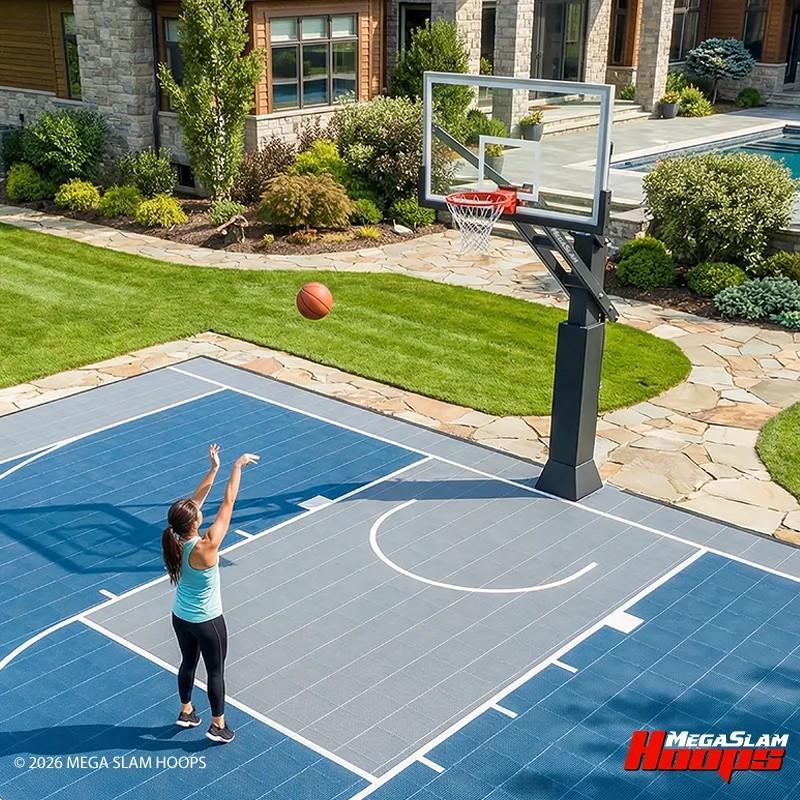
Is a Backyard Basketball Court Worth It?
For many homeowners, the answer is yes.
A basic half-court installation may cost anywhere from $15,000, while larger custom full courts can cost up to $80,000 depending on site conditions, surface materials, and additional features.
Although the upfront investment is significant, it often compares favorably to years of gym memberships, training fees, court rentals, and travel time. More importantly, you create a recreational space that is available whenever you want to use it.
A backyard court can also enhance the appeal of your property. While a basketball court does not automatically increase home value dollar for dollar, a well-designed outdoor recreation area can be attractive to future buyers.
The people who benefit most include:
- Families with children who want active outdoor recreation
- Serious players looking for convenient practice opportunities
- Households interested in a multi-sport court backyard setup
- Homeowners who regularly host friends and family gatherings
If your goal is creating a space that encourages activity and gets consistent use, a backyard basketball court is often one of the most practical recreational investments you can make.
How Much Space Do You Need?
Space requirements depend on how you plan to use the court.
A full NBA court is far larger than most residential properties can accommodate, but many homeowners successfully build half courts and practice areas.
| Court Type | Recommended Dimensions |
|---|---|
| Full Court (Residential Equivalent) | 50 ft x 80 ft |
| Half Court | Approximately 30 ft x 50 ft |
| Practice Area | As small as 30 ft x 30 ft |
In addition to the playing area, allow at least:
- 2 feet of clearance on each sideline
- 3 feet of clearance behind each baseline
These safety zones provide room for movement and reduce the chance of players running into landscaping, fences, or structures.
For many suburban properties, a half court is surprisingly achievable. Before making any decisions, use satellite measurement tools such as Google Maps to determine exactly how much usable space you have available. Taking measurements early helps prevent costly redesigns later in the project.
Planning Your Backyard Basketball Court
The planning phase determines how smoothly your project progresses.
1. Check Local Permits and HOA Requirements
Start by contacting your local building department and reviewing any HOA restrictions. Some communities regulate outdoor structures, fencing heights, lighting, and drainage modifications.
2. Assess Your Site
Walk the entire area and evaluate:
- Existing slope
- Drainage patterns
- Trees and landscaping
- Access for excavation equipment
- Nearby structures and utilities
A relatively flat site with good drainage will generally cost less to develop.
3. Choose Full Court or Half Court
Most homeowners find that a half court delivers the best balance of functionality and cost. If your budget and lot size allow for a larger playing surface, you can expand accordingly.
Think carefully about how the court will actually be used. Daily shooting sessions often require less space than full games.
4. Obtain Multiple Installation Quotes
Request at least two quotes from qualified installers. Ask each contractor to specify:
- Excavation requirements
- Base preparation methods
- Surface materials
- Drainage solutions
- Project timelines
Comparing proposals often reveals significant differences in scope and pricing.
5. Consider Multi-Sport Functionality
Many homeowners choose a multi sport court configuration. Adding pickleball, volleyball, or other recreational markings during construction is usually far easier than modifying the court later.
Planning these uses early allows you to optimize dimensions, line layouts, and equipment locations before construction begins.
Choosing Your Court Surface
The surface you choose affects performance, maintenance requirements, and overall comfort.
Concrete
Concrete remains the most common foundation for an outdoor basketball court. It offers exceptional durability and low maintenance requirements. Without an additional top layer, however, it can feel hard underfoot during extended play.
Asphalt
Asphalt generally costs less upfront than concrete and provides slightly more forgiveness during play. It also drains effectively when installed correctly.
Interlocking Tiles
Interlocking sport tiles are popular because they install quickly and can often be placed over existing concrete slabs. They provide excellent traction and improved comfort compared to bare concrete.
Acrylic Coatings
Acrylic coatings are applied over concrete or asphalt surfaces. They improve traction, enhance appearance, and create a more economical surfacing option.
Choosing the Right Basketball Hoop
Your hoop system becomes the centerpiece of the entire project, so this decision deserves careful attention.
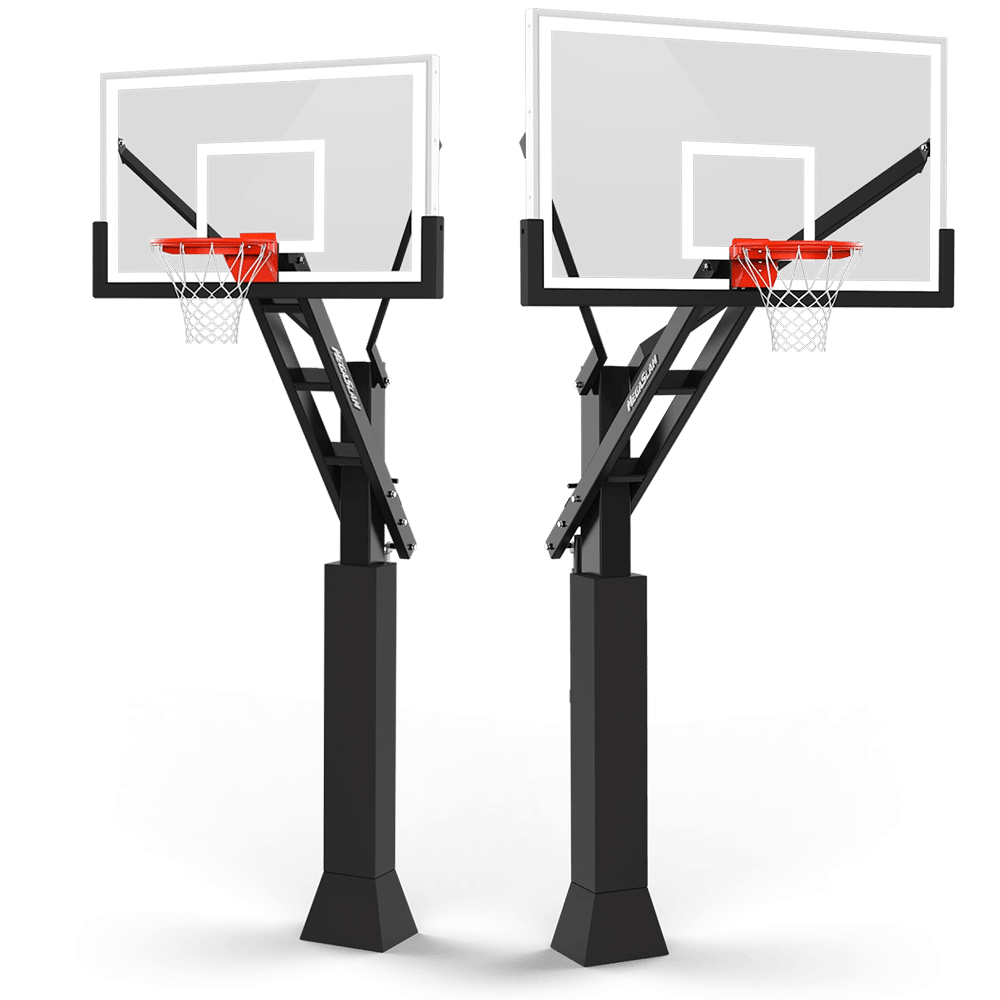
For a permanent backyard basketball court, an in-ground system is usually the preferred choice. Compared with portable systems, in-ground hoops provide superior stability, better rebound performance, and realistic court spacing.
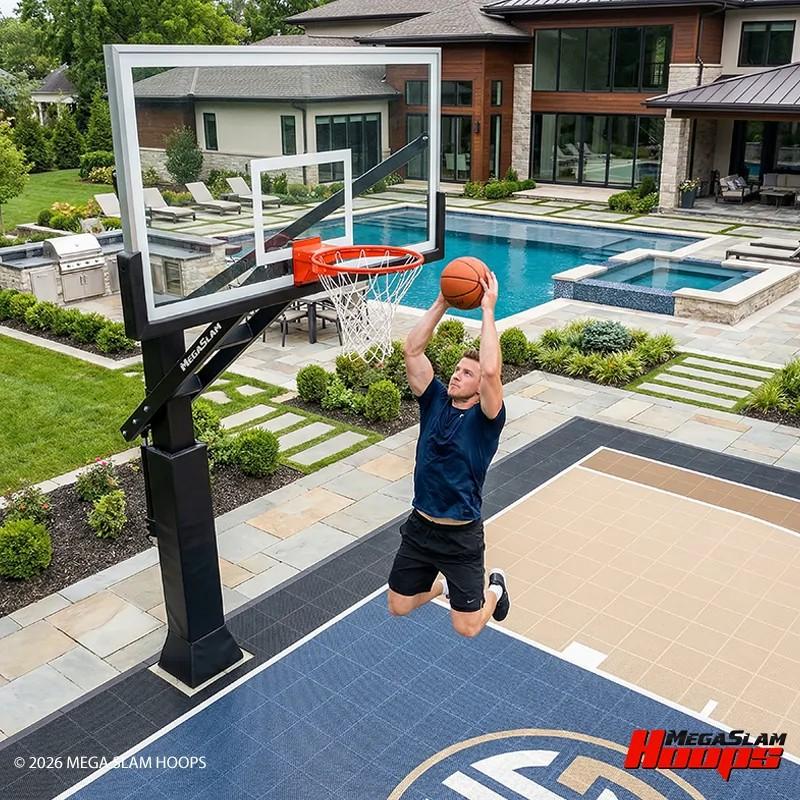
Portable systems can work for temporary use, but they typically cannot match the rigidity or regulation-style overhang that dedicated courts require.
When evaluating hoop systems, pay close attention to:
- Pole diameter and structural design
- Backboard size
- Backboard material
- Height adjustment mechanism
- Overall installation requirements
For example, premium Mega Slam Hoops systems utilize heavy-duty construction, regulation-style tempered glass backboards, and adjustable height mechanisms designed for long-term residential use. Look for specifications such as steel thickness and system weight when comparing options.
Overhang is another important factor. This refers to the distance between the pole and the backboard. Most residential courts benefit from approximately 3 to 5 feet of overhang because it creates safer play beneath the basket and more closely resembles organized basketball environments.
Installation is equally important. Most in-ground systems require substantial concrete footings and carefully prepared foundations. While some homeowners choose the DIY route, professional installation often ensures proper alignment, footing depth, and long-term stability.
A great surface paired with an undersized or unstable hoop can limit the entire court experience. Prioritize the hoop as carefully as you prioritize the playing surface.
Marking the Court
Court markings can be installed using paint, traffic tape, or permanent inlaid line systems. For most residential projects, painted lines provide the best balance of appearance and cost.
Common basketball markings include:
- Three-point arc
- Free throw line
- Key or paint area
- Half-court line
- Center circle
If you’re creating a multi-sport court, use different line colors for each activity. This makes the court easier to understand and reduces visual clutter during play.
For layout assistance, review court dimensions to properly plan.
Lighting, Fencing, and Add-Ons
The right accessories can significantly increase court usability.
LED floodlights are one of the most valuable upgrades because they extend play well into the evening. Most systems are mounted at approximately 17 – 20 feet to provide broad, even illumination.
Fencing or ball-stop netting helps contain missed shots and keeps play within the court area. Heights vary by site, but taller netting is often beneficial behind baskets.
For family-oriented courts, consider:
- Benches and seating areas
- Shade structures
- Water stations
For performance-focused setups, add-ons such as shot clocks and rebounding systems can help create a more structured training environment.
What Does a Backyard Basketball Court Cost?
Costs vary significantly based on location, site conditions, and design choices. Typical budget categories include:
Site Preparation and Leveling
Sometimes extensive dirt work and grading is necessary depending on grading requirements, excavation, and drainage work.
Surface Installation
Concrete, asphalt, tile systems, and specialty coatings all have different price points. Surface installation may range from $2 – $8 per sqaure foot.
Basketball Hoop and Installation
Premium in-ground systems and professional installation can range from $2,200 – $3,200.
Court Markings
Line striping and custom graphics generally vary depending on complexity and design.
Optional Features
Lighting, fencing, landscaping, seating, and training accessories can add to your construction costs also.
The biggest cost drivers are site conditions, court size, surface selection, and accessory upgrades. Obtaining multiple quotes helps you understand local pricing and avoid surprises during construction.
Frequently Asked Questions
How long does it take to build a backyard basketball court?
Most projects take 4-6 weeks from planning to completion. Site preparation, permitting, weather, and surface curing times all affect the schedule.
Do I need a permit to build a backyard basketball court?
Permit requirements vary by municipality. Some locations require permits for grading, lighting, fencing, or large concrete installations, while others do not.
What is the best surface for a backyard basketball court?
The best surface depends on your budget and performance goals. Many homeowners choose concrete foundations combined with sport tiles or specialty coatings for improved playability.
Can you build a basketball court on grass?
Not directly. Grass must be removed and replaced with a properly prepared base before installing a durable basketball surface.
What size half court fits in a backyard?
A half court measuring approximately 30 feet by 30 feet fits many residential properties and provides enough space for shooting, practice drills, and casual games.