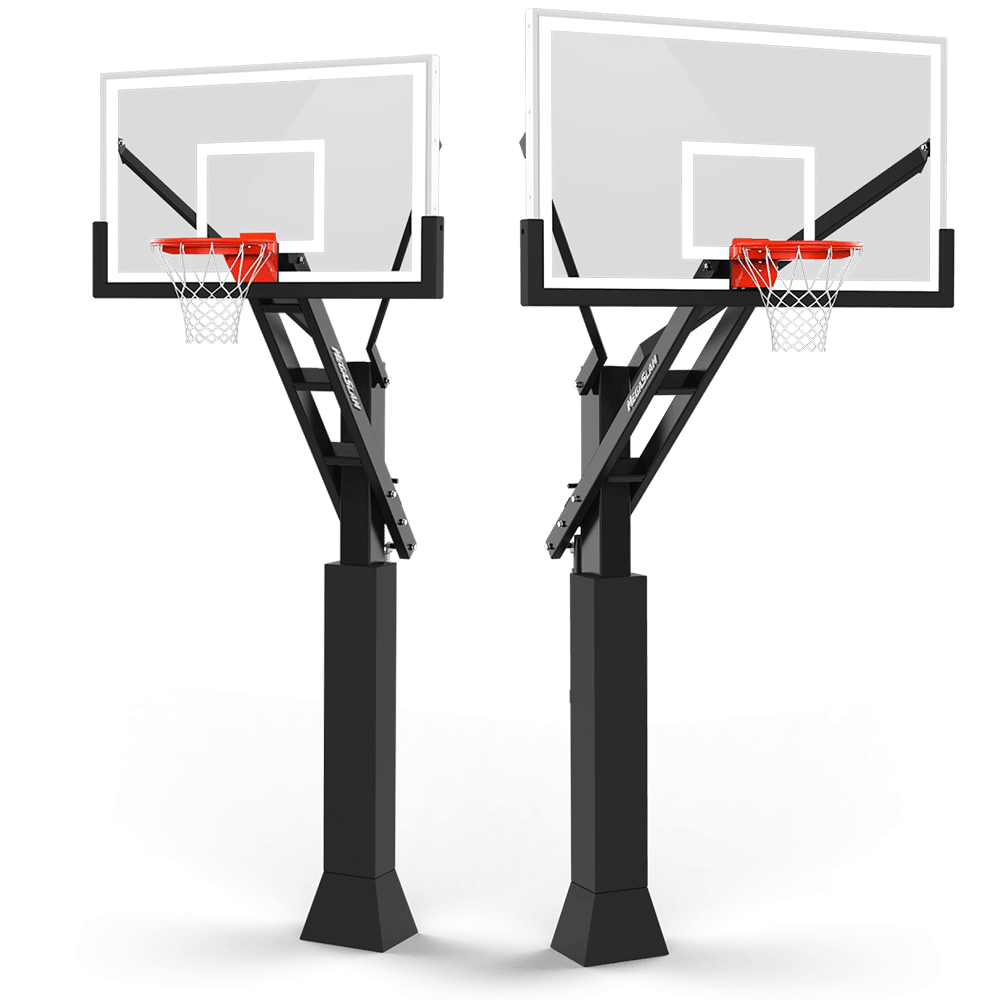
For most home courts, a 54-inch backboard is a practical starting point, while 60-inch and 72-inch boards give more playing surface for bank shots and rebounds. Regulation size, the kind used in the NBA, FIBA, and NCAA, is 72 inches. Most serious home players land somewhere between those two numbers, and the right choice depends on who’s using the hoop and how often.
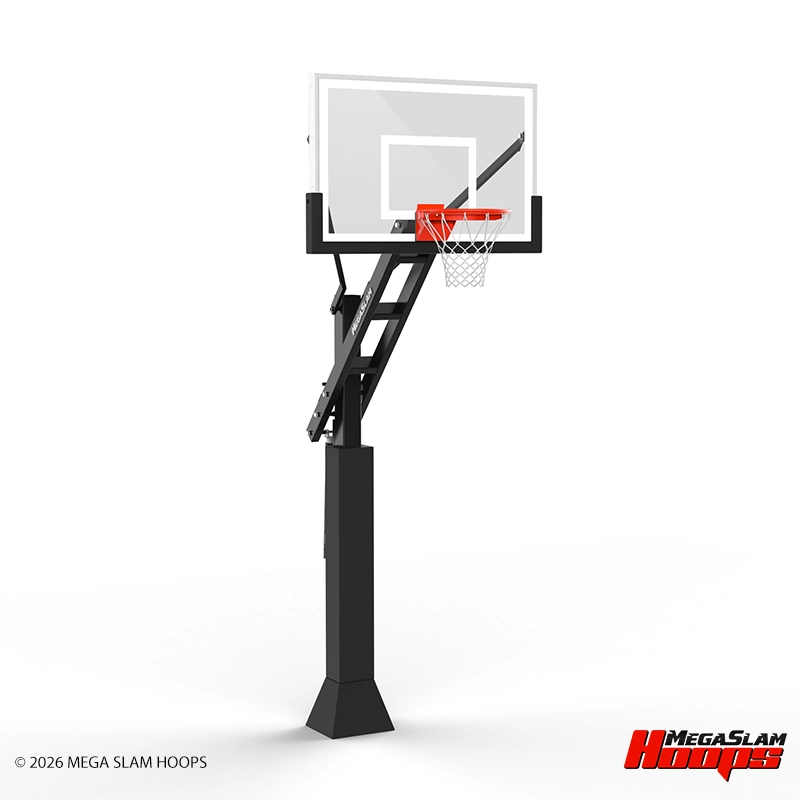
Backboard size and material affect more than looks. They change how the ball responds off the backboard, how forgiving your rebounds are, and how long the board holds up through hot summers and winter cold snaps. Choosing the wrong size or material can leave you with less playing surface than you need or features that don’t match how often the hoop will be used.
This guide covers what those size and material differences actually mean for your game, so you can buy a backboard that matches how you play instead of guessing.
Basketball Backboard Sizes and Dimensions
Backboard size affects how much usable surface players have for bank shots and rebounds, while the board’s dimensions, thickness and mounting requirements determine how it fits into the overall hoop system.
| Size | Best For | Relative Cost |
|---|---|---|
| 54 in | Recreational and family play | $$ |
| 60 in | Regular recreational and serious players | $$$ |
| 72 in | Regulation play, premium home or institutional courts | $$$$ |
A 54-inch backboard is a practical option for recreational play and younger players. It provides enough surface for general shooting practice, though more advanced players may find the smaller playing area limiting for bank shots and rebounds from wider angles.
A 60-inch backboard gives players more usable surface and greater flexibility when practicing from different positions around the court. It is a strong middle-ground option for players who use their hoop regularly but do not need a full regulation-size board.
A 72-inch backboard is regulation width and provides the largest playing surface of the three. It is commonly used for performance-focused home courts and institutional settings where a regulation-style playing experience is the priority.
Regulation basketball backboards measure 72 inches by 42 inches (183 cm by 107 cm). Residential backboards are typically smaller, with 54-inch and 60-inch options designed to fit more comfortably in driveways and home courts.
Backboard size does not determine rim height. Regulation play uses a 10-foot rim, while adjustable home systems can be lowered for younger players. See our basketball hoop height by age guide for recommended settings. A wider backboard mainly changes the amount of surface available for off-angle shots and rebounds rather than the height of the basket.
Thickness varies by material. Tempered glass and acrylic backboards commonly range from 3/8 inch to 1/2 inch, with thicker boards generally flexing less on impact and providing a more consistent ball response.
Beyond the board itself, consider the system’s mounting depth, overhang and structural support. Larger backboards place more weight on the pole and support arm, so the mounting hardware and extension length should be designed for the board size.
For a closer look at how different sizes perform side by side, see our detailed backboard size comparison.
Basketball Backboard Materials Compared
Material affects ball response, weight, durability, and price just as much as size does.
Tempered glass provides the most game-like ball response and the closest feel to what you see in professional play. Regulation 1/2 inch thick is heavy, and a premium option.
Acrylic is clear, offers good rebound response, and is lighter and more affordable than glass. The tradeoff is that acrylic can yellow over time under sustained UV exposure, which matters if your hoop sits in direct sun most of the year.
Polycarbonate is highly impact-resistant and a strong choice for high-use family courts, though it doesn’t match glass or acrylic for rebound clarity. If your backboard is going to take a beating from kids and pickup games, that durability trade often makes sense.
Fiberglass is extremely weather-resistant and opaque rather than clear. You’ll mostly see it on institutional courts rather than home setups, where visibility through the board isn’t a priority.
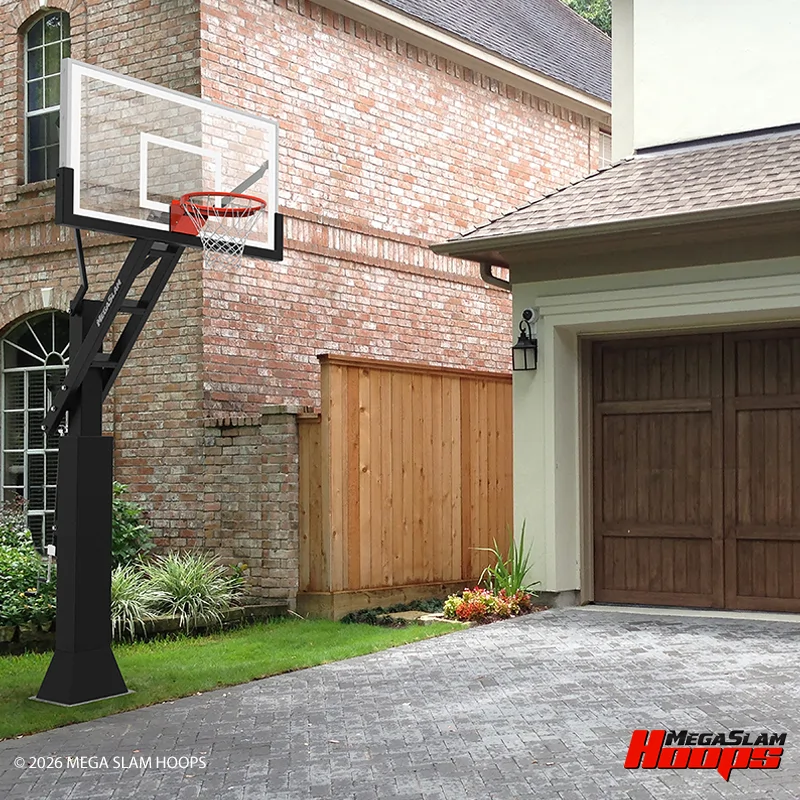
Weight matters more than most buyers expect. A larger tempered glass board puts real stress on a pole system over years of use, so if you’re mounting on an in-ground pole, confirm the system is rated to carry the board you’re pairing it with. This is one area where matching the backboard to the rest of the hoop system, rather than buying the board in isolation, makes a real difference in how long everything lasts.
For a broader look at how materials, construction and components differ across basketball hoop systems, see our cheap vs. premium basketball hoops guide.
What Backboard Should You Get?
The right backboard depends on how often the hoop will be used, who will be playing, and how closely you want the setup to match regulation play.
For casual family use, a 54-inch backboard is usually enough playing surface for recreational shooting and younger players. Acrylic or polycarbonate can also make sense when lower weight, durability or budget matter more than professional-style rebound response.
For regular recreational or serious play, a 60-inch backboard gives players more usable surface for bank shots and rebounds from different angles. Tempered glass is a strong choice when ball response and a more game-like feel are priorities.
For a performance-focused home court, a 72-inch tempered glass backboard provides regulation width and the closest feel to competitive play.
If you’re choosing between complete hoop systems rather than backboards alone, consider the backboard together with the pole, rim, overhang and adjustment range. Our basketball hoop buying guide explains how those features work together when choosing a system for your court.
Basketball Backboard Maintenance
Regular cleaning and basic inspections can help keep a basketball backboard looking good and performing as intended over time.
Clean the backboard with mild soap and water, and avoid abrasive cleaners or scouring pads that could scratch or cloud the surface, especially on acrylic or polycarbonate boards.
Periodically check the mounting hardware, support system and edge padding for visible wear, looseness or damage. If anything looks compromised, follow the manufacturer’s maintenance instructions before continuing to use the hoop.
Outdoor backboards are also exposed to sun, rain and temperature changes, so material-specific care matters. Acrylic and polycarbonate boards may show more cosmetic wear over time, while tempered glass generally requires less surface maintenance but should still be inspected for chips or cracks.
If the backboard develops significant cracking, structural damage or mounting issues, stop using the system until it can be inspected or repaired.
For broader system care, see our hoop specs and features guide for more information on poles, mounting hardware and system components.