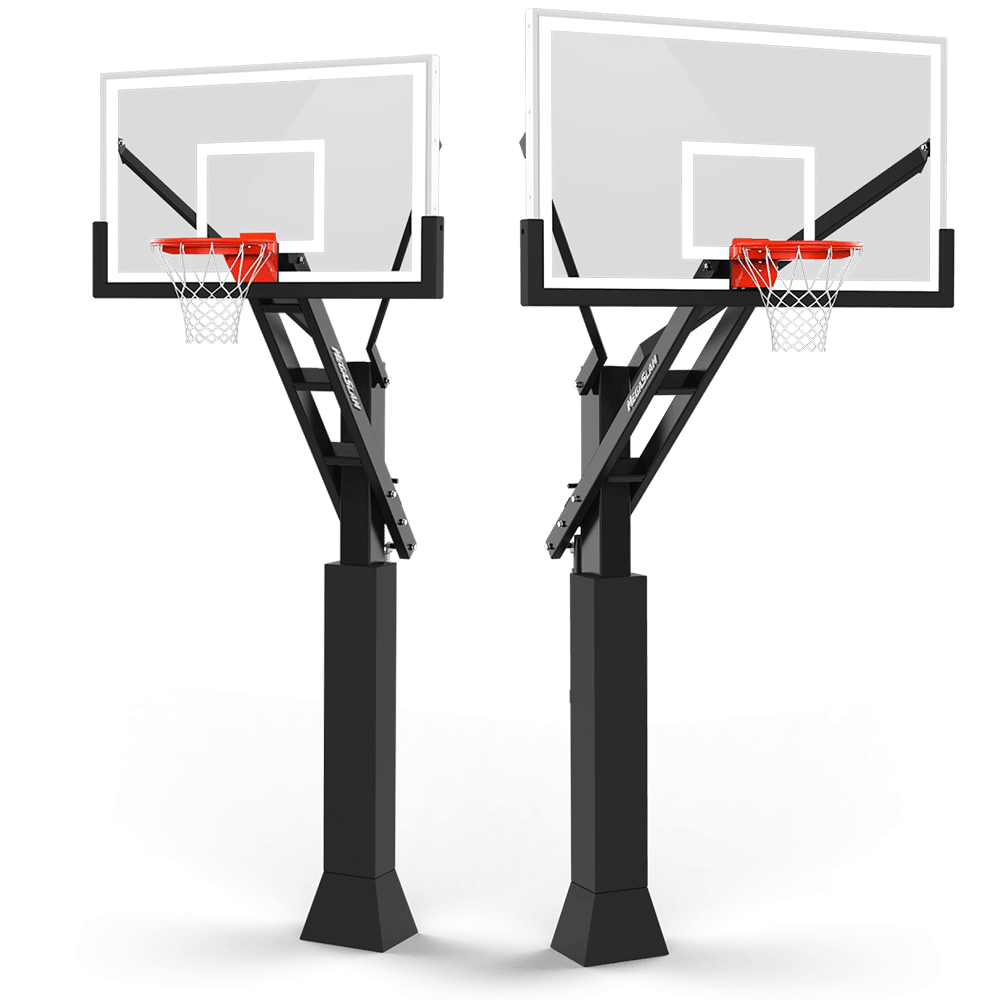
Overhang is the horizontal distance from the front face of the pole to the front face of the backboard. Get it wrong and you end up with one of two problems: a pole that crowds your driving lane, or a backboard that hangs so far into the driveway it eats into your parking or playing space. Many residential in-ground basketball hoops offer between 3 and 5 feet of overhang, depending on the model. This article covers what overhang means, how much you need for your specific setup, and what to check before you buy.
What Is Basketball Hoop Overhang?
Overhang is the horizontal distance measured from the front face of the pole to the front face of the backboard. Not every manufacturer measures it the same way: some spec sheets list overhang to the center of the backboard instead of the front face, so confirm which measurement you’re looking at before comparing two systems.
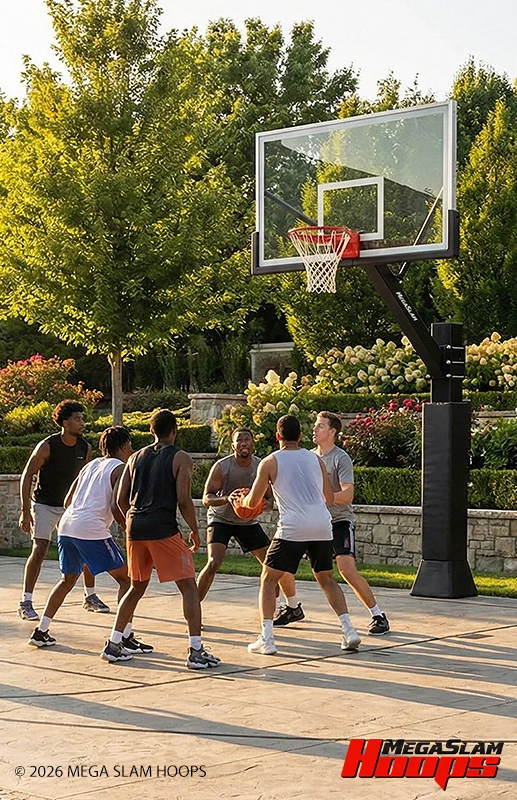
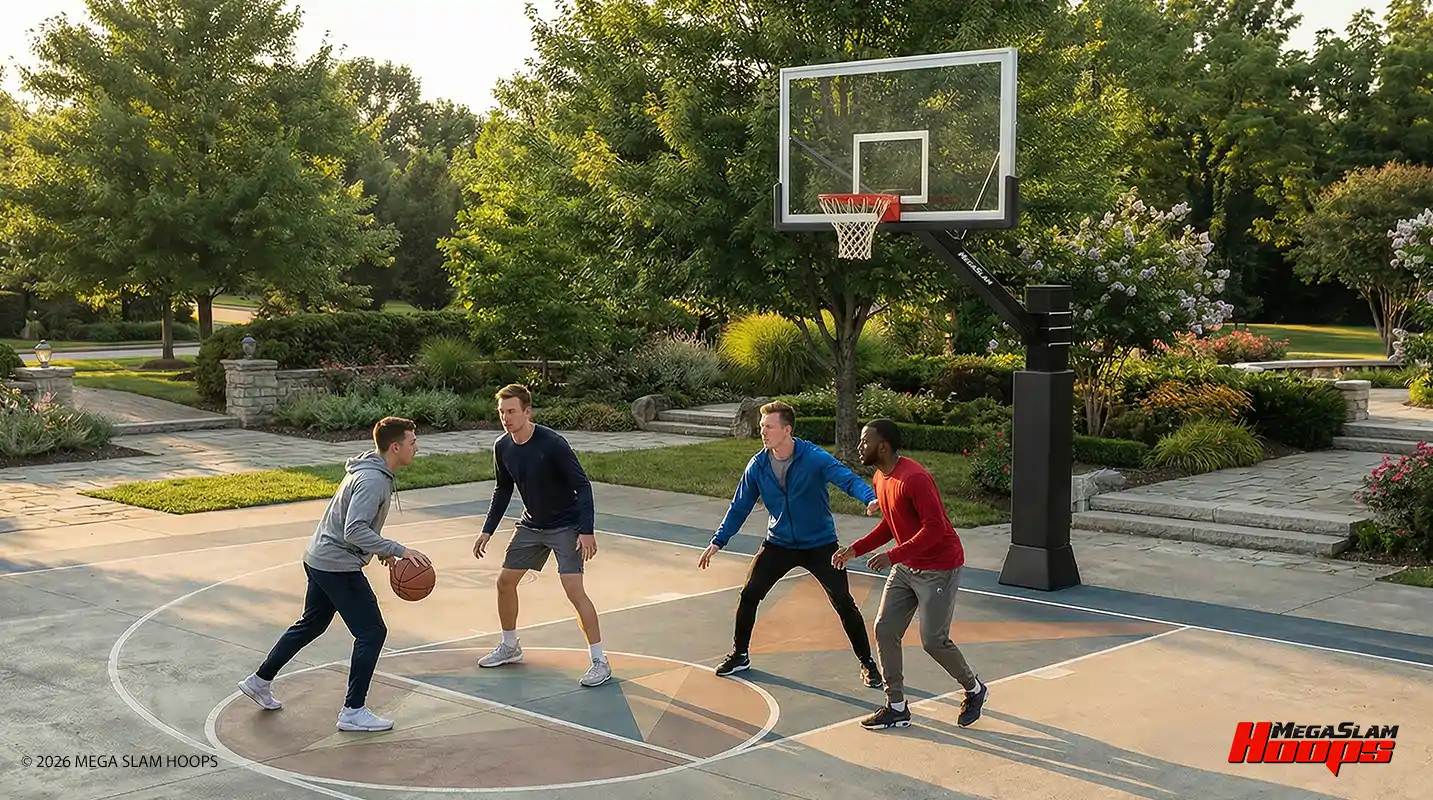
On a driveway installation, overhang determines how far the backboard sits over the playing surface. That distance directly affects how much room you have to move under the basket, drive to the rim, and finish a layup without running into the pole. On a backyard court, overhang determines whether the post sits inside or outside your playing boundary. It’s an easy detail to overlook during planning, and a hard one to fix once the pole is set in concrete. For more information on positioning your hoop, check out our basketball hoop installation guide.
How Much Overhang Do You Need?
How much overhang you need depends on where the hoop is going and who’s using it.
- Driveway, garage door behind you: aim for 3 to 4 feet. Less overhang may limit clearance when driving to the basket, so consider the position of the pole before installing.
- Dedicated backyard court: 4 feet is the standard. The post should sit outside your out-of-bounds line rather than inside it, so it doesn’t interfere with play along the baseline.
- Recreational family use: 3 feet is workable if the primary players are younger kids who aren’t driving hard to the rim yet. Adults and older kids who attack the basket regularly will be happier with 4 feet or more.
- Regulation reference: A regulation basketball court provides approximately 4 feet between the baseline and the front of the backboard. The overhang needed to achieve this spacing depends on the pole’s installation position.
Whatever setups you’re comparing, measure from the same reference point every time. Mixing pole-face and pole-center measurements can make two similar hoops look further apart on paper than they actually are.
Basketball Hoop Extension Arm
The upper extension arm, sometimes called the boom, is the horizontal or angled piece that connects the pole to the backboard bracket. Overhang is influenced by the length and positioning of this arm: a longer arm generally allows for more overhang, while a shorter one allows for less.
On fixed-overhang systems, arm length is set at the factory and can’t be adjusted after installation. On some height-adjustable basketball hoop systems, overhang may change as the rim height is adjusted. The important thing is to measure and plan the hoop’s position with the rim at the regulation height of 10 feet.
Overhang and Safety
Too little overhang can increase the risk of a player colliding with the pole when driving to the basket, particularly when there isn’t enough clearance underneath. If there’s any realistic chance of contact, consider adding basketball hoop pole padding to help reduce the risk of injury.
If you’re installing close to a garage door, check that the backboard at full overhang doesn’t restrict the door’s clearance. Nobody wants to choose between an evening pickup game and parking the car in the garage.
Overhang on Mega Slam Hoops Systems
Mega Slam Hoops systems are built with 3’–5’ of overhang. That measurement is chosen to give you enough room to drive to the basket and finish under the rim without pushing the backboard so far out that it crowds a typical residential driveway. It’s a middle-ground spec: enough clearance for real play, without demanding more driveway space than most homes have to give.
For example, the Mega Slam 60 offers 3 feet of overhang, the Mega Slam 72 provides 4 feet, and the Mega Slam XL extends to 5 feet for larger playing areas.
To compare additional specifications, including backboard sizes and pole dimensions, explore our in-ground adjustable basketball hoops.