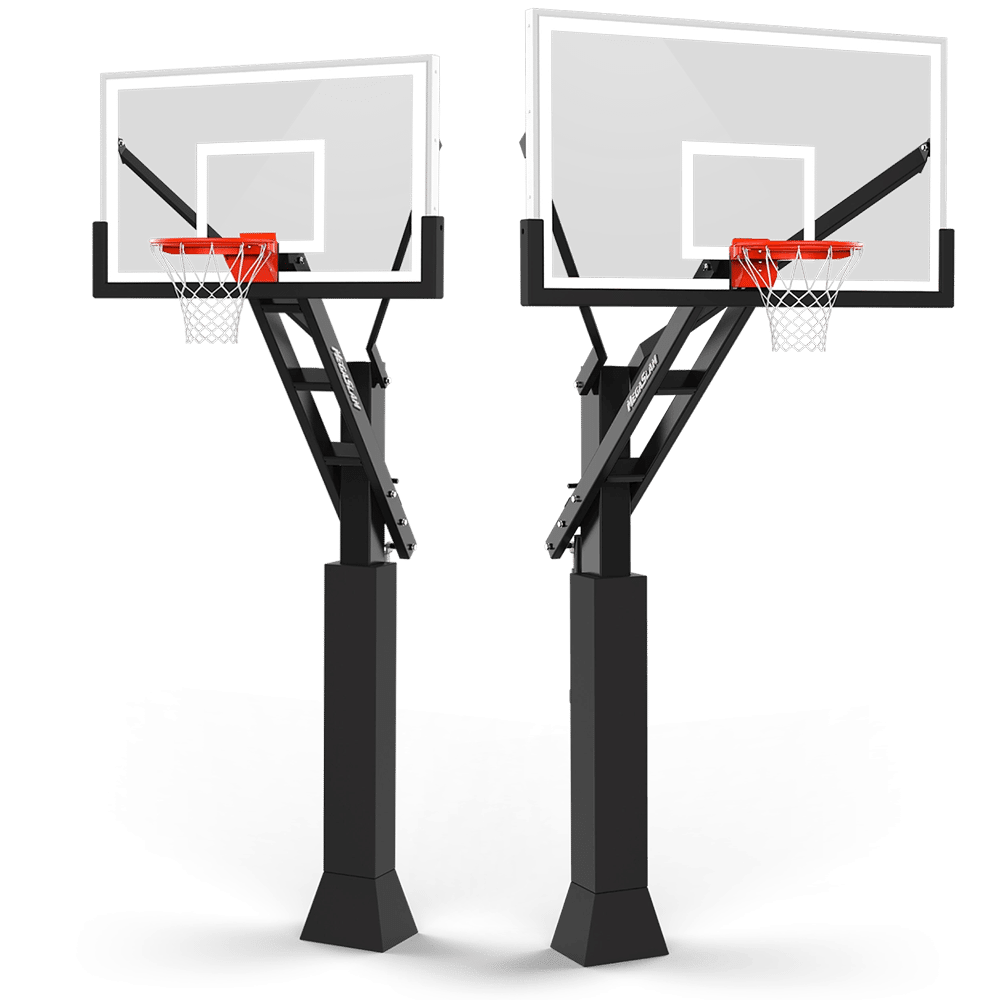
Deciding where to put a basketball hoop is one of the most important steps before you buy or install. Get it right and you’ll have a safe, well-used playing space that works for years. Get it wrong and you could face safety hazards, poor gameplay, or a costly relocation. Here’s what to consider.
1
Safety First: Choosing the Right Location
Can I put a basketball hoop in my driveway?
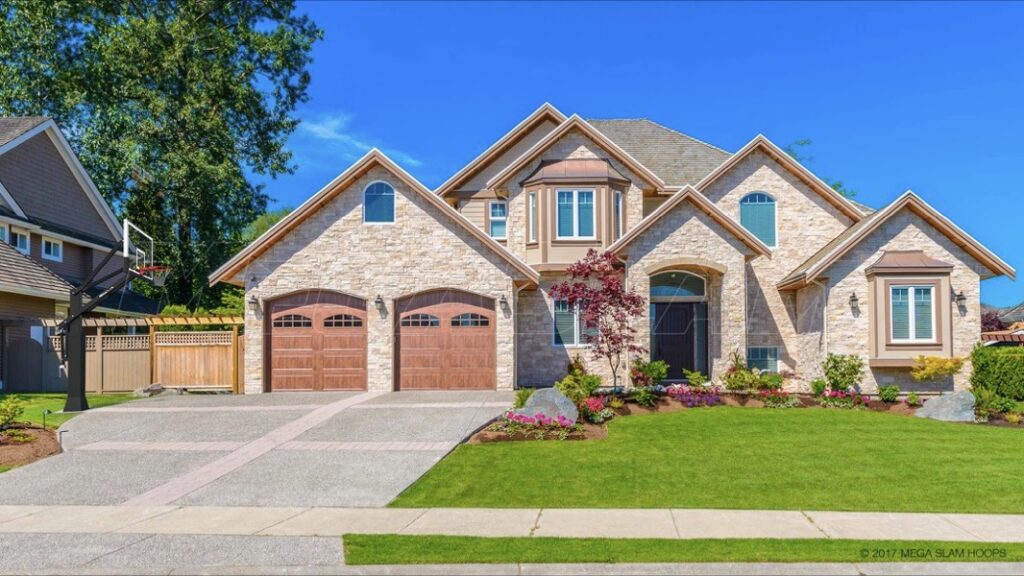
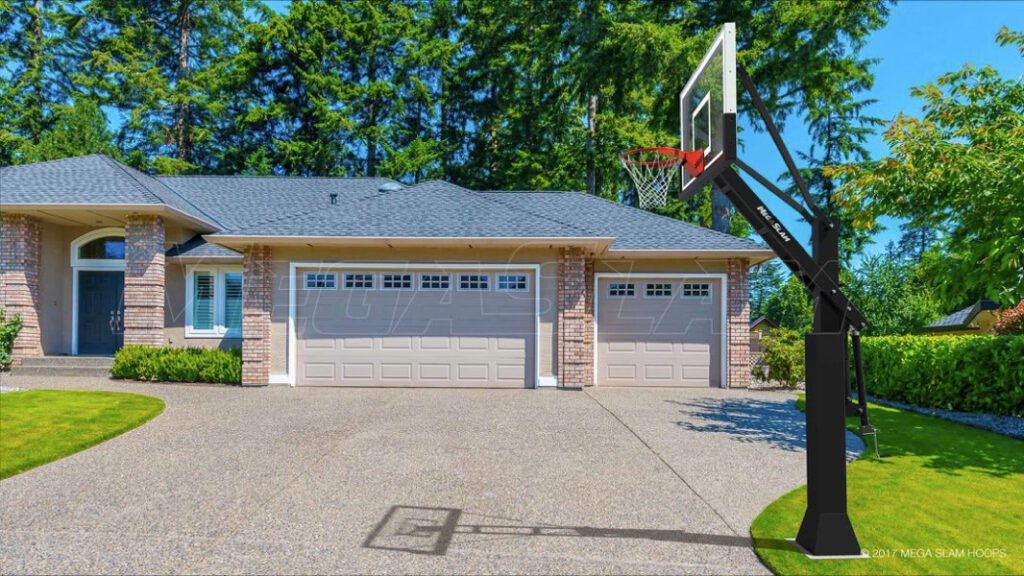
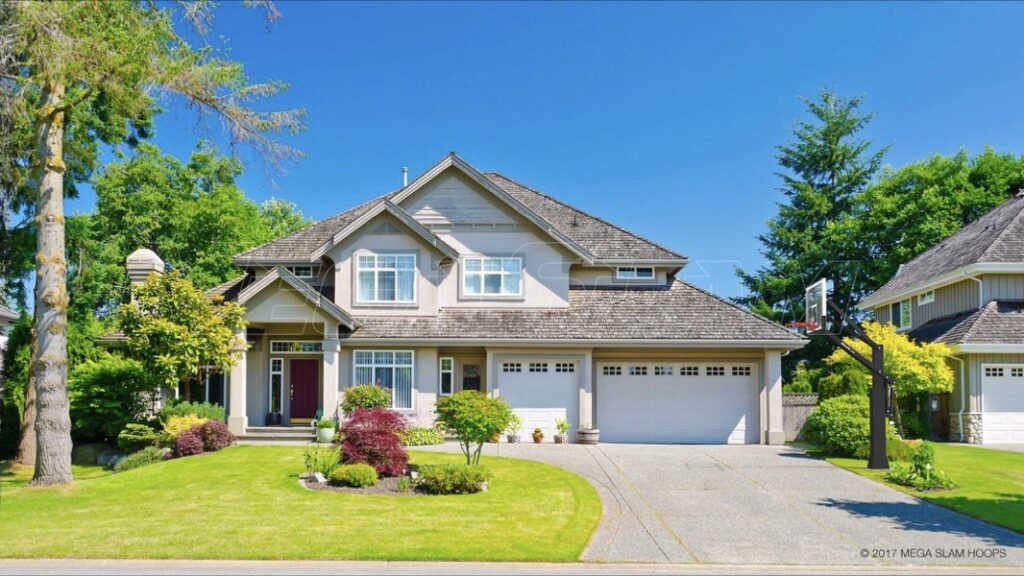
Yes — and it’s one of the most popular locations for a home hoop. Driveways already offer a hard, flat surface, good drainage, and easy access, making them a natural fit. The key is positioning. Place the hoop so that missed shots and loose balls roll away from the street rather than toward it. If your driveway opens directly onto a busy road, angle the hoop so the play area faces away from traffic, and consider a containment net (like The Net Protect) to catch stray balls. For quieter residential driveways, an in-ground installation near the end of the drive works well for most families.
Give players enough room to move
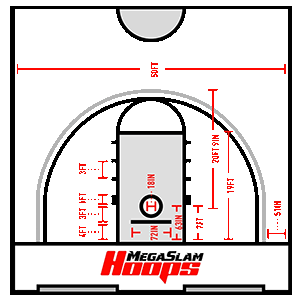
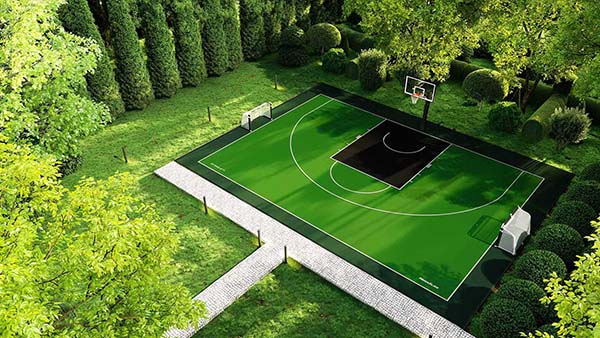
Wherever you install, players need space. Allow at least 3–4 metres of clear space around the hoop — enough room for driving to the basket, defending, and shooting from distance. Fixed obstacles like garden walls, fences, parked cars, and lamp posts are the main things to watch. Running into one at full speed puts an end to the game fast.
Check for overhead obstructions
Power lines, tree branches, and building overhangs are easy to miss but important to consider before you commit to a spot. Overhang matters because anything sitting above the playing area — a roof edge, an awning, a pergola — can cut across the natural arc of the ball on longer shots. Before finalising your position, stand at shooting distance and trace the likely ball path upward: you want clear vertical space of at least 6–8 metres above the basket. Both the right size hoop and precise placement work together here — a larger backboard needs more clearance on all sides.
Indoor hoops: ceiling height matters
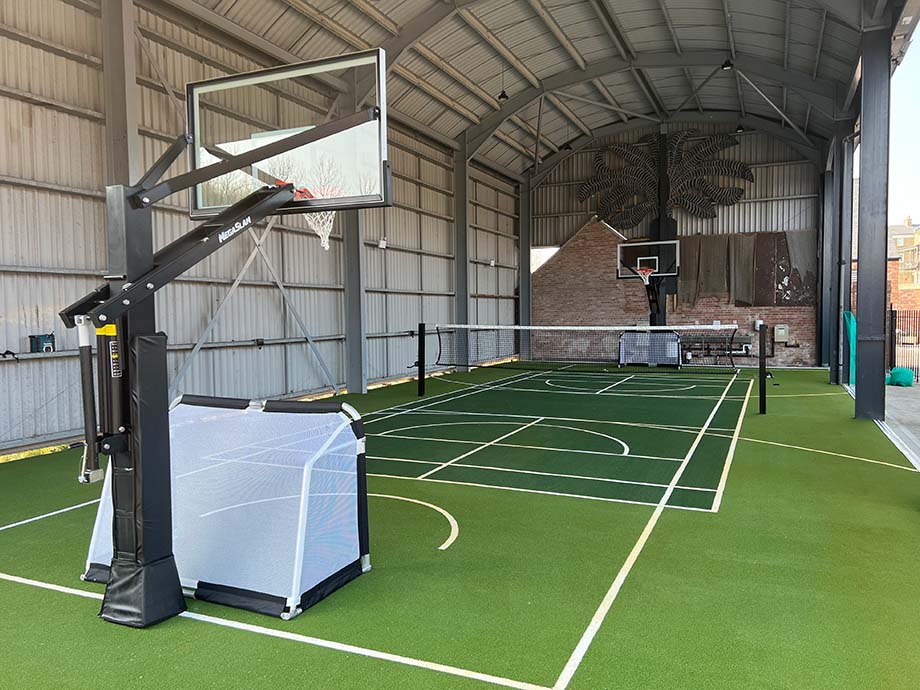
For indoor courts, a minimum ceiling height of 16 feet (around 4.9m) is the baseline for general play. Competitive or more intense play benefits from greater clearance to handle high-arc shots without interference. Always match the ceiling spec to the type and skill level of play you’re planning for.
2
What Are the Best Surfaces for an Outdoor Basketball Hoop?
A flat, stable surface is essential — both for the structural stability of the hoop and the safety of players. Uneven ground increases tripping risk and can compromise the hoop’s base over time.
Concrete or asphalt are the most common choices. They provide a consistent, reliable bounce and are a solid foundation for any in-ground installation.
Modular sports tiles are an increasingly popular upgrade. They offer better traction and cushioning than bare concrete — easier on knees and ankles — and can be customised with court markings, colours, or logos if you want a dedicated playing area.
Acrylic surfacing delivers more of a premium hard-court feel, similar to what you’d find in professional facilities, and can be applied over an existing concrete base.
For a full breakdown of safe setup options, see our guide: Choosing the Safest Outdoor Basketball Hoops.
3
How to Determine the Best Orientation for Sunlight and Wind
North-south is the right call for sun
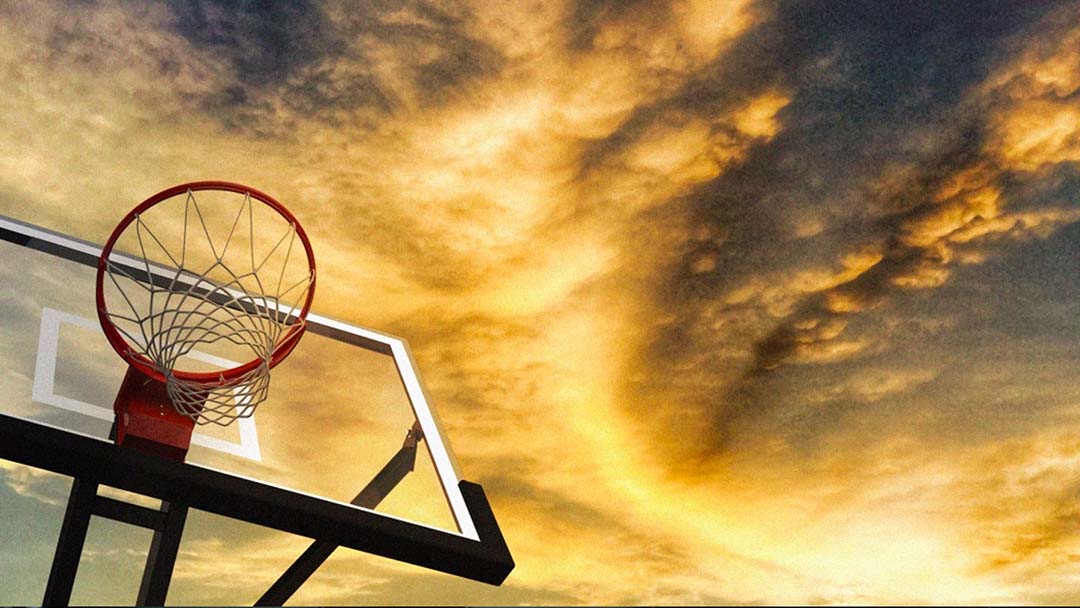
Orient your hoop so that players shoot along a north-south axis. This means neither player is shooting directly toward the rising or setting sun, which sits low and at eye level in the morning and afternoon. Shooting east or west leaves one end of the court with the sun constantly in their face — frustrating at best, a safety risk at worst. A north-south setup delivers more consistent natural light throughout the day and avoids the dramatic glare that can make tracking a ball genuinely difficult.
Mega Slam Hoops are built with thick steel and regulation ½” glass, so wind load on the structure itself isn’t a concern. But strong prevailing winds can affect shot accuracy and make play uncomfortable. If your property is exposed, look for natural windbreaks — a mature hedge, a fence line, or a solid wall — to shelter the playing area. Positioning the court in the lee of an existing structure often solves this without any additional work.
Some homeowners find it useful to use Google Earth or a sun tracking app to check the sun’s path across their specific property before finalising orientation — a simple step that avoids a common mistake.
4
Protect Property and People Around the Hoop
Position the hoop away from windows, cars, and anything fragile. A wayward shot or a rebound at pace can travel further than you’d expect. A protective net behind the backboard adds a simple layer of security for both property and bystanders.
Think about your viewing angle too. Many setups orient the hoop so it faces toward the house — comfortable viewing from inside or from a patio without anyone sitting in the line of play.
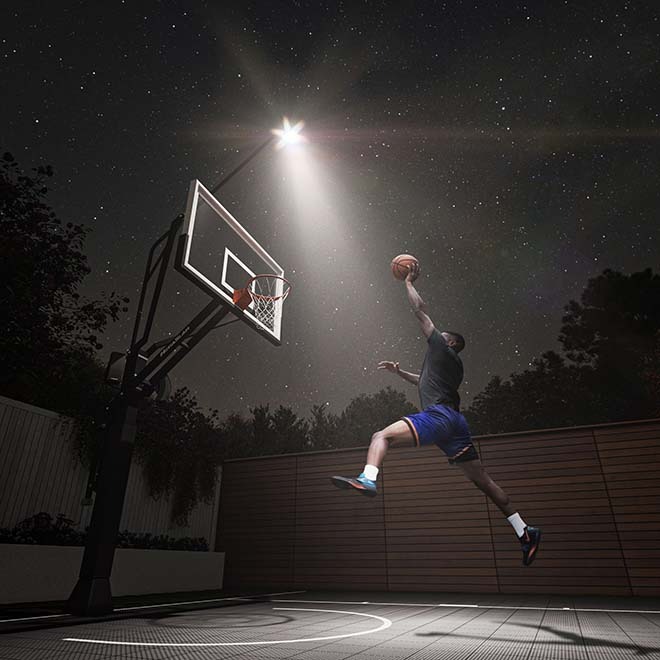
For evening games, consider a dedicated court light like Mega Slam’s Game Light system, which keeps the play area well lit without spilling unwanted light into neighbouring properties.
5
Think Ahead
If you’re installing for kids, plan for growth. What starts as casual shooting practice can become serious half-court play within a few years. Choose a location with room to expand, and ensure clear access around the base for future maintenance checks.
For guidance on the right equipment as players develop, explore our guide to official basketball hoops.
Choosing where to put your basketball hoop comes down to three things: safety, surface, and orientation. Get those right and the rest takes care of itself.