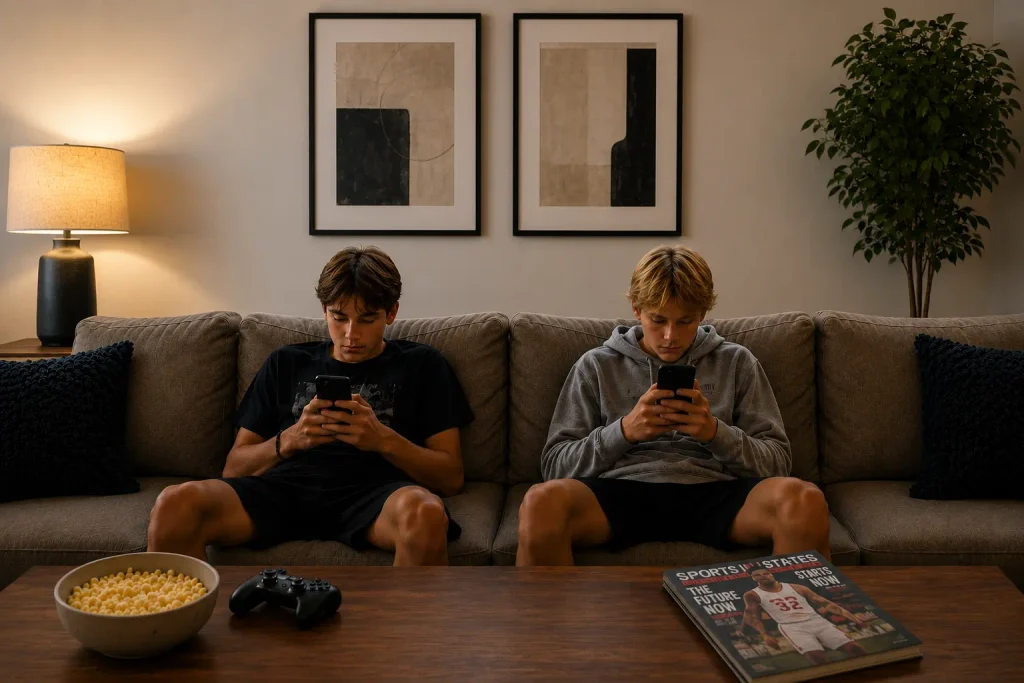
You send them outside and ten minutes later they’re back at the door asking for the tablet. It happens in almost every house, and it isn’t because your kids secretly prefer screens over sunshine. Screens are built to reward attention instantly, while an empty backyard asks kids to invent their own fun with no built-in payoff. So how to get kids off screens and playing outside for real, not just for ten minutes at a time? The most effective approach isn’t taking anything away. It’s making the outdoor alternative genuinely more compelling than the indoor one. Give kids a specific reason to stay outside, and the standoff at the door mostly disappears on its own.
Why Screens Win (and How to Change That)
Screens are engineered for instant reward loops. Every tap produces a response: a new level, a new video, a notification. A backyard offers none of that automatically, so when a child weighs “five more minutes of this” against “go stand in the yard,” the screen wins almost every time, and it isn’t close.
This is not a willpower problem and treating it like one usually backfires. Telling a child to “go play outside” without giving them something structured to do is like handing them a blank page and calling it more fun than a game engineered to keep them hooked. There’s no real contest there.
The fix isn’t tighter restrictions, although those still have a role to play. It’s building an outdoor environment compelling enough to compete on its own terms: quick to start, rewarding to return to, and interesting whether your child is alone or with a group of friends. Once that environment exists, you spend a lot less energy enforcing screen limits and a lot more energy just enjoying watching them play.
Most parents already sense this, even if they’ve never put it into words. The frustration isn’t really about the tablet itself; it’s about not having a ready answer for what happens after you take it away. Solve that second part, and the first one gets a lot easier.
Start with One Anchor Activity
Rather than trying to fill the backyard with a dozen options at once, start with one anchor activity, something with a built-in skill progression that keeps kids coming back because they want to get better, not because you told them to.
Basketball is one of the strongest examples of this. A five-year-old can dribble in the driveway, an eight-year-old can practice free throws after dinner, and a teenager can run full games with friends on the weekend, all on the same hoop. It scales with your child instead of getting outgrown in a single season. It also has one of the lowest barriers to solo play of any outdoor activity: no partner required, no team to organize, just a ball and a hoop.
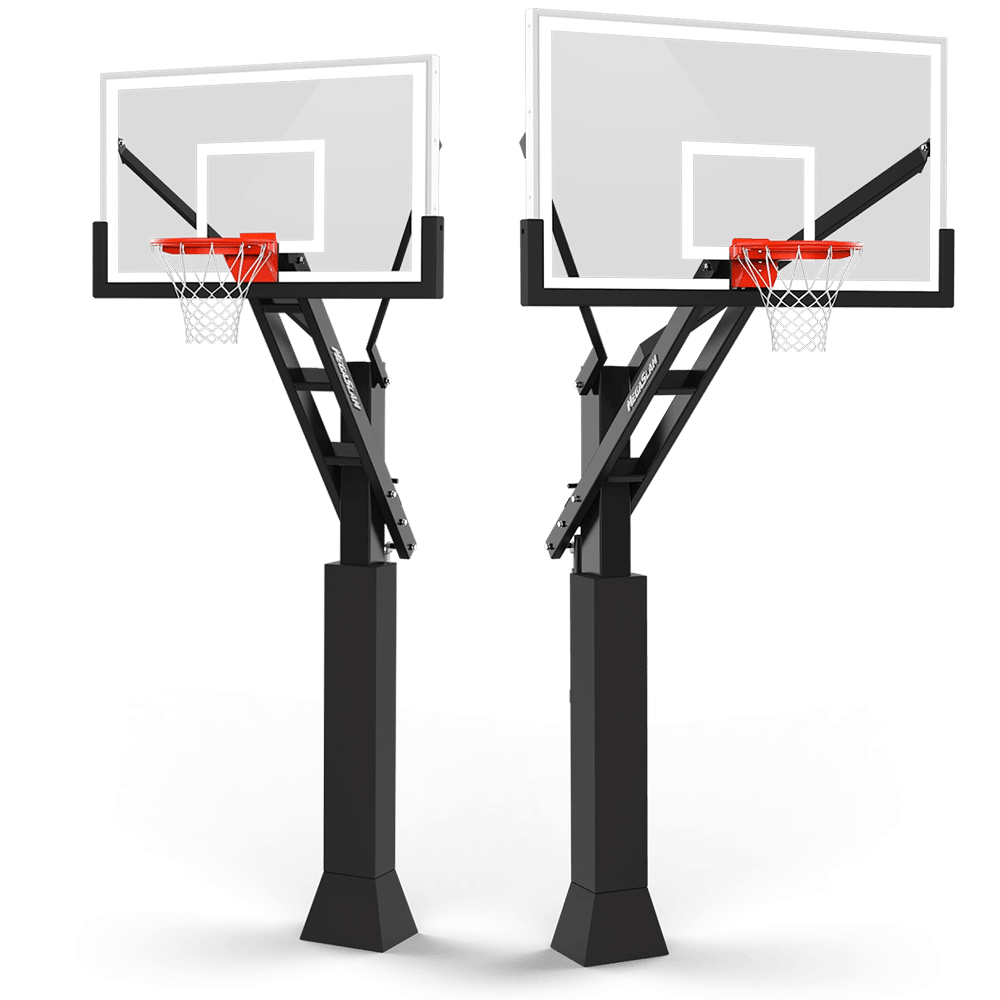
Other strong anchor activities include trampolines, soccer goals, and climbing structures, and any of them can work well for the right family. But basketball tends to cover the widest age range and asks the least of you in terms of coordination, which matters a lot if you’re the one who has to make outdoor time actually happen on an ordinary Tuesday. A well-placed hoop, like the Mega Slam Hoops systems built for driveways and backyards across Texas, tends to become the default answer to “I’m bored” pretty quickly.
One detail worth thinking through early: portable hoops tip in wind, roll around after a hard drive, and get outgrown as soon as a kid can dunk on them. An in-ground system stays put, holds up to daily use for years, and adjusts as your kid grows, which matters if you want this to be the anchor activity and not just this season’s activity.
Practical Strategies to Make Outside More Appealing
General encouragement rarely works on its own. Specific changes to the setup and the daily routine do. Here’s what actually moves the needle:
- Set a default, not a negotiation. Decide that outside comes first and screens come after, and make it the standing rule rather than something you re-argue every single afternoon. Kids adapt fast to a consistent default; they push back hard against a rule that seems to change depending on your mood that day.
- Give kids ownership. A child who helped pick the backyard activity, whether that meant choosing the hoop height, picking out chalk colors, or deciding where the goal should go, tends to use it far more than one who was simply handed something.
- Invite friends over. Social outdoor play beats solo screen time almost every time, and a hoop means there’s always something to do the moment a friend shows up: no setup, no explanation needed, no waiting for someone to pick teams.
- Remove friction. Shoes by the back door, a ball within easy reach, equipment that doesn’t need to be dragged out of a shed first. Every extra step between “I want to play” and actually playing is a chance for a kid to give up and pick a phone back up instead.
- Play with them, even briefly. Ten minutes of a parent shooting around or kicking a ball dramatically increases how long kids stay outside afterward, and it costs you almost nothing.
- Build a routine. After-school outdoor time that happens most days becomes a habit faster than an occasional special event, and habits don’t require daily convincing the way one-off activities do.
None of these strategies require a complete overhaul of your afternoons. Most families see a real shift after picking just two or three of them and sticking with the same two or three long enough for them to become normal.
Outdoor Activities for Kids at Home
Not every family wants to start with a big investment, and you don’t have to. Here’s how outdoor activities for kids at home break down by how much setup they take.
- Low setup: shooting hoops in the driveway, chalk obstacle courses, a backyard scavenger hunt. All of these need almost nothing beyond what you likely already own.
- Medium setup: soccer with a pair of portable goals, badminton with a freestanding net, water play with a sprinkler or a couple of buckets. A bit more gear involved, but still a low overall commitment.
- Higher investment, lasting value: an in-ground basketball hoop, which tends to get used almost every single day once it’s installed, a trampoline, or raised garden beds for older kids who prefer a slower, more hands-on project.
[ IMAGE → Image 2 — outdoor activities / mid | suggested file: kids-off-screens-driveway-basketball-game.jpeg | alt: “Kids playing an active driveway game on a Mega Slam in-ground hoop” ]
How Much Outdoor Time Do Kids Actually Need?
Health guidelines generally point to about 60 minutes of active play per day for kids, and it doesn’t need to happen in one continuous block to count toward that total.
The real challenge is rarely the number itself; it’s the logistics around it. Sixty minutes of organized sports usually means driving somewhere, scheduling around practice times, and coordinating with other families’ calendars. Sixty minutes of shooting hoops in your own backyard just means walking outside after school and picking up a ball. A backyard hoop is one of the few setups that makes that daily goal genuinely achievable on an ordinary school day, without anyone else’s schedule involved and without a car.
What About Screen Time Rules?
Limits still matter, and they’re not going away. A clear boundary on screen time gives kids a natural stopping point and takes some of the daily negotiation off your plate entirely.
But limits on their own tend to create friction without actually solving the underlying problem, because you’re removing the reward without offering a real replacement for it. Screen time rules work far better when they’re paired with something genuinely worth doing instead. The goal was never zero screens; it’s making outdoor time rewarding enough that kids start choosing it on their own, some afternoons before you even have to ask.
If a hoop sounds like the right anchor for your family, it’s worth spending a few minutes comparing systems rather than grabbing whatever’s cheapest at a big-box store, since the difference shows up fast once the Texas summer or the first big storm rolls through.
Why Families Choose Mega Slam Hoops
This isn’t the only in-ground system on the market, but it’s the one built with family backyards and driveways specifically in mind: heat that warps cheaper plastic backboards, wind that tips lightweight bases, and kids who are outside on it most days of the year, not just a few weekends a summer.
- Adjustable height that moves with your kid, from driveway dribbling drills at age five to full-height games by middle school with a 5’-10’ range of adjustment.
- Built for real weather and not just a showroom: an in-ground base and backboard rated to hold up through harsh summers and stormy winters with its hot-dipped galvanization process and powder-coated steel.
- Backed by a real warranty so this is a purchase you make once.
- Family-focused, start-to-finish. Designed, sold, and supported by a company that’s local, not a marketplace listing with a support line overseas.
The Mega Slam XL is hands-down the BEST basketball hoop that we’ve ever owned! From the moment it was set up, my sons were hooked — shooting hoops from morning until the sun goes down.
— Darell, Denton, TX
As they say, “Go big or go home”! Zero regrets in purchasing this basketball system! Absolutely love it.
— Michael, Long Island, NY
Shop the Mega Slam Hoops Lineup
Frequently Asked Questions
How do I get my child to play outside without a fight?
Give them a specific, low-effort activity waiting outside rather than a general instruction to “go play.” A hoop, a chalk course, or a scavenger hunt removes the decision-making that so often turns into an argument in the first place.
What outdoor activities are best for kids who don’t like sports?
Chalk art, scavenger hunts, gardening, and water play all work well for kids who aren’t naturally drawn to competitive games. The goal is finding something with its own small sense of progress or discovery, not necessarily anything athletic.
How much time should kids spend outside each day?
Around 60 minutes of active play is the general benchmark most guidelines point to, though it doesn’t need to happen in one block. Short sessions before and after school add up to the same total over the course of a day.
What is the best backyard investment for getting kids active?
An in-ground basketball hoop tends to get the most consistent daily use across the widest range of ages, from young kids practicing dribbling to teenagers running full games with friends on the weekend.