Basketball hoops range from under $150 for a basic portable model to well over $3,000 for a premium in-ground system, and that range reflects genuine differences in stability, backboard quality, durability, and overall playing experience. The right budget is not simply a matter of what you can afford today; it is about matching the system to how often you will use it, how serious your game is, and whether the installation needs to be permanent.
This guide breaks down the full cost spectrum across every hoop type: portable, wall-mounted, and in-ground, including the installation costs that many buyers overlook until they are mid-purchase. We also cover what drives cost up at each tier, what you sacrifice by going cheaper, and how to calculate the real long-term value of investing in a quality system. By the end, you will know exactly what to budget for the hoop that fits your game.
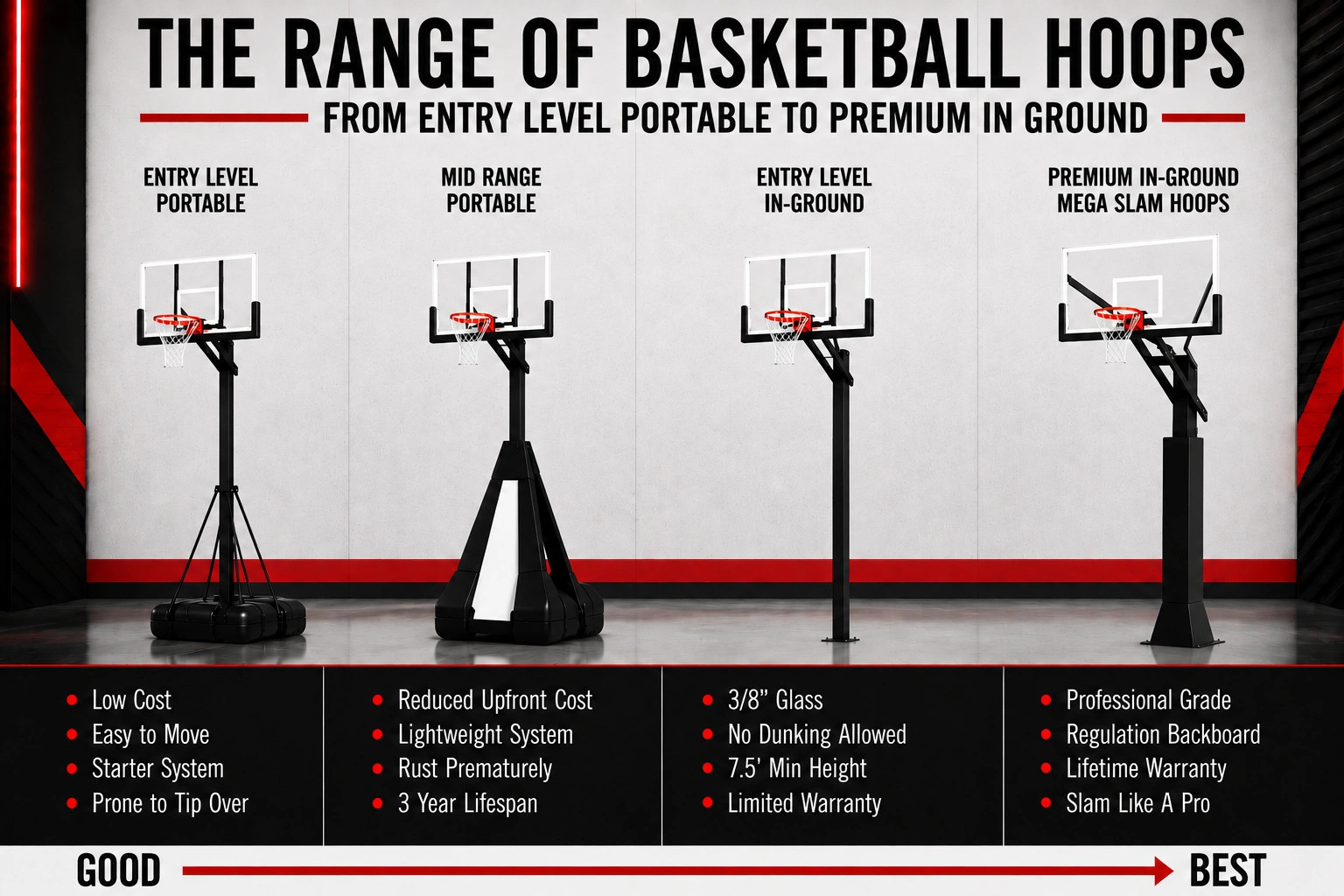
Basketball Hoop Price Ranges at a Glance
Here is a complete summary of what to expect across every hoop category, including typical installation costs and total budget estimates:
| Hoop Type | Price Range | Best For | Installation Cost | Total Est. Budget |
|---|---|---|---|---|
| Entry Portable | $150 – $250 | Young children, casual play, renters | $0 (DIY) | $150 – $250 |
| Mid-Range Portable | $250 – $600 | Families, moderate play, acrylic/glass backboards | $0 (DIY) | $250 – $600 |
| Entry In-Ground | $750 – $1,200 | Serious casual play, first permanent hoop | $350 – $500 | $1,100 – $1,700 |
| Mid-Range In-Ground | $1,200 – $1,800 | Serious players, dedicated home courts | $400 – $800 | $1,600 – $2,600 |
| Premium In-Ground | $1,500 – $3,000+ | Serious/frequent players, long-term home courts | $800 – $1,200 | $2,300 – $4,200+ |
Important: All prices are for the hoop system only unless stated. Installation costs are in addition to the purchase price and vary based on your location, ground conditions, and the installer you use.
How Much Does a Portable Basketball Hoop Cost?
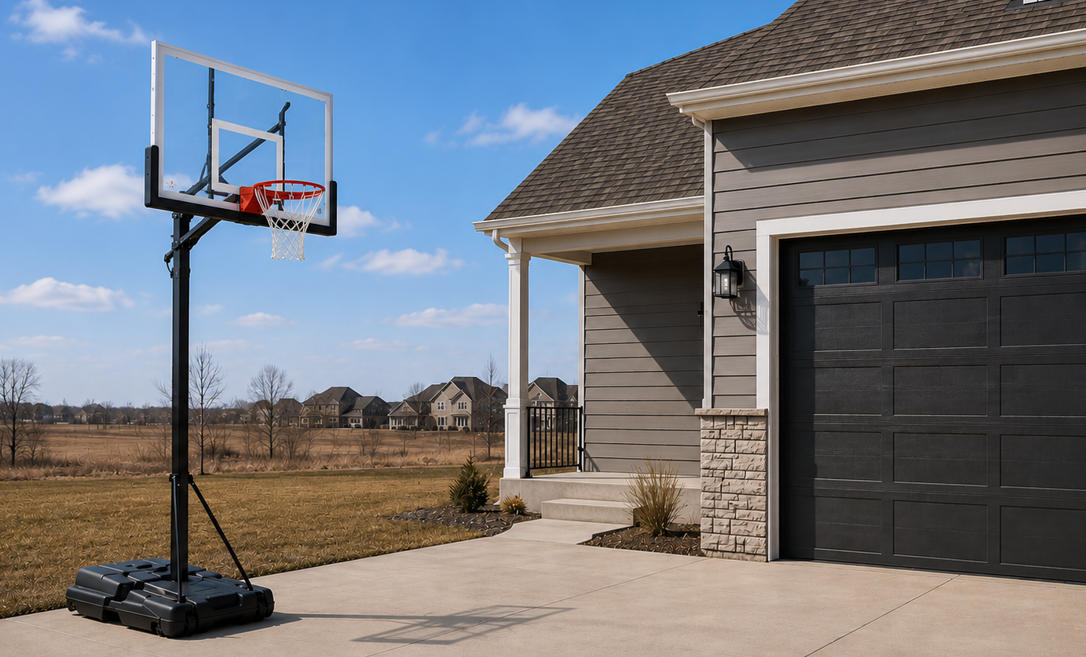
Entry-Level Portables: $150 – $250
At this price point you are typically getting a 44-to-48-inch polycarbonate backboard, a 27-gallon fillable base, a two- or three-piece round steel pole in the 2.75-inch diameter range, and a basic standard rim. These are the systems you find at Walmart, Target, and Amazon under the Lifetime and Spalding names at their most affordable tiers. They are adequate for young children and occasional casual play, but polycarbonate backboards produce noticeably soft, inconsistent rebounds, and thin poles flex during hard play. Expect a lifespan of three to five years with regular residential use.
- Typical brands: Lifetime or Spalding entry portables
- Backboard: 44″–48″ polycarbonate
- Pole: 2.75″–3″ round steel, multi-section
- Height adjustment: telescoping in 6-inch increments
- Best for: young children, casual use, tight budgets
Mid-Range Portables: $250 – $600
This tier is where the playing experience improves slightly. Backboards step up to acrylic, which delivers noticeably better rebound response than polycarbonate, and base capacity increases to 31–35 gallons for better stability. Poles move to 3-to-3.5-inch diameter and some models offer infinite height adjustment rather than fixed increments. The Spalding Beast 60″ with its tempered glass backboard and the Lifetime Mammoth portable both sit at the upper end of this range and represent a better option at this price point.
- Typical brands: Lifetime Power Lift, Spalding, Lifetime Mammoth portable
- Backboard: 50″–60″ acrylic or tempered glass (top of range)
- Pole: 3″–3.5″ round steel
- Height adjustment: infinite (Power Lift or screw jack mechanisms)
- Best for: families with mixed-age players, moderate regular use
No matter how well-specified, all portable hoops share one inherent limitation: a water- or sand-filled base will always introduce more movement than a concrete-anchored in-ground system. This is not a product flaw; it is a structural reality of portable design. For buyers who want genuine stability, the in-ground category is the right place to look.
How Much Does an In-Ground Basketball Hoop Cost?
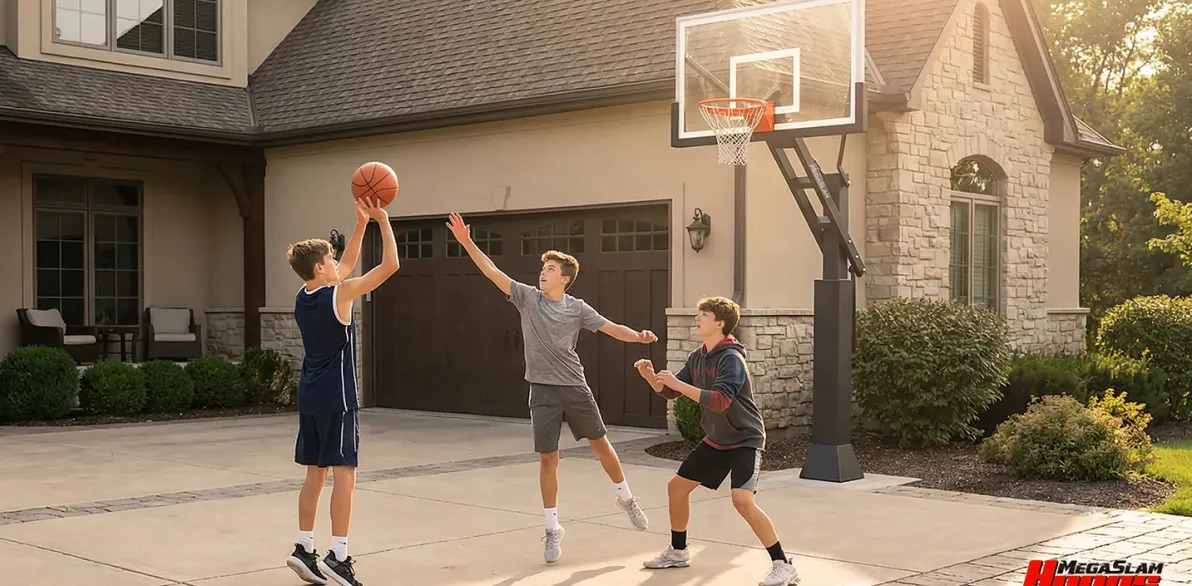
In-ground hoops represent the most significant investment in the category, and the most significant upgrade in playing experience. Once anchored in concrete, a properly installed in-ground system delivers the kind of rock-solid stability and authentic backboard response that no portable or wall-mount system can fully replicate.
Entry-Level In-Ground: $800 – $1,200
At this tier you are entering the in-ground category without reaching the premium brands. Expect acrylic or basic tempered glass backboards in the 54-inch range, pole diameters of 3.5 to 4 inches (often round and multi-section), and plastic or light-gauge steel anchor components. Spalding’s mid-range in-ground models and some Goaliath entry systems sit here. These are a genuine step up from portables for stability, but pole rigidity and long-term durability fall short of what premium in-ground brands deliver.
- Typical brands: Spalding entry in-ground, Goaliath entry models
- Backboard: 54″ acrylic or basic tempered glass
- Pole: 3.5″–4″ square steel, sometimes multi-section
- Best for: buyers making their first permanent installation on a tighter budget
Mid-Range In-Ground: $1,200 – $1,800
This is where the quality step becomes very clear. Brands like Goalrilla’s GS series, Spalding’s 888 Series, and Lifetime’s Mammoth in-ground all sit in this range. Expect 5-to-6-inch square one-piece steel poles, regulation-adjacent or regulation-size tempered glass backboards, proper J-bolt or bolt-down concrete anchor systems, and breakaway rims. Playing feel at this tier is genuinely arena-adjacent, the backboard response is consistent, and the pole holds steady after hard shots.
- Typical brands: Goalrilla GS54C/GS60C/GS72C, Spalding 888 Series, Lifetime Mammoth in-ground
- Backboard: 54″–72″ tempered glass (3/8″ on most models)
- Pole: 5″–6″ square one-piece steel
- Best for: more serious residential players, dedicated home courts, families wanting an upgraded installation
Premium In-Ground: $1,500 – $3,000+
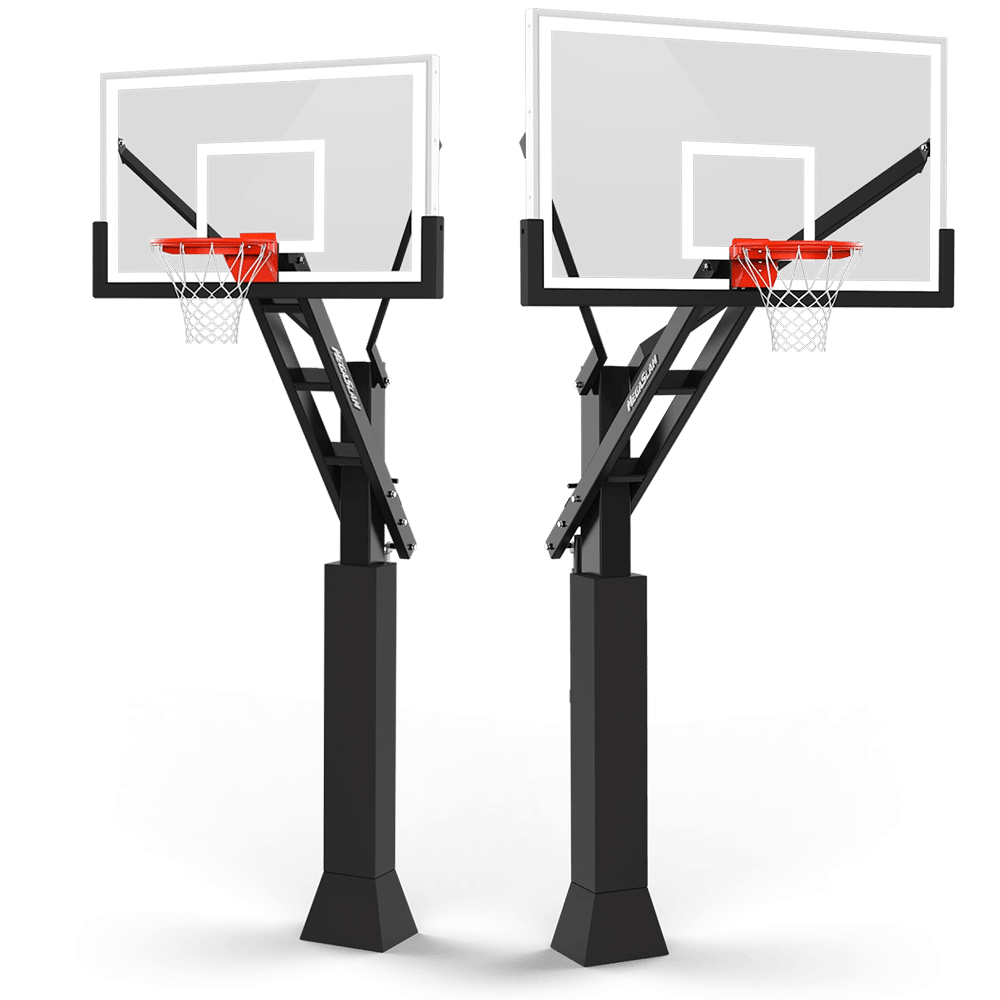
At the premium tier, you are buying the best residential in-ground systems available. This is where Mega Slam Hoops, and comparable premium brands operate. Key differentiators at this level include regulation 1/2-inch tempered glass backboards (vs. the 3/8-inch glass found on most mid-range systems), heavier-gauge 5-gauge steel poles, internal gusset reinforcement for maximum rigidity, hot-dip galvanized rust protection, and comprehensive lifetime warranties that cover the full system.
- Typical brands: Mega Slam Hoops (Mega Slam 60/72/XL, FX series), Goalrilla CV72S/DC72EI
- Backboard: 60″–72″ regulation 1/2″ tempered glass
- Pole: 5″x5″ to 12″x8″, 5-gauge steel with 12–14 internal gussets
- Rust protection: hot-dip galvanized + powder-coated (Mega Slam) or only powder-coated (Goalrilla)
- Warranty: limited lifetime on all components
- Best for: serious and frequent players, long-term home court investments, anyone who wants to buy once and never replace
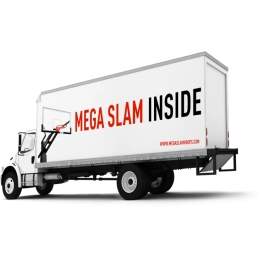
Mega Slam Hoops sells direct-to-consumer with free curbside liftgate delivery to the continental US included in the purchase price, a cost saving that matters at this tier, where competing brands can add $150–$300 in freight charges on top of the system price.
Basketball Hoop Installation Cost
Installation is one of the most commonly overlooked costs when buyers first research basketball hoops. For any in-ground system, the installation process involves digging a hole to the required anchor depth (typically 36 to 48 inches depending on the system), pouring and curing concrete, and then assembling the pole and backboard, which on premium systems can weigh 500 to 800+ pounds and requires multiple people and equipment to position safely.
Here is a direct comparison of DIY versus professional installation:
| Factor | DIY Installation | Professional Install | DIY Notes | Pro Notes |
|---|---|---|---|---|
| Cost | $0 labor + materials (concrete, tools) | $500 – $1,200 | Concrete ~$10/bag; typically 15-18 bags needed | Price varies by location, ground type, system weight |
| Time | Half-day to full day (plus 48–72 hrs cure time) | Similar; two visits typically required | First visit: dig & pour. Second visit: pole & backboard | Professional manages scheduling and both visits |
| Risk | Moderate; errors in anchor alignment affect long-term performance | Low; professionals have the right tools and experience | Poorly set concrete or misaligned anchors can cause wobble | Improper installation can void manufacturer warranty |
| Recommended For | Handy homeowners; lighter systems (entry in-ground) | Premium systems; anyone unfamiliar with concrete work | Always have 2–3 people for backboard lifting | Use Mega Slam’s installer database to find local pros |
What Affects Installation Cost
- Ground conditions: rocky or heavily compacted soil increases excavation time and cost
- System weight: heavier premium systems (Mega Slam XL, Goalrilla DC72EI) require more people and sometimes equipment, impacting labor cost
- Geographic location: labor rates vary significantly by region, installations in major metropolitan areas typically cost more than rural areas
- Concrete and hardware: some systems include an anchor kit; others require you to purchase separately. Budget $200–$300 for concrete and hardware if not included
- Multiple installations: if you are adding a second anchor point for relocation, costs increase accordingly
Hidden Costs to Budget For
Planning and Approval
- HOA approval: some homeowners’ associations require written approval before a permanent structure is installed. Check your HOA rules before purchasing; this costs nothing but time, but delays can be significant
- Permits: in most residential settings, a basketball hoop does not require a building permit, but rules vary by municipality. Worth a quick check with your local council or city before breaking ground
- Underground utilities: before digging any hole for a permanent anchor, contact your local utility marking service (811 in the US is the free national number). This is free, legally required in many states, and prevents costly and dangerous accidental utility strikes
Conclusion
Basketball hoop costs range from $250 for an entry-level portable to $3,000 or more for a premium in-ground system with professional installation, and every tier in between represents a different combination of playing experience, durability, and long-term value. The right budget starts with an honest answer to one question: how serious is your game?
For casual family use and tight budgets, a $300–$500 acrylic backboard portable from Lifetime or Spalding delivers an entry level option. For serious players who want a permanent home court that will last a decade or more, the in-ground tier is where the investment makes sense. At that level, Mega Slam Hoops is the brand that delivers the specs, the warranty coverage, and the playing experience that justifies the spend.
Before you buy, use this guide to build your full budget: hoop, installation, concrete, and any accessories, so there are no surprises at the end of the driveway.
Ready to invest in premium? Explore the Mega Slam Hoops in-ground range adjustable Mega Slam systems and fixed-height FX series with free curbside delivery to the continental US included in every purchase.