Kids can start exploring basketball as early as age 3 or 4, though what “ready” looks like changes as they grow. At this stage, it’s mostly about bouncing, tossing, and chasing the ball around the yard. Organized team play may begin around ages 5 to 6, depending on the child’s readiness and local programs, while more structured or competitive play often comes later. This guide walks through what readiness looks like at each stage and how you can support your child’s development without pushing too early.
Quick Answer: Basketball by Age Group
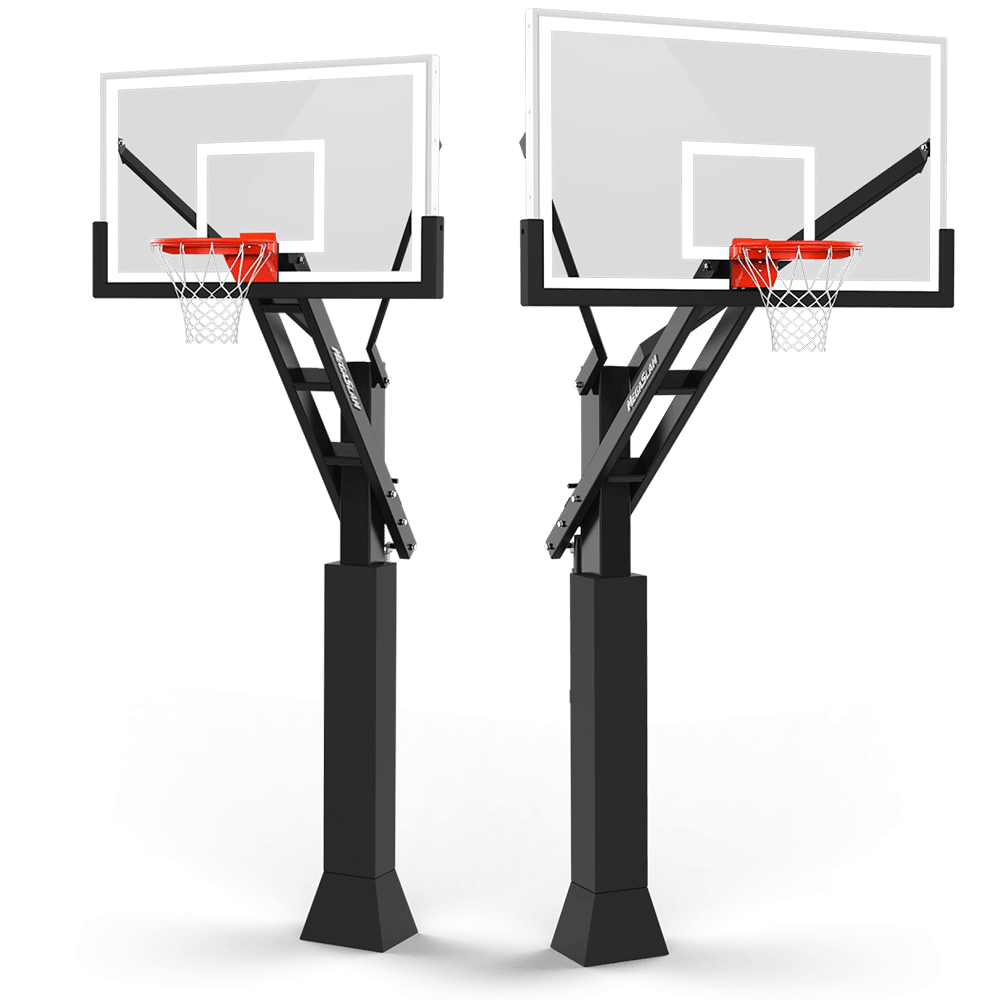
Here’s a quick overview of what to expect at each stage, along with suggested hoop heights and activities based on your child’s age and skill level. These are general guidelines, not fixed milestones. A height-adjustable in-ground system from Mega Slam Hoops, means you are not buying a new hoop every couple of years as your child moves through these stages.
| Age Group | What to Expect | Recommended Hoop Height | Activity Type |
| 3-4 years | Free play, no rules, big smiles | 5-6 ft (adjustable) | Backyard play |
| 5-6 years | Simple rules, short games | 6-7 ft (adjustable) | Rec league intro |
| 7-8 years | Real shooting form, 2v2/3v3 games | 7-8 ft (adjustable) | Youth league |
| 9-11 years | Full rules, position basics | 8-10 ft (adjustable) | Competitive league |
| 12+ years | Regulation play and travel teams | 10 ft (regulation) | School/travel team |
For more detailed guidance on choosing the right rim height, check out our basketball hoop height by age chart.
Ages 3-5: Play First, Rules Later
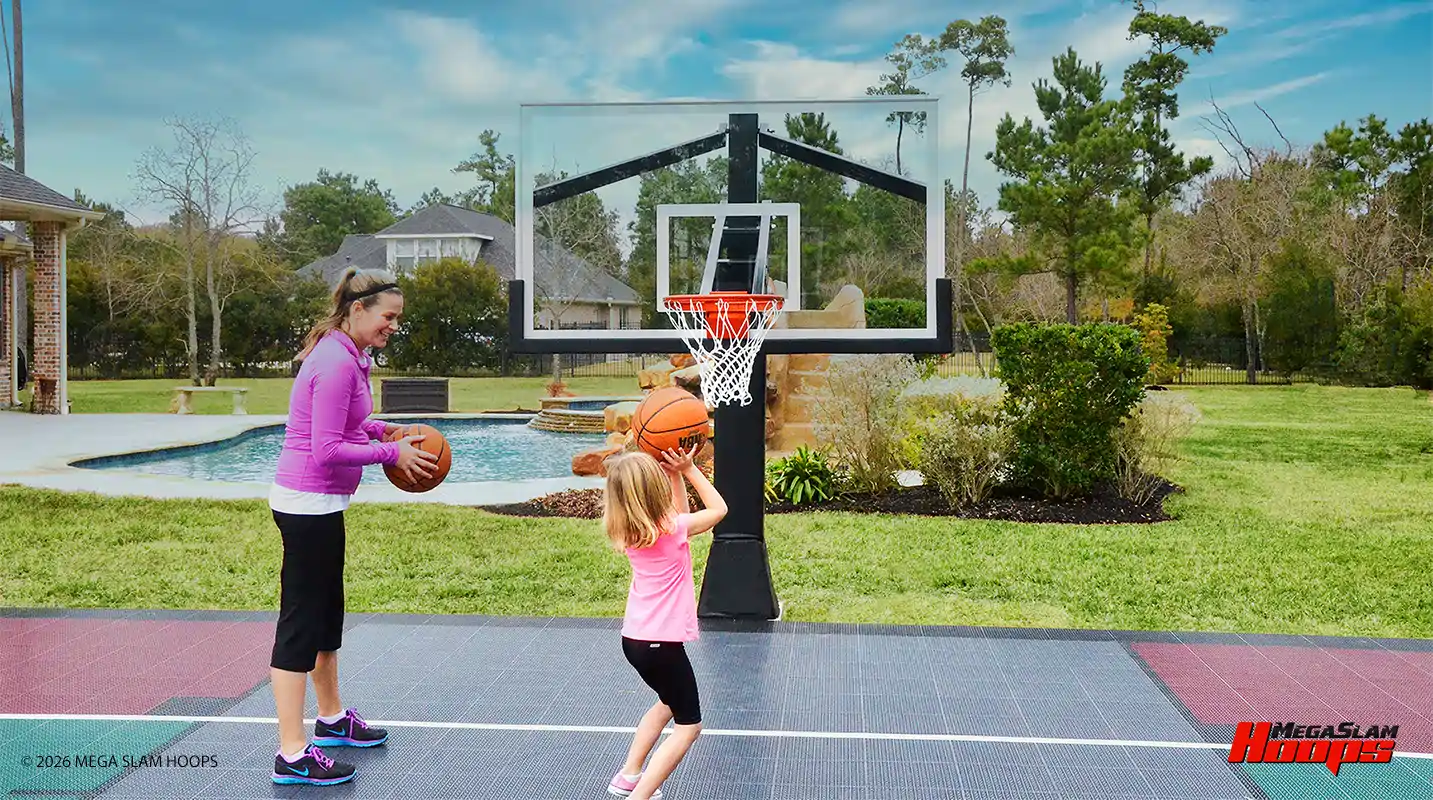
At this age, basketball is about fun and movement, not rules. Your goal is to help your child enjoy playing with the ball, not to teach plays or positions. A hoop set at a low, adjustable height (around 5–6 feet) can make it easier for a young child to practice shooting and experience the excitement of making a basket. Early success can help build confidence and encourage them to keep playing.
Your involvement matters more than formal instruction right now. Rebounding for them, cheering them on, and playing simple games of catch help build coordination and keep things fun. Save the technique lessons for later.
If you’re setting up a hoop for this age group, consider:
- Adjustable height: A hoop that can be lowered to match your child’s size and ability.
- Stability: A securely installed system suited to the intended use.
- Backboard: A larger target can make early shooting practice more approachable
At this stage, the priority is creating a positive introduction to basketball through simple, enjoyable activities.
Ages 5-8: Learning the Basics
This can be a good time to introduce simple basketball rules, such as dribbling with one hand, basic passing, and the idea of avoiding traveling (taking too many steps without dribbling). Kids this age are still developing coordination, so keep expectations realistic and games short.
Small-sided games like 2v2 or 3v3 can work better than full 5v5 at this stage. Fewer players mean more touches, more shots, and more opportunities to learn. Many recreational basketball programs welcome children around this age, depending on local availability and readiness. A hoop set between 7 and 8 feet can also help young players practice their shooting form without having to heave the ball toward the rim.
A few backyard drills that build fundamental skills at this age:
- Stationary dribbling: Practice with each hand, keeping the ball low and controlled.
- Chest passes: Pass the ball back and forth from a few feet apart.
- Simple layup runs: Dribble toward the hoop and practice laying the ball off the backboard.
Ages 8-12: Skill Development and Competition
As kids move through this age range, they may be ready for more structured basketball, with increasingly detailed rules and competitive play. Many youth programs use lower rim heights before transitioning toward the regulation 10 feet, depending on age and league guidelines. Players can begin focusing more on footwork, basic defensive positioning, and simple offensive sets rather than just chasing the ball.
Backyard practice can be especially valuable at this stage. Dribbling drills, shooting repetitions, and one-on-one games against a sibling or parent help reinforce skills learned during organized practices. As players develop strength and shooting mechanics, they can gradually transition toward regulation height (10 feet), often around ages 11–12, depending on their readiness and league requirements.
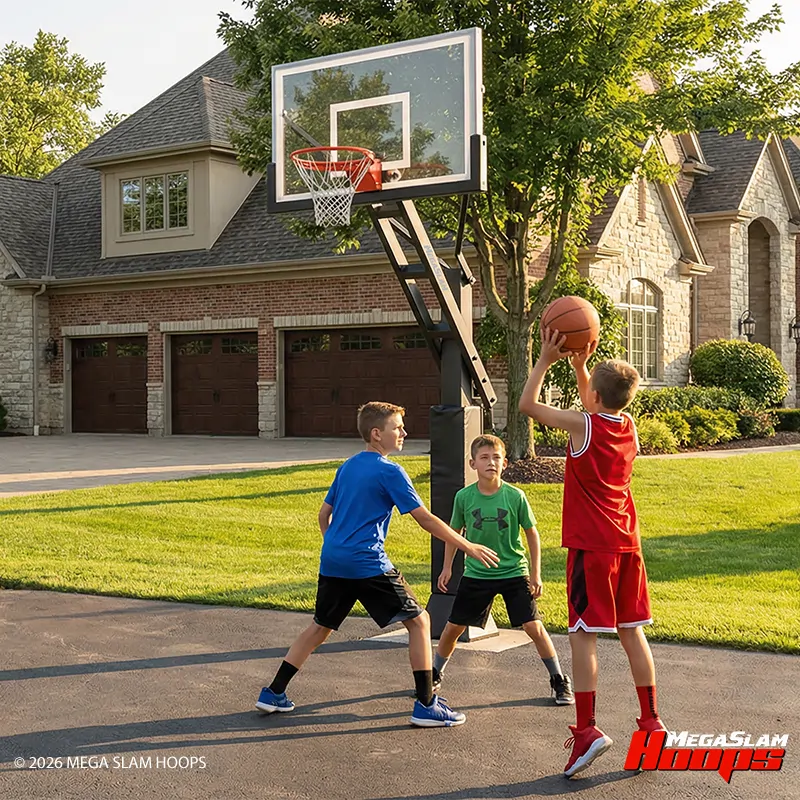
Signs Your Child Is Ready
Age is a useful guideline, but readiness is really about interest and coordination. Watch for these signals rather than going strictly by birthday:
- They show interest in watching games or playing basketball at a park
- They can catch and throw a ball reliably, even if not perfectly
- They can follow simple two-step instructions, like “dribble to the cone and pass it back”
- They are comfortable in a group setting, which matters for organized play
A child who is not quite there yet is not behind. Backyard play at your own pace is a perfectly good way to build the foundation for organized ball later, and it is also the best time to get a hoop set up at home. Our website walks you through how to pick the right system for your driveway or yard.
Youth Basketball Training: What to Focus On
Youth basketball training should match your child’s developmental stage rather than jumping ahead to advanced skills too soon.
Under 8: keep it fun, focused on movement and making shots. Nothing technical yet.
An adjustable in-ground hoop set as low as 5 ft is the best basketball hoop for a 6-year-old. At that age, kids need a rim they can reach with a real shooting motion, not a heave. Look for easy adjustability so you can raise the hoop gradually as their game develops.
- Freeze tag while dribbling to build ball control under distraction
- Close-range shooting games that reward makes with points or high-fives
- Ages 8-10: build real fundamentals with both hands and clean mechanics.
- Two-ball dribbling to force both hands to work independently
- Bounce and chest pass accuracy against a wall or target
- Form-shooting close to the hoop before backing up
- Ages 10-12: layer in footwork and basic game awareness.
- Defensive slide drills across cones to build lateral quickness
- Catch-and-shoot reps to connect passing with shot mechanics
- Simple two-on-two reads to practice recognizing an open teammate
Basketball Rules for Beginners
If your child is new to the game, here are a few things to remember:
- You must dribble the ball while moving; you cannot run while holding it
- Double-dribble (stopping and restarting your dribble) is not allowed
- Traveling, taking steps without dribbling, results in a turnover
- Fouls on a shooter typically result in free throws
Youth leagues usually simplify things further: no full-court pressing, shorter quarters, and often no stealing allowed for the youngest divisions. That keeps the pace manageable while kids are still learning to dribble and pass under pressure.
Frequently Asked Questions
Is 10 too old to start playing basketball?
Not at all. Ten year olds who are new to the game can catch up quickly with consistent backyard practice and a season or two of league play. Coordination and coachability matter far more at this age than a head start of a year or two.
What size basketball should a child use?
Ball size should match age and hand size rather than league level alone. As a general guideline, younger kids use a smaller, lighter ball, and most players move up to a size 6 or the full size 7 ball in early adolescence.
How do I teach my child to dribble?
Start stationary before adding movement. Have your child dribble in place with one hand, then the other, focusing on fingertip control rather than slapping the ball. Once that feels natural, add walking, then light jogging, while dribbling. Short, frequent sessions beat one long practice.