
At the same diameter and steel gauge, a square pole is generally more rigid than a round pole, which means less flex when someone hangs on the rim or drives hard to the hoop. But shape is only one piece of the picture. Diameter and wall thickness affect stiffness just as much, sometimes more than shape alone. A well-built round pole can outperform an undersized square one. This article breaks down what square versus round actually means for stability, what diameter fits the way you play, and what to check in our guide on how to choose the right basketball hoop before you buy a pole.

Square Pole vs Round Pole: The Core Difference
A square pole resists front-to-back bending differently than a round one. Its flat faces distribute stress more evenly in the direction that matters most for a basketball hoop: the forward and backward flex that happens every time a ball hits the rim or a player drives toward the basket. That geometry gives a square pole a real stiffness advantage over a round pole of the same outer diameter and gauge.
A round pole spreads stress equally in every direction. That makes it a strong performer under multi-directional load, but it does not always match a square pole’s resistance to that specific front-to-back force a hoop sees most often.
Shape alone does not decide the winner, though. At comparable quality and price, total spec, meaning diameter and gauge together, matters more than shape by itself. A 5-inch square pole typically outperforms a 5-inch round pole for rigidity. Shape sets the direction of the comparison while size and steel thickness set the magnitude.
5 Inch vs 6 Inch Basketball Pole: Why Diameter Matters as Much as Shape
A 5-inch pole, square or round, is the meaningful minimum for a residential in-ground hoop. Anything thinner flexes noticeably under dunking and hard, repeated play, and that flex shows up as a wobbly rim and a shortened lifespan for the whole system.
A 6-inch pole delivers significantly more rigidity than a 5-inch pole. You feel the difference directly in play, especially when someone hangs on the rim after a dunk. That is why most institutional and performance-level hoops, the kind built for daily heavy use, are specified at 6 inches or larger.
When you compare poles, measure the outer diameter the same way across shapes: the widest face on a square pole, the outer edge on a round pole. Sellers do not always define this consistently, so ask directly if a spec sheet is vague.
For Mega Slam Hoops systems pole dimensions range from 5” x 5” all the way up to 12” x 8”. Those dimensions combined with 5 gauge steel will handle repeated dunking without perceptible sway.
Basketball Hoop Pole Material
Structural steel is the standard for quality in-ground basketball hoops, and for good reason: it holds up under repeated impact and years of outdoor exposure in a way lighter materials cannot.
Steel gauge, which is the wall thickness of the pole, matters independently of outer diameter. Two poles can share the same outer measurement and still perform very differently if one uses a heavier gauge steel. A thicker wall means less flex under the same load, so gauge deserves as much attention as diameter when you compare poles.
Powder coating is the standard finish for weather resistance. Look for a multi-layer coating backed by a warranty, since a single thin coat wears through faster at the ground line, where moisture exposure is highest.
Aluminum poles exist on the market, but they are not recommended for a full-size residential system. Aluminum flexes more than steel at a comparable diameter and does not hold up as well to the repeated stress of regular dunking and rebounding.
What to Look for in a Basketball Hoop Pole
A few specs separate a pole that holds up for decades from one that needs replacing in a few years.
- Diameter: 5 inches is the floor for recreational use. Step up to 6 inches at a minimum if you or your players dunk regularly or play hard, competitive pickup.
- Shape: square is the better choice at equivalent spec. Round is a fine option once you move to a larger diameter, since the added size closes most of the stiffness gap.
- Wall thickness, or gauge: heavier gauge means less flex. Ask for the actual gauge spec rather than relying on outer diameter alone, since diameter without gauge only tells half the story.
- Finish: powder coat with UV and rust resistance backed by a warranty. Inspect the coating quality at the ground-level section specifically, since that is where moisture contact and wear are heaviest.
- Anchor depth and footing: even the best pole underperforms if it sits in an undersized footing.
Mega Slam Hoops Pole Design
Mega Slam Hoops builds its poles with either square or rectangular shapes and only uses 5 gauge steel. That combination is chosen to deliver professional grade performance and minimize shake and vibration during dunking and stand up to years of outdoor use.
The finish is black powder coat, which protects against UV breakdown and rust at the ground line where poles see the most wear. Every pole is backed by our limited lifetime warranty, so the spec is not just a number on a sheet, it is a commitment you can hold the company to.
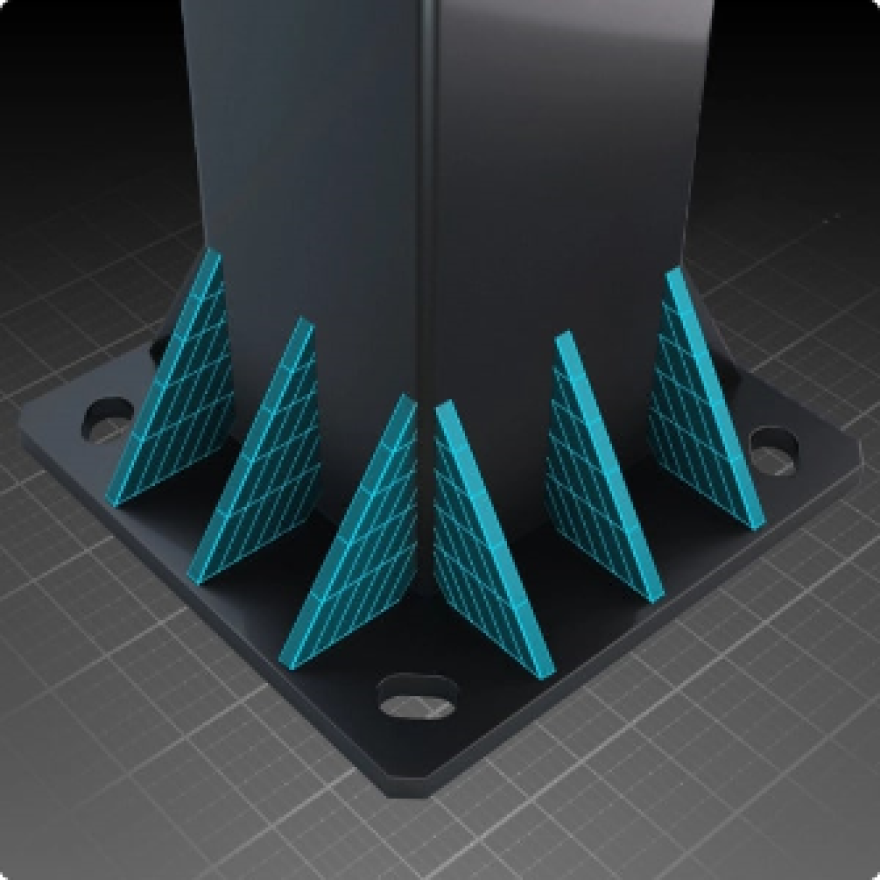
If you want to see how these specs translate into a finished system, view Mega Slam Hoops systems and compare the pole options directly.
Frequently Asked Questions
Is a square pole better than a round pole for a basketball hoop?
At the same diameter and steel gauge, yes, a square pole is generally stiffer against the front-to-back flex a hoop experiences during play. But a round pole at a larger diameter can outperform a smaller square pole, so shape should never be evaluated on its own.
What diameter pole do I need for an in-ground basketball hoop?
5 inches is the minimum for recreational, residential use. If you or your players dunk regularly or play hard pickup games, a 6-inch pole delivers noticeably more rigidity and a more stable rim.
What is a basketball hoop pole made of?
Structural steel is the standard material for quality in-ground hoops, typically finished with a multi-layer powder coat for weather resistance. Aluminum poles exist but are not recommended for a full-size residential system since they flex more under repeated impact.