A quality in-ground basketball hoop should last 15-20 years or more with basic maintenance. A cheap portable hoop, by contrast, is often done in 3-5 years. The gap comes down to build quality, materials, and how the system is installed. This article covers what actually determines a hoop’s lifespan, what to expect at different price points, and what Mega Slam Hoops systems deliver over the long haul.
How Long Does an In-Ground Basketball Hoop Last?
A properly installed in-ground hoop, built around a steel pole, a quality backboard, and a breakaway rim, should last 15-20+ years. That’s the benchmark for basketball hoop lifespan, and it’s achievable as long as the system is installed correctly from the start.
The concrete footing anchoring the pole is typically permanent. It’s not usually the part that fails. Instead, you’ll likely replace the rim, net, and backboard one or more times before the pole itself needs attention. These are the components that take the most direct hit from play and weather.
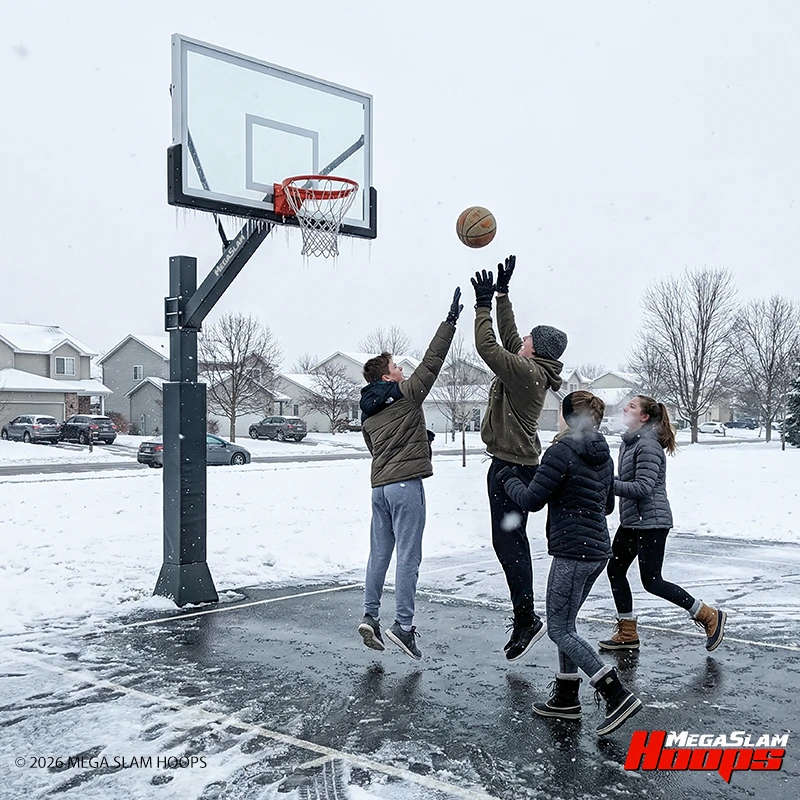
Speaking of weather, that’s the main enemy of any outdoor hoop. UV rays break down backboard material over time, moisture works into any exposed metal and causes corrosion, and freeze-thaw cycles put repeated stress on concrete footings. Powder-coated steel poles and UV-stabilized backboards resist this kind of wear significantly better than untreated materials, which is a major reason build quality matters more than sticker price.
Mega Slam Hoops in-ground systems are engineered for this kind of longevity, with a limited lifetime warranty giving you peace of mind for the lifespan of the system.

How Long Do Portable Basketball Hoops Last?
Portable hoops trade longevity for flexibility. You get a system you can roll into the garage or move to a new house, but that convenience comes with a shorter shelf life. A mid-range portable hoop under regular use typically lasts 3-7 years.
The failure points are predictable. The plastic or steel base that holds the water or sand ballast tends to crack over time, especially in freezing climates. Pole welds fatigue from the repeated rocking motion of dunks and rebounds. Backboards, particularly acrylic ones, yellow and grow brittle under sun exposure.
Portable systems cost less upfront, which makes them appealing for a first hoop or a temporary setup. But if you’re buying for kids who’ll be playing on it for a decade, there’s a real chance you’ll be replacing the whole unit before they’ve outgrown the game.
What Affects Basketball Hoop Lifespan?
Basketball hoop durability comes down to a handful of factors, and most of them are things you can evaluate before you buy.
- Pole material and gauge. Heavier-gauge steel resists shake and vibration during play better than thin-walled poles. This is one of the clearest indicators of how a system will hold up over years of use.
- Backboard material. Tempered glass lasts the longest and holds up best against UV exposure and impact. Acrylic and polycarbonate boards are lighter and cheaper, but they degrade faster in the sun unless they’re specifically treated for UV resistance.
- Rim construction. A breakaway rim absorbs the force of a dunk or a hard rebound, reducing the stress transferred to the mounting bracket and backboard. Over time, this protects the entire system, not just the rim.
- Installation quality. A footing that’s undersized or too shallow will shift as the ground freezes and thaws, gradually loosening the pole. This is one of the most common reasons a hoop fails well before its materials would otherwise allow.
- Maintenance. Simple upkeep, like re-torquing bolts, replacing worn nets, and cleaning the backboard, extends the life of every component listed above.
How to Make Your Basketball Hoop Last Longer
Most of what shortens a hoop’s life is preventable with a bit of annual attention. Here’s what to check each year:
- Re-torque all mounting hardware. Bolts loosen gradually from vibration and temperature swings. Tightening them annually keeps the rim and backboard secure.
- Replace the net when it frays. A worn net doesn’t affect the pole or backboard, but it’s a cheap fix that keeps the system looking and playing right.
- Clean the backboard with mild soap and water. Avoid abrasive cleaners or scouring pads on acrylic boards, which scratch easily and lose clarity over time.
- Check the concrete footing after hard freezes. Look for new cracks or shifting at the base, especially in regions with harsh winters.
- Inspect the breakaway spring annually. If it’s lost tension, it won’t absorb impact the way it should, which puts extra stress on the rim and backboard.
None of this takes more than an afternoon, and it’s the difference between a hoop that lasts two decades and one that needs major repairs after five years.
How Long Do Mega Slam Hoops Last?
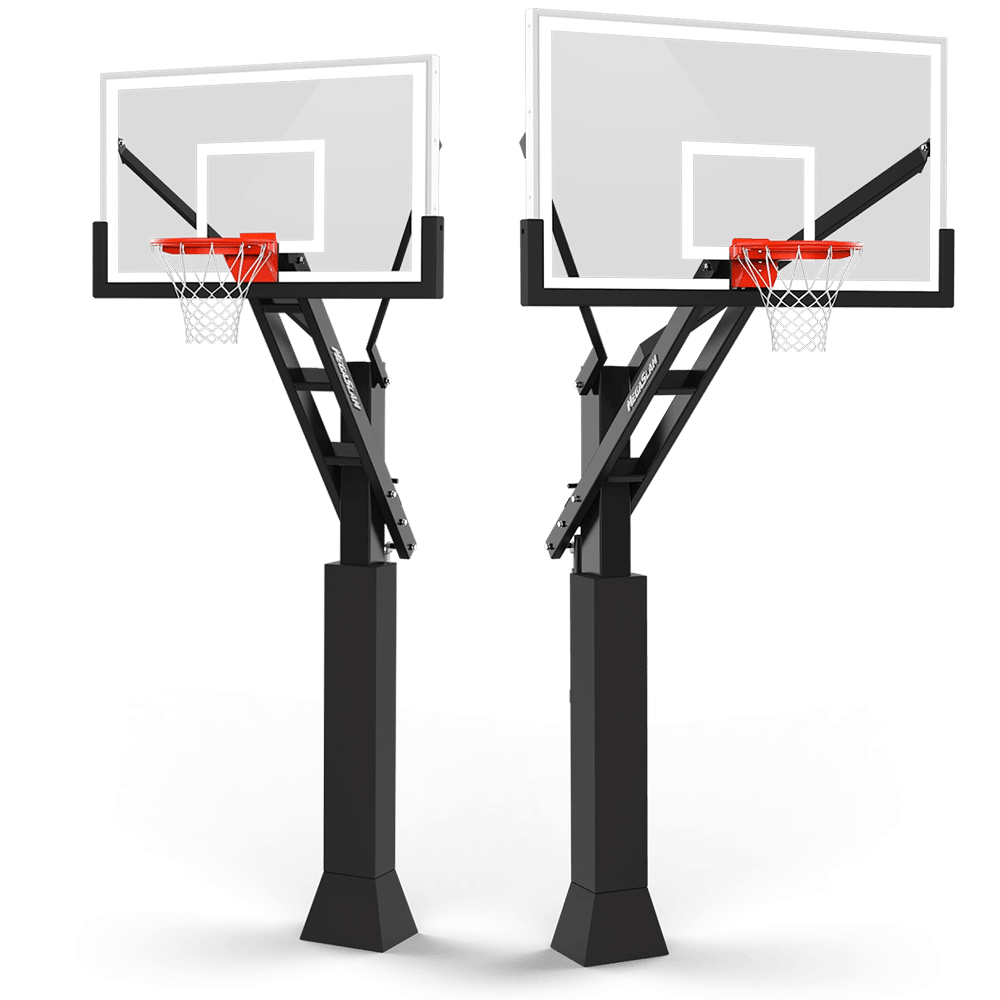
Mega Slam Hoops in-ground systems are built to last, backed by a limited lifetime warranty. The 5-gauge steel pole resists shake and vibration during play, while the ½” regulation tempered glass backboard is built to withstand UV exposure without yellowing or warping. The direct rim attachment reduces the stress that hard play puts on the rest of the system, protecting the mounting bracket and backboard from repeated impact.
These aren’t features added for marketing appeal. They’re the same build factors covered above, pole gauge, backboard material, and rim construction, applied consistently across every system. If you want to see what goes into a Mega Slam Hoop, you can see our engineering overview for a peek behind the scenes.
Frequently Asked Questions
How long does a basketball backboard last?
A quality backboard, tempered glass or a UV-treated acrylic, typically lasts 10-15 years before it needs replacement. Untreated acrylic or polycarbonate boards can start yellowing and losing rebound consistency within 3-5 years, especially in sunny climates.
Can a basketball hoop be left out in winter?
Yes, most in-ground systems are designed to stay outside year-round. The bigger concern is the footing, not the pole or backboard. Check for cracking or shifting at the base after hard freezes, and make sure any exposed hardware isn’t corroding.
How do I know when to replace my basketball hoop?
Watch for a pole that’s visibly rusted or bent, a backboard that’s cracked or badly yellowed, or a footing that’s shifted enough to make the pole wobble. Any one of these affects both safety and play quality.