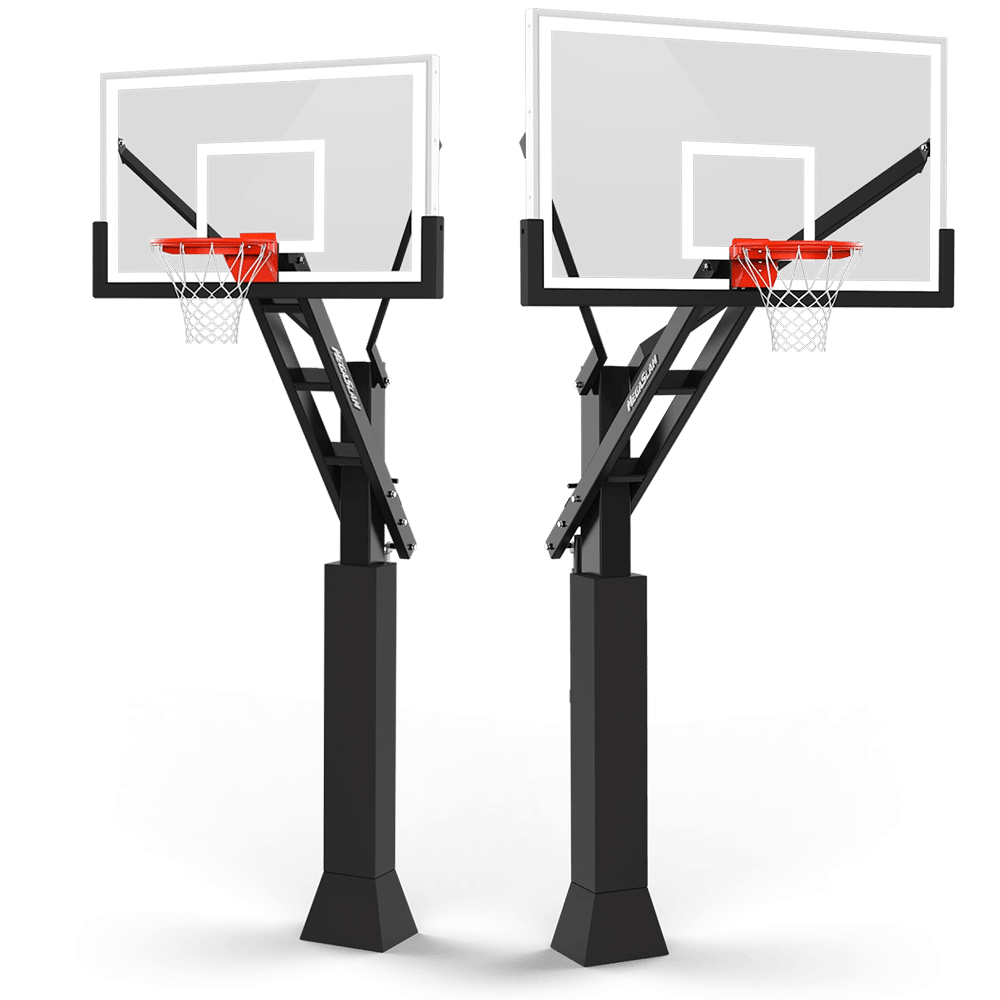
A regulation basketball hoop is 10 feet high, measured from the floor to the top of the rim. This is the standard at the NBA, NCAA, FIBA, and most high school levels. Youth leagues use lower heights: 8 feet for ages 7-8 and 9 feet for ages 9-11. This guide covers the height standards for every level of play and every age group, from young kids just learning the game to adults playing on a full-size court.
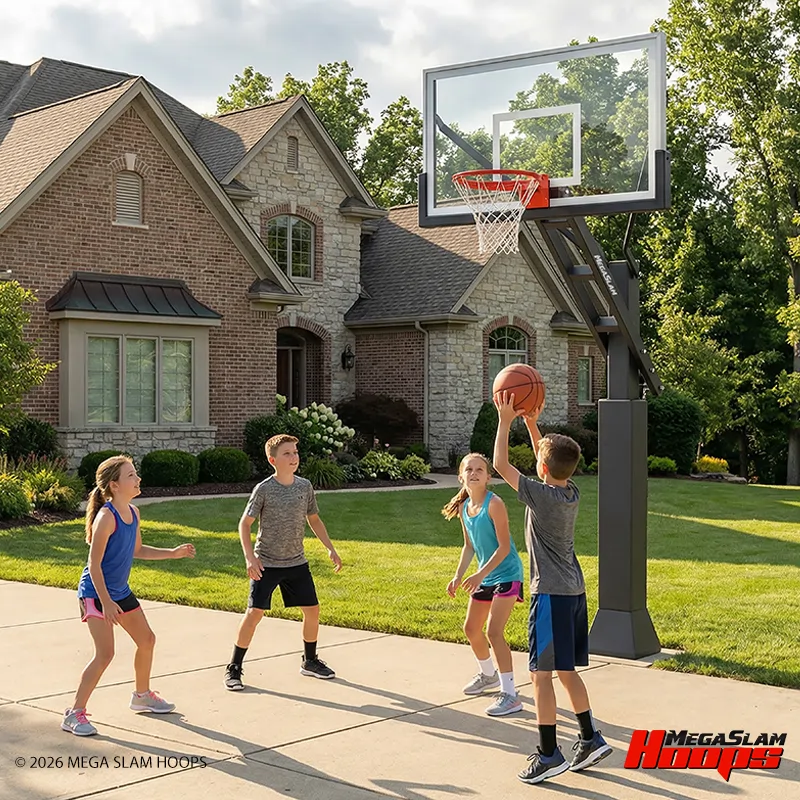
Regulation Basketball Hoop Height
Ten feet is the standard rim height across nearly every level of organized basketball, including the NBA, WNBA, FIBA, NCAA, and high school leagues (NFHS). That measurement runs from the floor to the top of the rim, not the top of the backboard, and not the net. It is easy to eyeball a hoop and misjudge the height by several inches, so if you are checking your own setup, measure straight up from the ground to the rim itself.
This number has not moved since James Naismith set the original peach basket at 10 feet in 1891. Every regulation court built since has kept that height, which is why it remains the benchmark for competitive play. If you are installing a hoop for a home court that adults and older teens will use, 10 feet is the height to set it at.
Basketball Hoop Height by Age Group
| Age Group | Recommended Height | League Standard |
|---|---|---|
| Under 6 | 6 ft | Introductory / recreational |
| Ages 6-8 | 7-8 ft | Youth recreational |
| Ages 8-10 | 8-9 ft | Youth recreational |
| Ages 10-12 | 9-10 ft | Junior high / middle school |
| 12+ / Adults | 10 ft | High school, college, pro |
Height matters more than it might seem. A hoop set too high forces young players to throw the ball toward the rim instead of shooting it, since they don’t yet have the strength to push a proper shot that far up. That throwing motion becomes a habit, and coaches often spend years correcting the flat, armed-out release it creates.
Matching the hoop height to a player’s age and size lets them build a proper shot from the very first attempt: knees bent, ball raised with two hands, elbow under the ball, and a real arc on the release. That foundation is much easier to build early than to fix later.
If you’re setting up a hoop at home, most adjustable in-ground systems move from 5.5 feet to 10 feet in 6-inch increments, so you can dial in the right height as a player grows rather than guessing between two fixed settings. For a closer look at recommended heights by exact age, see the full basketball hoop height by age chart.
What Height Should I Set My Home Basketball Hoop?
The right height for a home hoop depends on who’s playing:
- Adults only: set the hoop at 10 feet, the regulation height.
- Children aged 8-12: start at 8-9 feet and raise the hoop as their shooting strength develops.
- Children under 8: 6-7.5 feet lets them shoot with proper form instead of heaving the ball.
- Mixed ages: use the youngest player’s recommended height as your floor. An adjustable hoop is essential here, since a single fixed height will always be wrong for someone in the group.
If your household spans several ages, or if you expect to host neighborhood games with a mix of skill levels, an adjustable system is worth the extra cost. It’s the only way to keep the hoop at a useful height for everyone who plays on it.
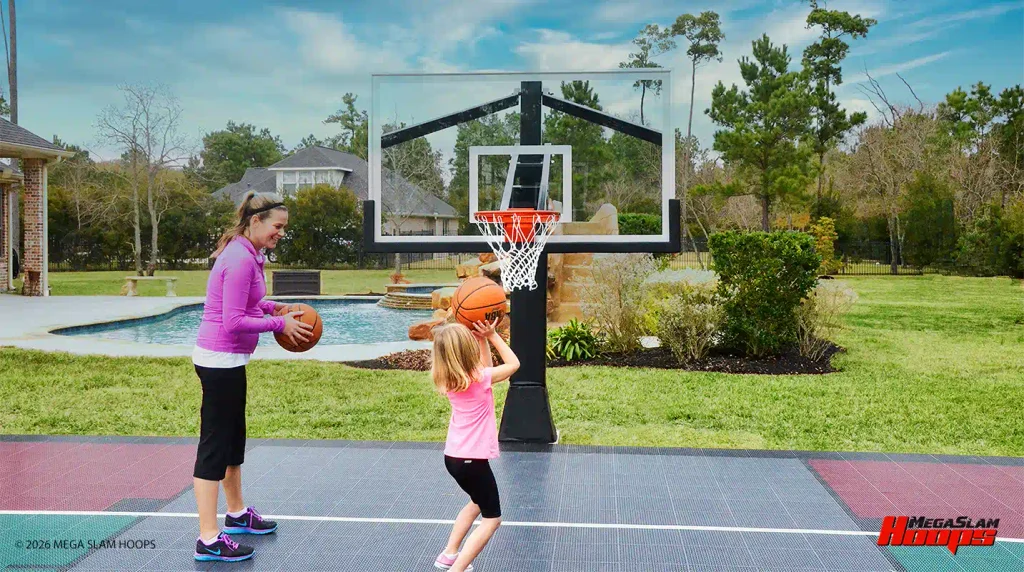
Does Hoop Height Affect Shooting Form?
Hoop height has a direct effect on how a player shoots, and the effect goes both directions.
When the hoop is too high for a player’s strength, they compensate by heaving the ball: arms fully extended, little or no arc, and no wrist snap on the release. That motion looks nothing like a real jump shot, and it’s a hard habit to unlearn once it sets in.
When the hoop is too low, players never need to develop the arc that regulation play requires. Shots that work at 7 feet often fall short or get blocked at 10 feet, because the shooter never learned to shoot up and over.
The right height lets a player’s elbow sit at roughly 90 degrees at the start of the shot, with the ball positioned above and slightly in front of the head. That starting position is what makes a smooth, repeatable release possible, and it’s only achievable when the hoop matches the player’s size and strength.
Basketball Hoop Height for Common Court Types
- NBA and WNBA: 10 feet
- NCAA: 10 feet
- FIBA (international play): 10 feet
- High school (NFHS): 10 feet
- Youth recreational leagues: varies by age; see the chart above
Outside of youth leagues, which scale the hoop down for younger age groups, every major basketball organization plays at the same 10-foot height. If you’re building or renting a court for anything other than youth play, 10 feet is the number to plan around.
How to Adjust a Basketball Hoop Height
Adjustable hoops generally use one of three mechanisms:
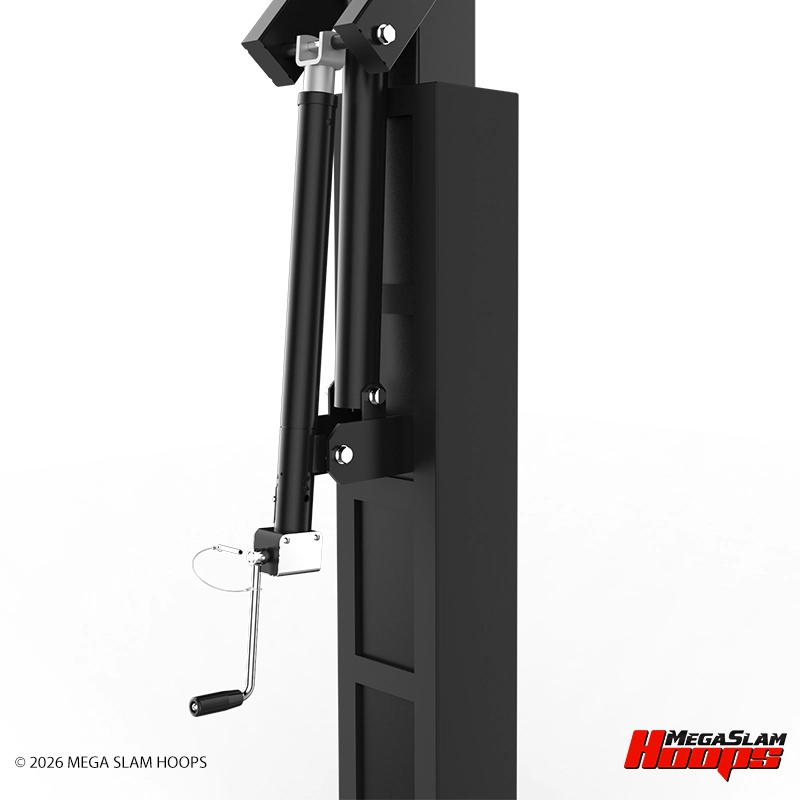
- Manual crank: the most common option and the easiest to use. You turn a handle to raise or lower the pole or backboard assembly.
- Pneumatic assist: a pressurized mechanism that reduces the effort needed to raise the hoop, useful on heavier systems.
- Ratchet or pin systems: the backboard locks at a fixed height using a pin or collar, which you reposition manually to change height.
Mega Slam Hoops systems use an actuator crank with a lift assist for infinite adjustment. It’s built to make height changes quick enough that you’ll actually use the full range as your players grow, rather than leaving the hoop at one setting out of convenience.
You can view Mega Slam Hoops systems to see the full lineup.
Frequently Asked Questions
How high is a basketball hoop in feet?
A regulation basketball hoop is 10 feet high, measured from the floor to the top of the rim. This applies to the NBA, WNBA, NCAA, FIBA, and high school basketball.
What height is a youth basketball hoop?
Youth hoop height depends on age. Players under 6 typically use 6 feet, ages 6-8 use 7-8 feet, ages 8-10 use 8-9 feet, and ages 10-12 use 9-10 feet. Players 12 and up generally move to the full 10-foot regulation height.
Can you adjust the height of a regulation basketball hoop?
Yes. Most in-ground hoops designed for home use are adjustable, typically ranging from 5.5 feet to 10 feet in 6-inch increments. This lets one hoop serve players of different ages as they grow, rather than requiring a fixed 10-foot setup from day one.
Is 10 feet the standard basketball hoop height everywhere?
Ten feet is the standard for adult and competitive play worldwide, including the NBA, WNBA, NCAA, FIBA, and high school leagues. Youth leagues are the exception, using lower heights scaled to age until players reach their early teens.