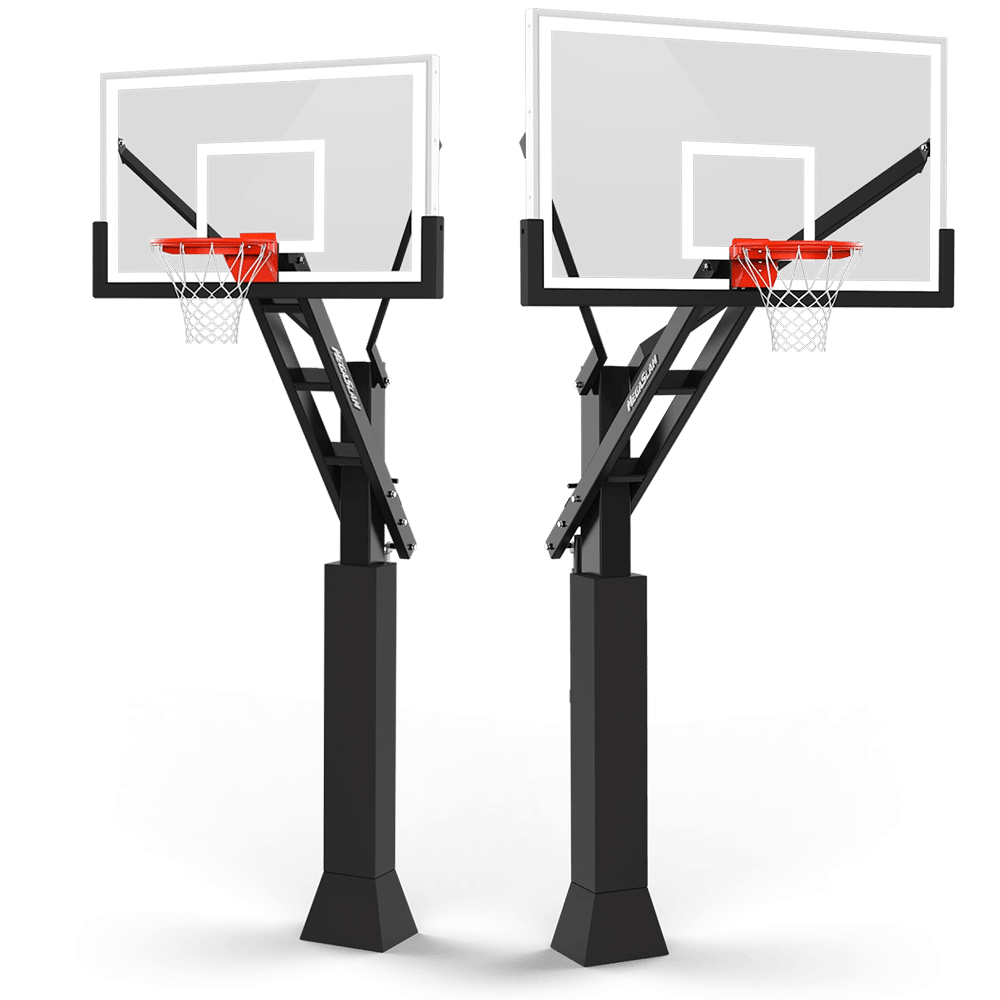
Backboard size shapes your basketball experience more than any other spec on a hoop system. It determines how much of the board you can actually use for bank shots, how predictable your rebounds are, and how much pole and mounting hardware you need underneath it. For most serious home players, 60 inches is the sweet spot: wide enough for real bank shots and clean rebounds, without the cost and structural demands of a full regulation setup. A 72-inch board is regulation size, the same width used in the NBA, NCAA, FIBA, and high school gyms, and it’s the right choice for a performance-level home court. A 54-inch board is the practical minimum for recreational adult play, still capable of legitimate shots off the glass, just with a narrower margin at the edges. Here’s what you gain, and what you’ll spend, at each step up.
Quick Comparison Table
Before you get into the details, here’s how the three sizes stack up.
| Size | Best For | Rebound Quality | Relative Cost | Regulation? |
|---|---|---|---|---|
| 54 in | Recreational kids and family play | Good; workable bank shots from moderate angles | $ | No |
| 60 in | Regular adult or teen players; dedicated home use | Very good; wider shooting angles across the board | $$ | No |
| 72 in | Performance home courts | Best; the full board face is usable | $$$ | Yes (NBA, NCAA, FIBA, high school) |
The rest of this guide walks through what each size means for your game and your budget.
54-Inch Backboard
A 54-inch backboard is the smallest size worth considering for recreational adult or youth play, and it’s a real step up in playability with ½” tempered glass. At 54 in x 32 in, you get enough surface area for bank shots from roughly 45-degree angles, which opens up a shot you simply can’t rely on with a narrower board. This size is common on mid-range in-ground systems, where it strikes a workable balance between performance and price.
A 54-inch board tends to show up on driveway and garage-adjacent setups where space and budget are real constraints, but the household still wants a hoop that plays like a legitimate court. It’s a solid fit for family use, casual pickup games, and players who are still developing their shot.
If you’re watching your budget, treat 54 inches as the number to protect. It’s worth trimming other features first, a simpler pole finish, a standard rim, rather than dropping backboard size to save money. The backboard face does more to shape your actual shooting experience than most of the other components on the system, so this is where your money should go first.
60-Inch Backboard
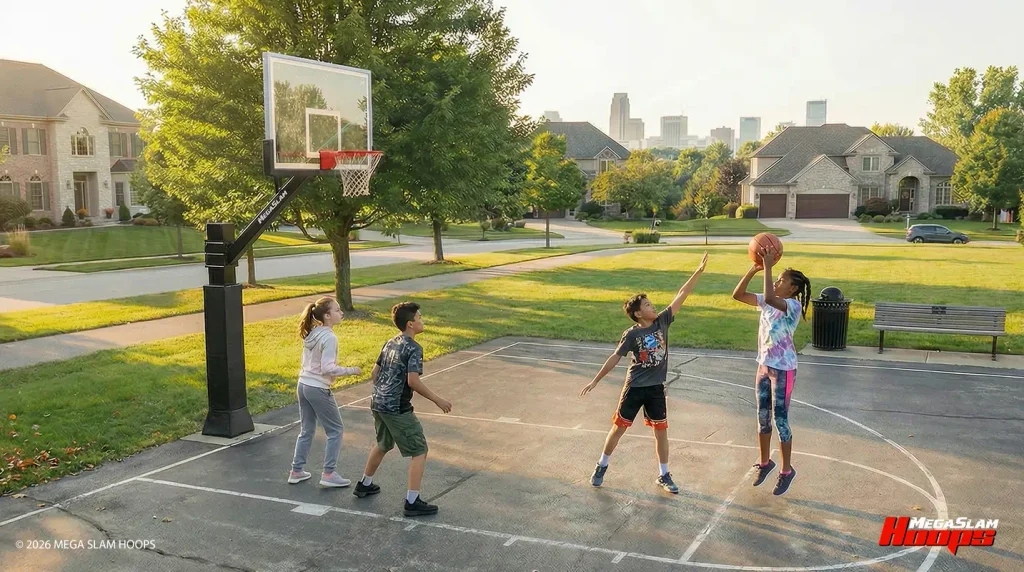
Step up to 60 inches and the rebound geometry changes noticeably. This is the size most dedicated home players land on, and for good reason: the extra width and height open up shooting angles that a 54-inch board simply can’t offer, especially on shots taken from the wings.
That extra room matters most at the edges of the board. On a 54-inch backboard, a shot taken from a sharp angle can clip the edge and bounce unpredictably. On a 60-inch board, that same shot has more usable glass to work with, so the ball comes off the rim and backboard more consistently. Across a full session of shooting, that 6-inch difference between 54 and 60 inches adds up, especially for players working on bank shots or attacking the rim from the baseline.
If you play regularly, whether that’s pickup games, drills, or just shooting around most evenings, 60 inches is the size that will feel right for the long run without pushing you into regulation-level cost and pole requirements.
72-Inch Backboard
A 72-inch backboard is full regulation size, the same 72 in x 42 in board used in the NBA, NCAA, FIBA, and high school competition. If you’ve been searching for a 72 inch backboard basketball hoop that plays true to regulation, this is the size and build quality to look for.
The full square of a 72-inch board is usable, which means rebound angles are as true as they get outside of an actual arena. Ball response is especially accurate on tempered glass versions, which flex less than acrylic or polycarbonate on hard rim contact. If you want to compare materials in more depth, see how tempered glass stacks up against acrylic, polycarbonate, and fiberglass.
Because of the added size and weight, a 72-inch board asks more of the rest of the system. Expect a heavier board, a more robust pole, and a mounting system built to handle real force at the rim, especially if you plan on players hanging on the rim after a dunk. It’s also the most expensive of the three sizes, and the one built for a performance-level home court.
Mega Slam Hoops offers 72-inch systems built for this kind of use, including the adjustable Mega Slam 72 or Mega Slam XL or a fixed height option with the FX 72 or FX PRO, which all feature a regulation 72” backboard. If you’re ready to build a court that plays like regulation, view the lineup of Mega Slam Hoops 72-inch systems.
Which Size Is Right for You?
Use this as a quick decision framework:
- Recreational family use: 54 inches is your minimum for a board that plays like a real hoop.
- Regular adult or teen player: 60 inches gives you room to grow into your shot without overspending.
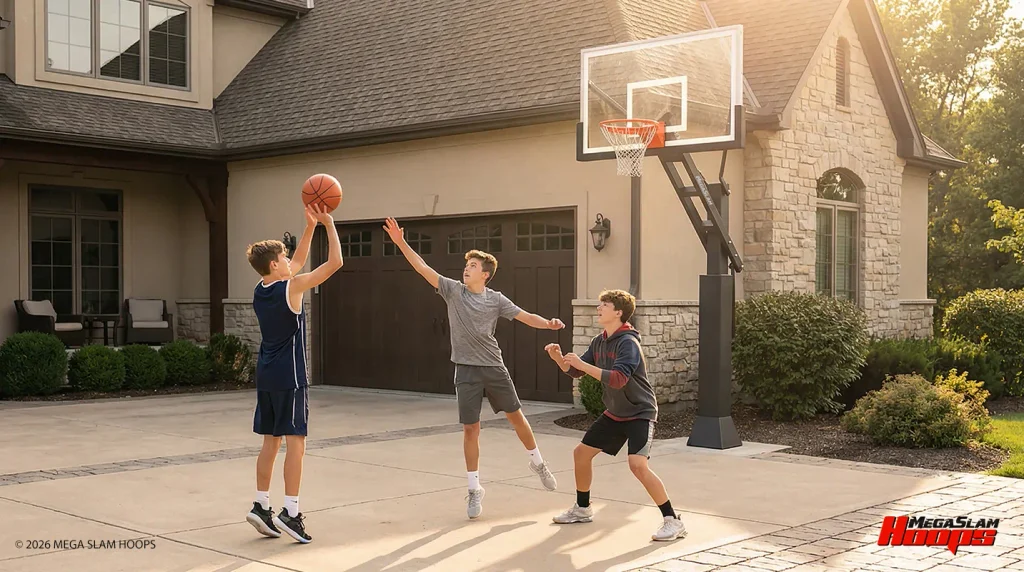
- Performance home court: 72-inch tempered glass gets you the closest to a true gym experience.
Budget matters too. As a rough guideline, expect cost to climb with each step up in size, and to climb further if you choose tempered glass over acrylic or polycarbonate at the 72-inch level. Weigh that against how often you’ll actually use the hoop and who’s playing on it.
If you want the full picture on materials, poles, rim types, and mounting before you decide, the full backboard buying guide covers all of it in one place.
Frequently Asked Questions
Is a 72-inch backboard worth it?
If you’re building a performance-level home court or want the same rebound geometry you’d find in a real gym, yes. The full board face is usable, shot angles stay true at the edges, and tempered glass versions give you the most accurate ball response of any size. It’s the largest investment of the three sizes, but it’s also the only one that’s regulation.
What is the difference between a 54-inch and 60-inch backboard?
The 6-inch difference mostly shows up at the edges of the board. A 60-inch backboard gives you more usable glass on angled shots, especially from the wings, so rebounds stay more consistent than they do on a 54-inch board. Both sizes support real bank shots, but 60 inches handles a wider range of shot angles.
What size backboard do you need to dunk?
Backboard size doesn’t determine whether you can dunk, rim height and your own athleticism do. That said, if you’re dunking regularly, a 54-inch board or larger is recommended so the backboard can handle the force of rim contact without excessive flex.
What backboard size do most home courts use?
Most driveway courts land on 60 inches. It offers noticeably better rebound performance than the 54-inch minimum without the cost and structural requirements of a full 72-inch regulation setup.